
The double stranglehold between high interest rates and a strong dollar: Wells Fargo revised gold price expectations three times, and the gold carnival was forced to be postponed until 2027
The Zhitong Finance App noticed that earlier this year, Wells Fargo made a bold commodity price forecast, which is the most aggressive forecast made by this large institution in many years.
This prediction is remarkable. It means the kind of return that usually only appears in speculative assets. Over the course of a few months, this trading strategy really worked.
But then the market changed. This forecast was downgraded. Then it was downgraded again. This is the third revision in 2026 alone. The gap between Wells Fargo's predictions at the beginning of the year and today's predictions is large enough that no one who follows it can ignore it.
Wells Fargo Investment Research Institute lowered the 2026 target price for gold from the previous price of $5300 to $5500 per ounce to $4900 to $5100. Its 2027 price target was also lowered from $5800 to $6000 to $5400 to $5600. The upper and lower ends of both forecast ranges were reduced by $400.
Wells Fargo cuts 2026 gold price target
In February of this year, Wells Fargo raised its 2026 gold price target to $6100 to $6300. Gold was trading around $4961 at the time. At the time, the bank expected 23% to 27% room to rise by the end of this year.
The logic at the time was straightforward: interest rates were about to be lowered, central banks were buying, and gold had structural support.
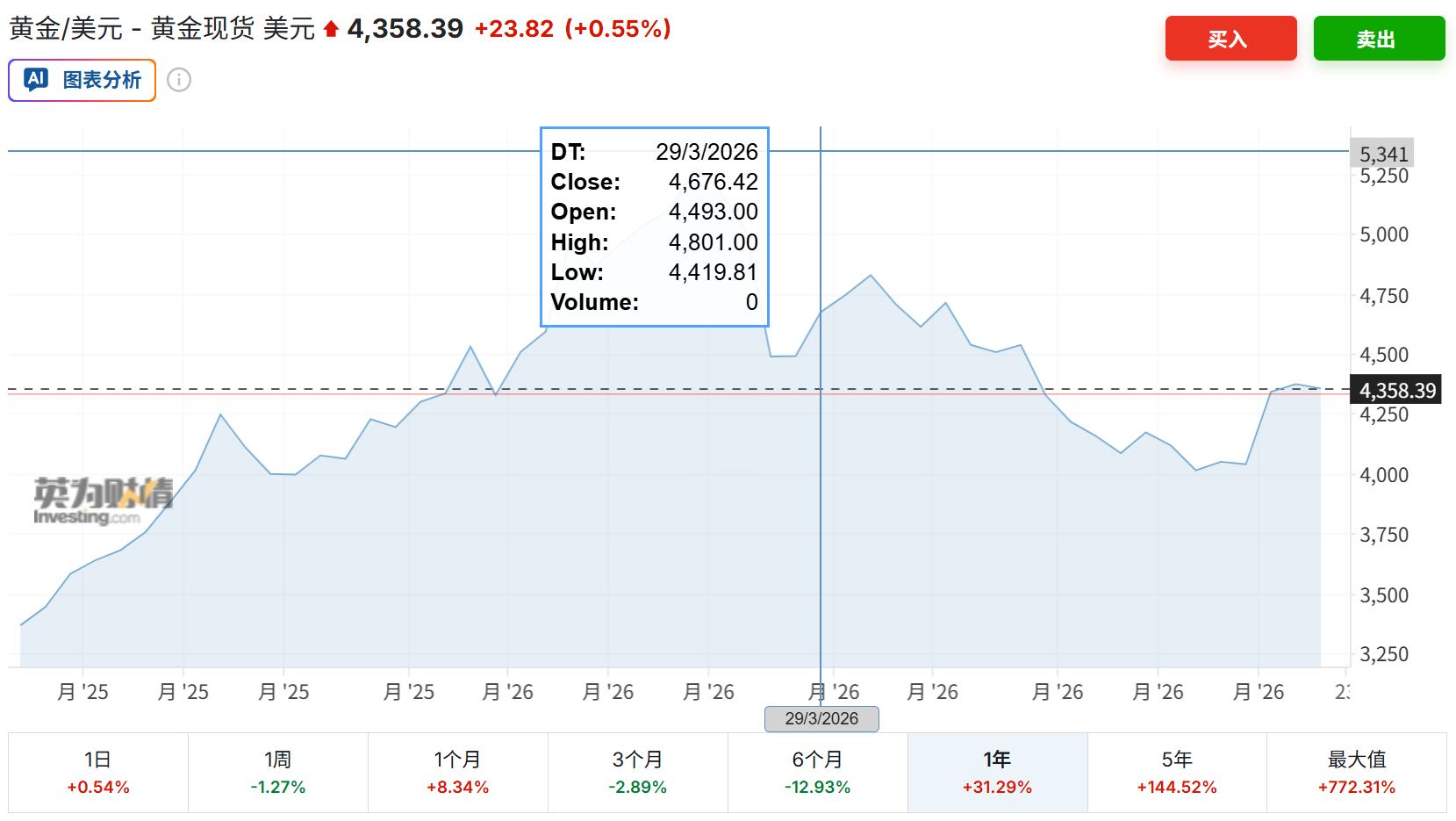
However, this logic ran into a wall. Gold hit an all-time high of nearly $5594 in January and then pulled back sharply. The Federal Reserve turned hawkish, the dollar strengthened, and US bond yields remained high. Wells Fargo lowered its 2026 price target to $5300 to $5,500 by June.
July has passed, and there has been no further reduction. However, August ushered in a second drop.
Since the peak in February, the 2026 median price target has dropped from $6200 to $5,000. In six months, it was reduced by $1,200 per ounce.
The February price target is based on two assumptions: the Federal Reserve will cut interest rates, and central banks will continue to buy.
However, the Federal Reserve did not cut interest rates, and the pace of purchases by the central bank has also slowed. Wells Fargo has been revising its price target since then.
Gold price correction in August
On August 18, spot gold traded around $4397 per ounce. Rising US bond yields and rising oil prices are the main culprits. Higher yields are particularly bad for gold, as this metal doesn't pay any interest or dividends.
When bond yields are higher, investors face a real opportunity cost of holding gold rather than bonds. And that cost has been rising throughout the year.
Wells Fargo said in July that the price of gold had fallen by more than 20% from its January high. The reason is a combination of factors: the settlement of profits after the surge, outflows of ETFs, expectations of the Federal Reserve's tighter policy, a stronger dollar, and temporary sell-offs by some central banks.
At the peak of capital outflows, the monthly redemption amount of gold funds listed in the US reached about 5.3 billion US dollars. None of these dynamics have been completely reversed. As a result, the upper limit of predictions was lowered again.
The connection with crude oil is less intuitive, but it still exists. Higher oil prices have boosted inflation expectations, while higher inflation expectations have also driven higher bond yields. Higher bond yields have reduced the competitiveness of gold. This mechanism has been adversely affecting gold for most of the summer.
Those bulls who based their layout on a different set of assumptions earlier this year have felt it.
However, the bank still expects the price of gold to rise. The new 2026 forecast range of $4900 to $5100 is still above the current trading price. At $4397, this range means 11% to 16% upside. The 2027 target price of $5400 to $5,600 means 23% to 27% room for growth.
The general direction has not changed; what has changed is the schedule and forecast limits.
Golden Feast postponed
There is a substantial difference between lowering the target price and a bearish reversal. Wells Fargo is not recommending a sale of gold, but rather indicates that the price of gold will not rise as fast or as high as expected in February.
This is critical for investors who have been using Wall Street price targets to build return expectations.
In February, Wells Fargo said gold was an opportunity for a potential increase of more than 23% by the end of 2026. Now, it's an 11% to 16% opportunity, and the larger increase has been delayed until 2027.
Central bank demand, diversification of foreign exchange reserves, and geopolitical uncertainty are still included in the bank's research report. Wells Fargo has not given up on these reasons for holding gold. Long-standing high interest rates and a strong dollar have only delayed the schedule for implementation. This is an objective and realistic interpretation of the changing situation.
Investors who are betting that the price of gold will quickly hit $5400 or higher by December will be the most affected. If investors have been expecting the old target price before, then the new target price is certainly a significant reduction.
If investors only held gold as a means of long-term value preservation, this reduction would be less dramatic. Wells Fargo remains optimistic that the price of gold has reached a new high, but has moved time to 2027.
Gold is now more sensitive to the trend of US interest rates and the dollar than almost any other variable. Investors are awaiting the minutes of the Federal Reserve's upcoming July meeting on August 20.
This record may indicate whether interest rates will be raised in September or whether the military will stand still. The effect of this signal on the next trend of gold will be far superior to the target price given by any bank.