
The Fed's austerity logic is being challenged! Walsh wants long-term bonds to “raise interest rates for the central bank,” and Bezent's buyback disrupts the layout
The Zhitong Finance App learned that while Federal Reserve Chairman Kevin Walsh was working to restore price stability by reducing the balance sheet by $6.8 trillion, an emergency move by Treasury Secretary Scott Bessent was causing a rare “misalignment” in the direction of the two major departments.
On Wednesday, the US Treasury announced that it will “at least double” the scale of liquidity support repurchase operations for 10-year to 30-year treasury bonds, raising the maximum single repurchase limit from 2 billion US dollars to at least 4 billion US dollars. After the news was announced, the 10-year US Treasury yield fell 6 basis points to 4.65%, and the 30-year yield plummeted by nearly 10 basis points to 5.18% — just the day before, the 30-year US Treasury yield had just hit 5.337%, a new high since April 2007.
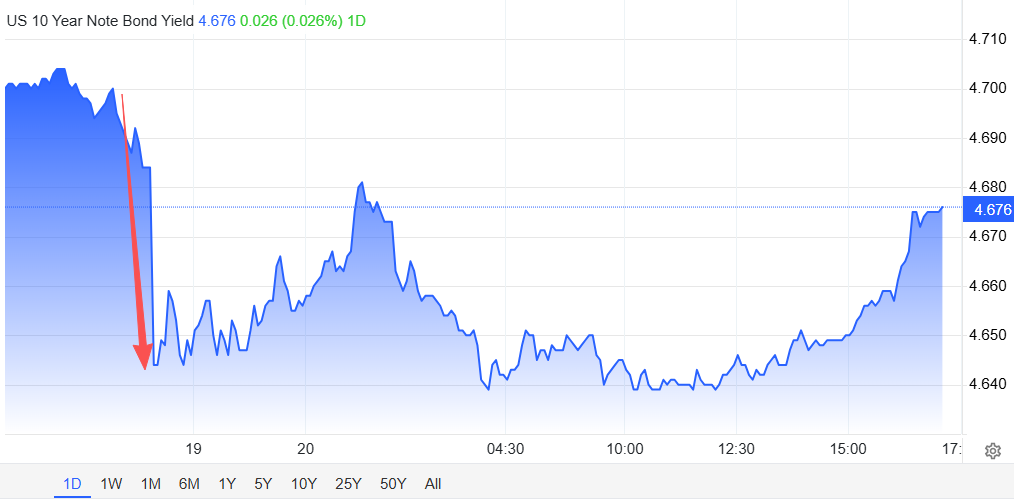
This operation, which appears to be a “technical adjustment,” is sparking a heated debate on Wall Street about “who dominates credit conditions.” David Russell, head of global market strategy at TradeStation, put it bluntly: “Given Walsh's reluctance to say more, and Bezent's actions today, the focus may be shifting from the Federal Reserve to the Treasury. This will be a huge change for traders.”
Bezent's “Historic Turn”: From “Regularly Predictable” to “Most Interventionist”
The US Treasury Department announced that it will raise the upper limit of liquidity support repurchase operations for 10-20- and 20-year nominal interest-bearing treasury bonds from US$2 billion to at least US$4 billion. It will take effect on September 9 and continue until the end of the Japanese refinancing quarter on November 4.
The Treasury's treasury bond repurchase program is nothing new — the mechanism was restarted in 2023 to improve liquidity in the old securities market. But this time the situation was quite different.
Two weeks ago, the Ministry of Finance had just released its quarterly refinancing report. Wednesday's emergency adjustments meant that officials were “uneasy” about the 30-year US Treasury yield soaring to a 19-year high. John Briggs, head of US interest rate strategy at Natixis, pointed out that if this plan were announced in a routine refinancing announcement, the market reaction would not have been so strong; however, “the choice at this point shows that officials don't like what happened at that time.”
Bezent's intervention was not an exception. In the past month, he has played an intensive “combo punch”: at the end of last month, he participated in the first joint purchase of yen between the US and Japan since 1998; then adjusted forward-looking guidelines in the quarterly bond issuance policy statement to pave the way for a possible reduction in the issuance of long-term treasury bonds in the future; and attacked again with a “double repurchase” this Wednesday. Citigroup's team, led by Jason Williams, put it bluntly: “In our view, the move was to control long-term returns, not to maintain the normal operation of the market.”
Akiki Omori, Japan's chief fixed income strategist at Deutsche Bank, commented: “The Ministry of Finance can buy back its own bonds, but it can't buy back dollars. He called Bezent “the most interventionist finance minister in decades,” and pointed out that the move marked a clear shift in the Treasury's long-held “regular and predictable” debt management principles.
Ironically, in 2024, Bezent criticized former Treasury Secretary Yellen for adopting a similar strategy — reducing long-term financing costs by increasing the issuance of short-term treasury notes, believing that this is tantamount to artificially influencing the market. Now he's on this path himself.
Walsh's “embarrassing situation”: Long term debt was “reversed” by the Treasury after “working for the Federal Reserve”
The reason why Bessent's move caused a huge shock in Washington is because it directly impacted Walsh's carefully designed policy logic.
After the Federal Reserve meeting on July 29, Walsh repeatedly mentioned the sharp rise in treasury bond yields, implying that the Federal Reserve is happy to see higher treasury yields — because this can raise borrowing costs and tighten policies through the market, without the Fed having to personally raise short-term interest rates. Wil Sith, senior bond portfolio manager at Wilmington Trust, put it bluntly: “The market previously generally believed that since the long end of the bond market is already 'working' for the Federal Reserve, we don't necessarily need to see an increase in federal funds interest rates. Now, the Minister of Finance's operation has reversed this situation to a certain extent. ”
David Russell, head of global market strategy at TradeStation, pointed out that this incident may mark a fundamental shift in the focus of power: “Given Walsh's reluctance to say more, and Bezent's actions today, the focus may be shifting from the Federal Reserve to the Treasury. ”
What further complicates Walsh's situation is that he has long been strongly skeptical about central bank asset purchases, and has made it a core goal to reduce the current balance sheet of 6.8 trillion US dollars. He advocates changing the balance sheet from a routine policy tool to a crisis response tool. Outsiders have interpreted that the long-term goal is to reduce the current size of 6.7 trillion US dollars to about 3 trillion US dollars. Now, when the Treasury Secretary actively reduces long-term yields through buybacks, Walsh faces a profound paradox: he opposes the Federal Reserve's intervention in the market, but the Treasury's intervention is forcing the Federal Reserve to reconsider its interest rate path.
Joseph Brusuelas, chief economist at RSM America, also pointed out that the Treasury Department's actions made Walsh's task of reducing inflation back to 2% more difficult. Walsh has always preferred to let the market set interest rates naturally, rather than government intervention.
The Federal Reserve's “policy shackles”: two forces are pulling in reverse
Bezent's actions are putting the Federal Reserve and the Treasury in direct opposition to the policy direction.
“The Federal Reserve and the Treasury are basically working in the opposite direction,” Sith warned. “I think this will only force the Federal Reserve — after all, its' toolbox 'is larger — to adjust the federal funds rate target more drastically. ” Joe Brusuelas, chief economist at RSM, further stated that the Treasury Department's actions have made Walsh's task of reducing inflation back to 2% more difficult — “Walsh has always preferred to let the market set interest rates naturally rather than intervene by the government. Until then, investors did just that — repricing long-term debt and demanding higher yields to hold US Treasury bonds.”
If inflation remains flat or continues to rise, the Federal Reserve will be forced to raise interest rates more aggressively to offset the expansionary effects of the Treasury depressing yields. Brusuelas put it bluntly: “We are slowly moving to the point where populist logic would require central banks to support fiscal goals. ”
Currently, market participants see no reason for the Federal Reserve to directly step in. Gennadiy Goldberg, head of US interest rate strategy at TD Securities, said, “Currently, the threshold for the Fed to make stable purchases in the market is very high. We need to see signs of significant deterioration in liquidity and market failure, and we have not seen these signs at all. Michael Feroli, chief US economist at J.P. Morgan Chase, also believes that this “has no impact” on the Federal Reserve's ability to control short-term interest rates.
Temporary painkillers or Pandora's box? The “structural limitations” of repurchases: Unsolved fundamental issues such as inflation, deficits, and the wave of AI debt issuance
Wall Street experts are generally skeptical about whether the Treasury can keep bond yields down for a long time, because the underlying factors driving up yields have not changed.
Multiple factors are jointly driving up US bond yields: the fiscal deficit continues to widen — the federal budget deficit is expected to reach 2.1 trillion US dollars this fiscal year; inflation continues to be higher than the Fed's 2% target; large-scale issuance by AI companies — companies such as Alphabet, Amazon, and Meta have issued nearly $220 billion in bonds this year to compete with government bonds for investors; and market questions about the independence of the Federal Reserve.
Krishna Guha, head of strategy at Evercore ISI central bank, said: “The immediate results do seem remarkable... but we doubt that this operation will have a substantial impact over a longer period of time.”
Brusuelas put it more bluntly: “To keep bond yields down sustainably, government spending must be cut. However, judging from the current economic framework preferred by both parties, it is almost impossible to achieve this. As a result, Wednesday's move was nothing more than a temporary dose of pain relief for the financial wounds we have caused ourselves. ”
The fundamental factors driving up US bond yields have not changed: the fiscal deficit widens, inflation continues to rise above the Federal Reserve's 2% target, the weakening dollar, and technology companies issuing large numbers of bonds to build data centers and other AI infrastructure — these corporate bonds are competing with government bonds for investors. J.P. Morgan strategists even issued a warning: the Treasury's sudden increase in the scale of bond repurchases may be viewed by the market as lacking credibility, and may cause term premiums to rise in the long term and push up yields.
What is even more worrisome is the “asymmetry” of operation methods — expanding the probability of repurchases will not stop the term premium center from rising, and the decline in yield that can be exchanged for repurchases will decrease accordingly. The costs and effects of this set of operations are probably all based on the premise that the Federal Reserve tacitly responds by choosing to “stand still.” Once the Federal Reserve is forced to raise interest rates due to inflationary pressure, the effects of the Treasury's intervention will be completely offset.
Jackson Hole's “Ultimate Test”
Stith pointed out that Bezent's move has already opened the “Pandora's box”: “How far does he plan to go in lowering long-term interest rates? The question is how much 'ammunition' will the finance minister use to counter rising interest rates? After all, what he can do is limited; it is far worse than the Federal Reserve.” He also asked whether the Ministry of Finance will further raise the scale of long-term treasury bond repurchases to 8 billion US dollars after this repurchase.
The direct test of this game will come at next week's Jackson Hole Global Central Bank Annual Meeting. Walsh will deliver a keynote address at the conference. At that time, the market will pay close attention: How will the US Federal Reserve Chairman, who promises “zero tolerance” for inflation, deal with the “reverse operation” from the Treasury? And how far will Bezent — the finance minister who claims to have a “huge toolbox” — go to lower long-term interest rates?
Meanwhile, Wells Fargo estimates that if the current increase continues, the scale of bond repurchases could rise to $32 billion per quarter. The tug-of-war between the Treasury Department and the Federal Reserve has only just begun against a backdrop of US debt approaching a record $40 trillion and the fiscal deficit maintaining 5% to 6% of GDP.
The threshold for intervention by the Federal Reserve: the market has not “failed”
Despite widespread concerns about the long-term rise in yield, the Federal Reserve still has no reason to step in.
Gennadiy Goldberg, head of US interest rate strategy at TD Securities, clearly stated: “Currently, the threshold for the Federal Reserve to make stable purchases in the market is very high. We need to see signs of significant deterioration in liquidity and market failure, and we have not seen these signs at all.”
The minutes of the FOMC meeting in late July confirmed that short-term interest rate targets are still the central bank's main tool for achieving employment and inflation targets. Michael Feroli, the chief US economist at J.P. Morgan Chase, also said, “I don't see any impact this will have on the ability of the Federal Reserve to control short-term interest rates.”