
Q2 Earnings Highlights: Woodward (NASDAQ:WWD) Vs The Rest Of The Aerospace Stocks

As the craze of earnings season draws to a close, here’s a look back at some of the most exciting (and some less so) results from Q2. Today, we are looking at aerospace stocks, starting with Woodward (NASDAQ:WWD).
Aerospace companies often possess technical expertise and have made significant capital investments to produce complex products. It is an industry where innovation is important, and lately, emissions and automation are in focus, so companies that boast advances in these areas can take market share. On the other hand, demand for aerospace products can ebb and flow with economic cycles and geopolitical tensions, which can be particularly painful for companies with high fixed costs.
The 14 aerospace stocks we track reported a strong Q2. As a group, revenues beat analysts’ consensus estimates by 1.7% while next quarter’s revenue guidance was 5.5% above.
In light of this news, share prices of the companies have held steady. On average, they are relatively unchanged since the latest earnings results.
Woodward (NASDAQ:WWD)
Initially designing controls for water wheels in the early 1900s, Woodward (NASDAQ:WWD) designs, services, and manufactures energy control products and optimization solutions.
Woodward reported revenues of $1.11 billion, up 21.2% year on year. This print was in line with analysts’ expectations, and overall, it was a strong quarter for the company with a solid beat of analysts’ EBITDA and EPS estimates.
“We delivered outstanding third quarter results, including significant sales growth and margin expansion in both segments,” said Chip Blankenship, Chairman and Chief Executive Officer.
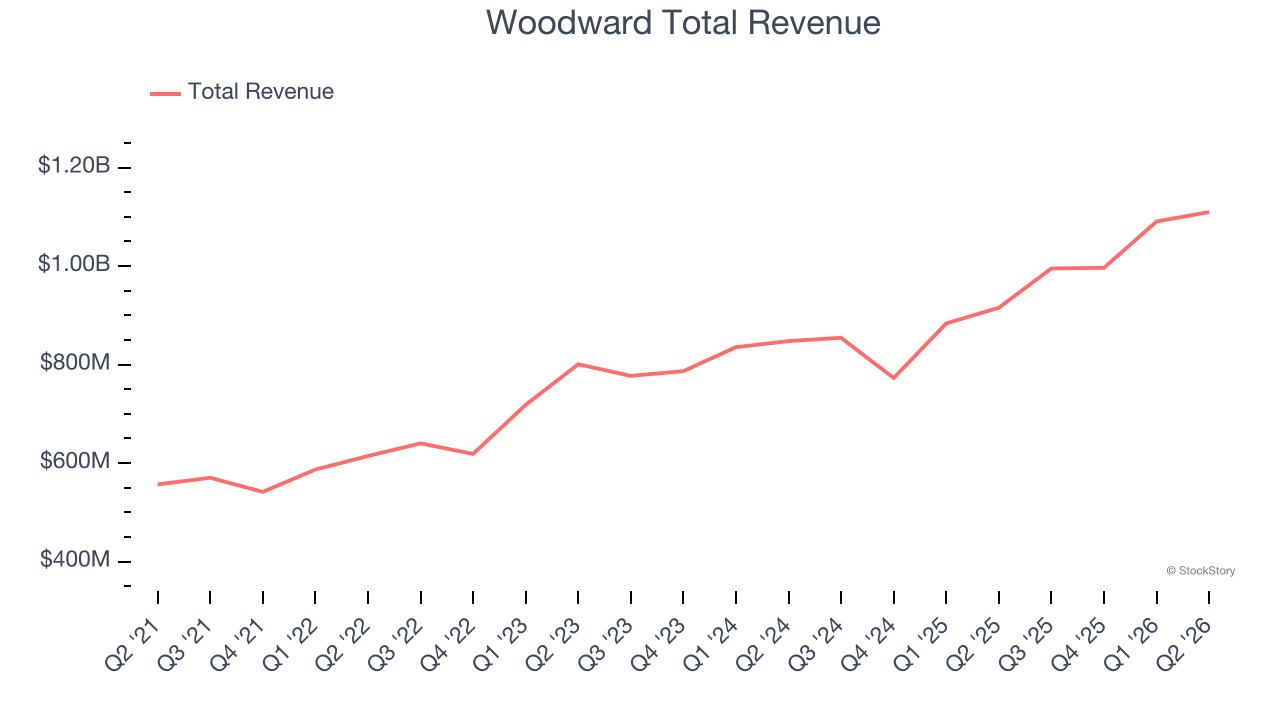
Investor expectations, however, were likely higher than Wall Street’s published projections, leaving some wishing for even better results (analysts’ consensus estimates are those published by big banks and advisory firms, not the investors who make buy and sell decisions). The stock is down 6.6% since reporting and currently trades at $359.89.
Read why we think that Woodward is one of the best aerospace stocks, our full report is free.
Best Q2: Astronics (NASDAQ:ATRO)
Integrating power outlets into many Boeing aircraft, Astronics (NASDAQ:ATRO) is a provider of technologies and services to the global aerospace, defense, and electronics industries.
Astronics reported revenues of $260 million, up 27% year on year, outperforming analysts’ expectations by 6%. The business had a stunning quarter with a solid beat of analysts’ EBITDA estimates and full-year revenue guidance exceeding analysts’ expectations.
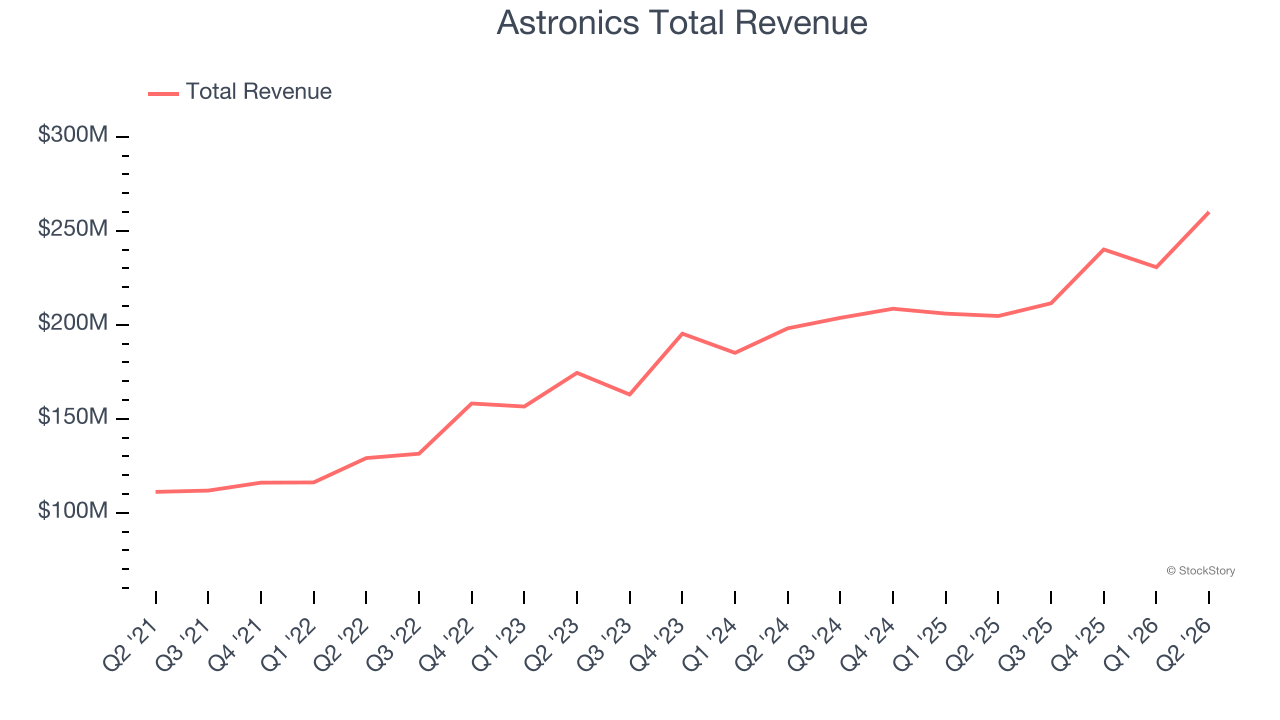
Astronics scored the highest full-year guidance raise of the whole group. The market seems happy with the results as the stock is up 9.5% since reporting. It currently trades at $82.00.
Is now the time to buy Astronics? Access our full analysis of the earnings results here, it’s free.
Weakest Q2: AerSale (NASDAQ:ASLE)
Providing a one-stop shop that integrates multiple services and product offerings, AerSale (NASDAQ:ASLE) delivers full-service support to mid-life commercial aircraft.
AerSale reported revenues of $70.93 million, down 33.9% year on year, falling short of analysts’ expectations by 12.7%. It was a disappointing quarter as it posted a significant miss of analysts’ EBITDA and EPS estimates.
AerSale delivered the weakest performance against analyst estimates and slowest revenue growth among its peers. As expected, the stock is down 8.4% since the results and currently trades at $5.77.
Read our full analysis of AerSale’s results here.
Redwire (NYSE:RDW)
Based in Jacksonville, Florida, Redwire (NYSE:RDW) is a provider of systems and components used in space infrastructure.
Redwire reported revenues of $117.1 million, up 89.6% year on year. This print topped analysts’ expectations by 8.7%. It was a strong quarter as it also produced a solid beat of analysts’ EBITDA estimates and full-year revenue guidance slightly topping analysts’ expectations.
Redwire scored the biggest analyst estimate beat and fastest revenue growth in the group. The stock is up 16.2% since reporting and currently trades at $12.46.
Read our full, actionable report on Redwire here, it’s free.
Hexcel (NYSE:HXL)
Founded shortly after World War II by a group of engineers from UC Berkley, Hexcel (NYSE:HXL) manufactures lightweight composite materials primarily for the aerospace and defense sectors.
Hexcel reported revenues of $529.3 million, up 8% year on year. This result was in line with analysts’ expectations. Overall, it was a strong quarter as it also recorded full-year EPS guidance exceeding analysts’ expectations and a beat of analysts’ EPS estimates.
Hexcel had the weakest full-year guidance update of the whole group. The stock is down 5.3% since reporting and currently trades at $100.01.
Read our full, actionable report on Hexcel here, it’s free.
Market Update
Over the past year, investors have been forced to repeatedly answer the same question: what is the market’s biggest risk? The answer has changed several times, and each shift has reshaped market leadership.
Late in 2025 and early 2026, artificial intelligence became the market’s primary uncertainty. Investors questioned whether AI would erode software pricing power and weaken competitive moats as AI made it easier to replicate once-differentiated products.
By the spring, technology took a back seat to geopolitics. The U.S. conflict with Iran briefly became the market’s dominant narrative, raising concerns about oil prices, inflation, and global growth. But as energy markets remained orderly and fears of a prolonged supply disruption faded, investors quickly turned their focus back to fundamentals.
Want to invest in winners with rock-solid fundamentals? Check out our Hidden Gem Stocks and add them to your watchlist. These companies are poised for growth regardless of the political or macroeconomic climate.