
Preparing for a joint intervention? Foreign exchange officials from South Korea and Japan “meet” to discuss strengthening bilateral cooperation
The Zhitong Finance App learned that top foreign exchange officials from South Korea and Japan held talks in Tokyo on Friday to discuss ways to strengthen bilateral cooperation. According to a statement issued by South Korea's finance department, South Korea's Deputy Minister of Finance Moon Jisung (Moon Jisung) held talks with Japan's Deputy Minister of Finance Atsushi Mimura (Atsushi Mimura). The statement said that the two sides exchanged views on recent developments in the global economy and financial markets and explained their respective policy responses. The two sides also exchanged positions on issues facing multilateral mechanisms such as ASEAN+3 (ASEAN+3) and the Group of Twenty (G20), and discussed the 11th Korea-Japan Finance Ministers Meeting. The conference will be hosted by Korea. The two sides stated that they will continue to maintain close ties at the working level and at the senior level.
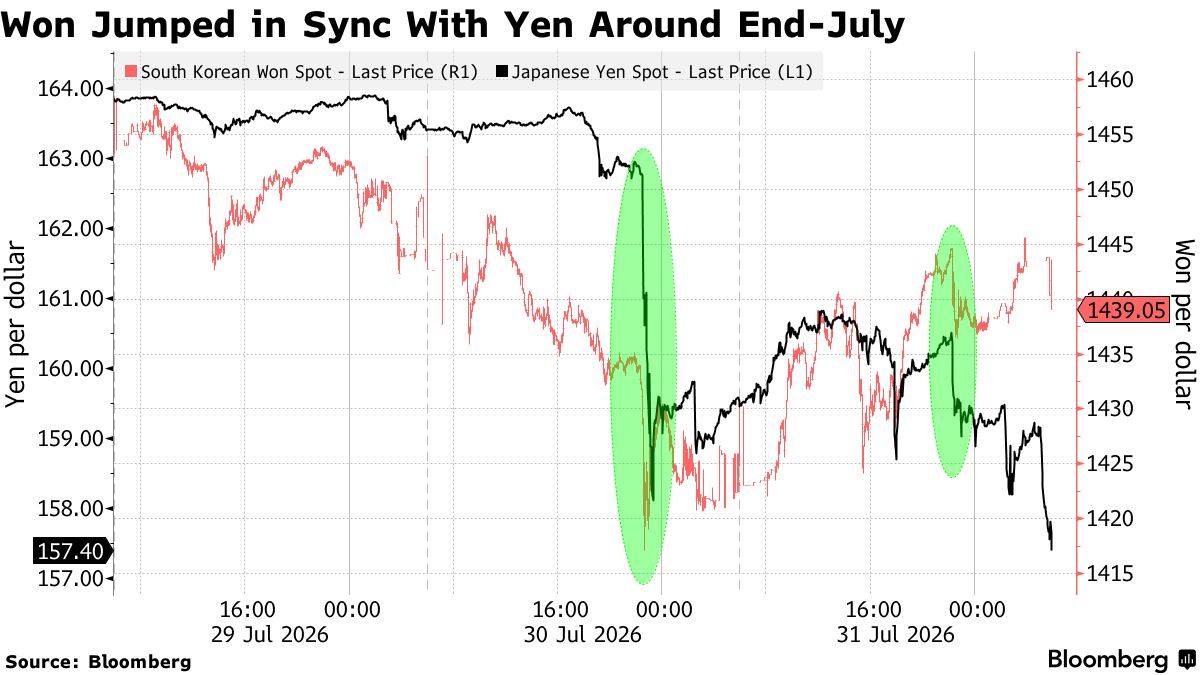
The talks are the first time since the July 31 operation that South Korea and Japan have had high-level bilateral contacts. Just three weeks ago, the US and Japan made a rare coordinated intervention in the foreign exchange market, triggering sharp fluctuations in the regional currency market and helping strengthen the Korean won and yen. Moon Ji-sung said on July 31 that the foreign exchange authorities of the US, South Korea and Japan maintain close ties. Although Moon Ji-sung declined to confirm whether South Korea also intervened, the media quoted an unnamed market source as reporting that the South Korean authorities sold dollars.
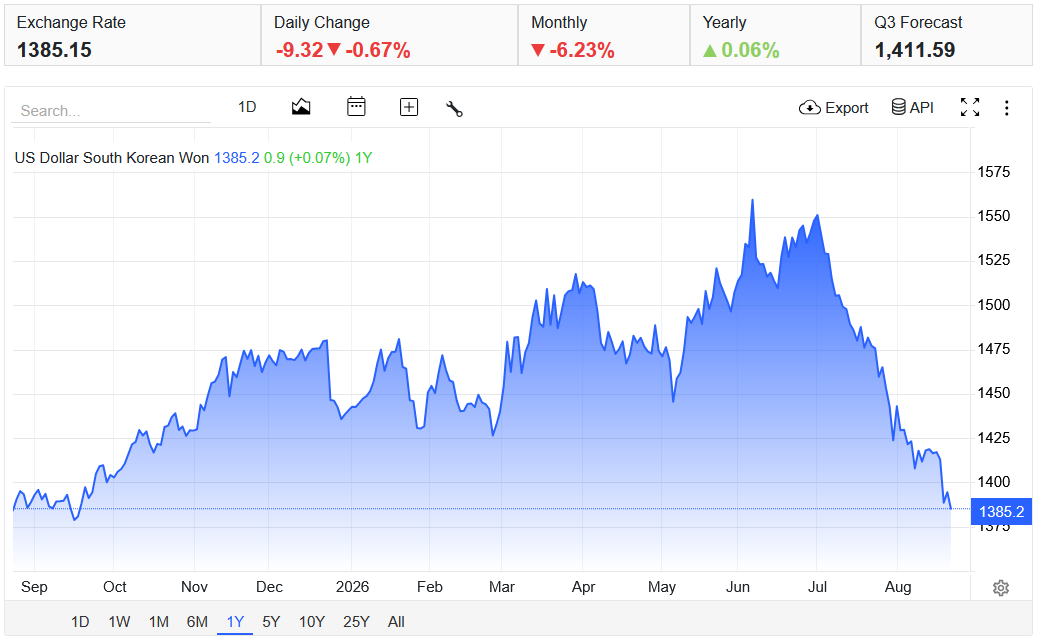
It is worth mentioning that although the trend of yen and won was the same for two days after the intervention at the end of July, the two currencies began to go their separate ways since then. As of press release, the exchange rate of the yen against the US dollar was reported at 158.6 yen per dollar, which has taken back some of the gains driven by intervention. Interest spreads between the US and Japan, and concerns about Japan's fiscal outlook continue to put pressure on the yen. The exchange rate of the won against the US dollar continued to strengthen. This week, for the first time in more than 10 months, it broke through the key mark of 1,400 won per US dollar. As of press time, it was 1385.15 won per dollar, rising to the highest level in 11 months.
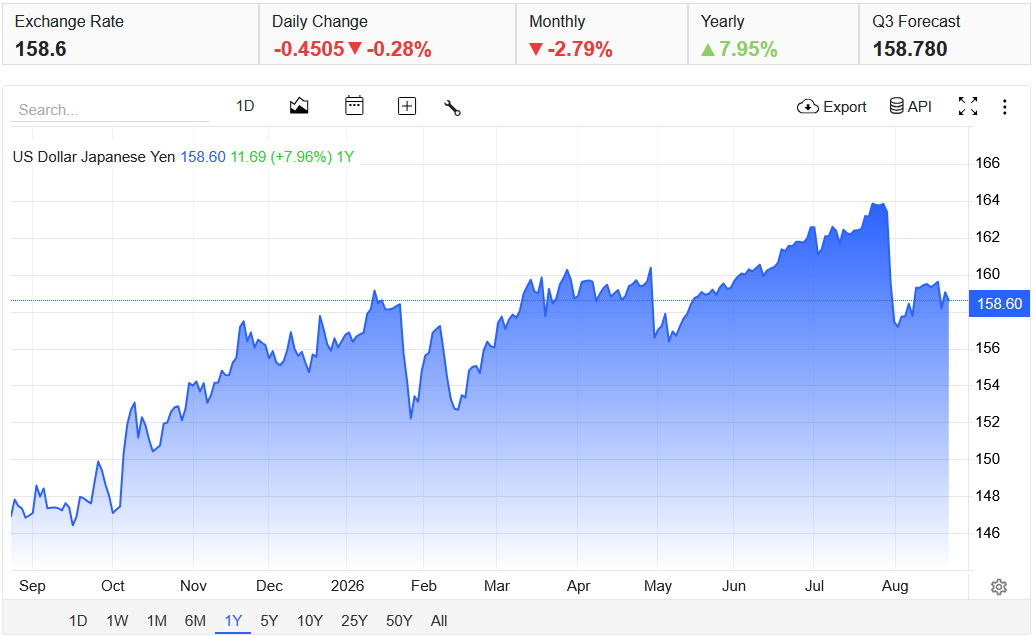
As the yen approaches the important mark of 1 dollar to 160 yen, the next trend of the yen will also be affected by the Bank of Japan's policy actions, in addition to potential intervention and concerns about the Japanese government's fiscal outlook.
Many speculators believe that the Bank of Japan is under pressure to raise interest rates in order to cooperate with the government's intervention in the foreign exchange market. According to previous reports, the Japanese government has reached a consensus with the central bank that “it is necessary to raise interest rates in the near future.” If the yen continues to weaken and the increase in inflation prompts the Bank of Japan to speed up action, the yen may receive stronger support. The overnight swap index (OIS) market pricing shows that when the Bank of Japan announced its interest rate decision in September, the probability of raising interest rates was about 80%.
Meanwhile, the unprecedented shareholder return plans of South Korea's two largest memory chip giants are gradually becoming a key factor affecting the trend of the won. If the two companies raise capital through the local currency market to support their shareholder return plans, the won may be able to continue its recent gains.
SK Hynix (SKHY.US) announced on Wednesday that it will repurchase and cancel 40 trillion won (US$28.6 billion) worth of shares and use more than 50% of the free cash flow generated between 2025 and 2027 to increase shareholder returns. Also, according to people familiar with the matter, SK Hynix has reached an agreement in a preliminary salary agreement. It plans to distribute 60% of this year's employee bonuses in the form of company shares, while the remaining 40% will be paid in cash. Furthermore, the board of directors of Samsung Electronics held a meeting today and approved the 2026 shareholder return plan. The total amount is estimated to be approximately 90 trillion won to 110 trillion won.
Investors are paying attention to how much demand will be brought to the won by SK Hynix and Samsung Electronics' shareholder return plans, and how much capital will eventually be remitted to Korea by overseas shareholders. Citigroup estimates that if overseas stock investors remit funds back to their home countries, about half of the funds in these shareholder return plans may be converted back into US dollars. However, Citigroup Korea's chief economist Kim Jin-wook wrote in a report that these shareholder return plans should still constitute a net benefit for the won as a whole, because these companies will need to exchange more export revenue for the won. He added that strong exports, dollar financing, and active currency exchange and hedging operations by the private sector all form factors supporting the appreciation of the Korean won.