
Meridian Energy (NZSE:MEL) Reports Stronger July Generation, Is The Stock Overvalued?
Meridian Energy (NZSE:MEL) drew fresh investor attention after reporting July 2026 generation volumes of 1,371 GWh, compared with 1,157 GWh a year earlier. This operational update has coincided with recent share price moves.
See our latest analysis for Meridian Energy.
Meridian Energy’s recent 1 day share price return of 0.90% comes after the July generation update and the appointment of Fraser Whineray as a new non executive director. The 5 year total shareholder return of 34.65% points to steadier long term momentum.
If this kind of infrastructure and energy theme interests you, it can be useful to see what else is on the move in the sector through a dedicated screener such as 39 power grid technology and infrastructure stocks
For Meridian Energy, recent gains sit between stronger July output and a new board appointment on one side, and shorter term sentiment swings on the other. How does the current valuation reflect that mix?
Preferred Price-to-Sales Multiple of 3.2x for Meridian Energy: Is it justified?
On the latest data, Meridian Energy is trading on a P/S ratio of 3.2x, which the model flags as expensive relative to both peers and an internally assessed fair level.
The P/S ratio compares the company’s market value to its revenue and is often used for utilities and renewable generators when earnings are volatile or currently negative. For Meridian Energy, this helps investors relate the NZ$14.8b market value to its reported NZ$4,588m of revenue, even though the company is currently loss making.
According to the assessment, the current 3.2x P/S is higher than the peer average of 2.8x and also above the estimated fair P/S level of 2.7x. That indicates the market price reflects stronger revenue quality or future revenue performance than what these comparison points would indicate, and it highlights a gap that could narrow if sentiment or fundamentals shift.
At a global level, Meridian Energy is also described as expensive relative to the wider Renewable Energy group, where the average P/S is 2.5x. This adds another layer of comparison that points to a richer valuation than both local and global peers, as well as above the level that regression based fair value work suggests the market could move towards over time.
Explore the SWS fair ratio for Meridian Energy
Result: Price-to-sales ratio of 3.2x (OVERVALUED)
However, Meridian Energy also carries risk, including recent annual revenue contraction and a current net loss of NZ$104m, which could pressure sentiment if it persists.
Find out about the key risks to this Meridian Energy narrative.
Another View on Meridian Energy’s Valuation
While the P/S ratio suggests Meridian Energy is expensive, the SWS DCF model points the other way. It values the shares at NZ$10.01, compared with the current NZ$5.60 price, which implies the stock trades at a large discount. Which signal should carry more weight for you right now?
Look into how the SWS DCF model arrives at its fair value.
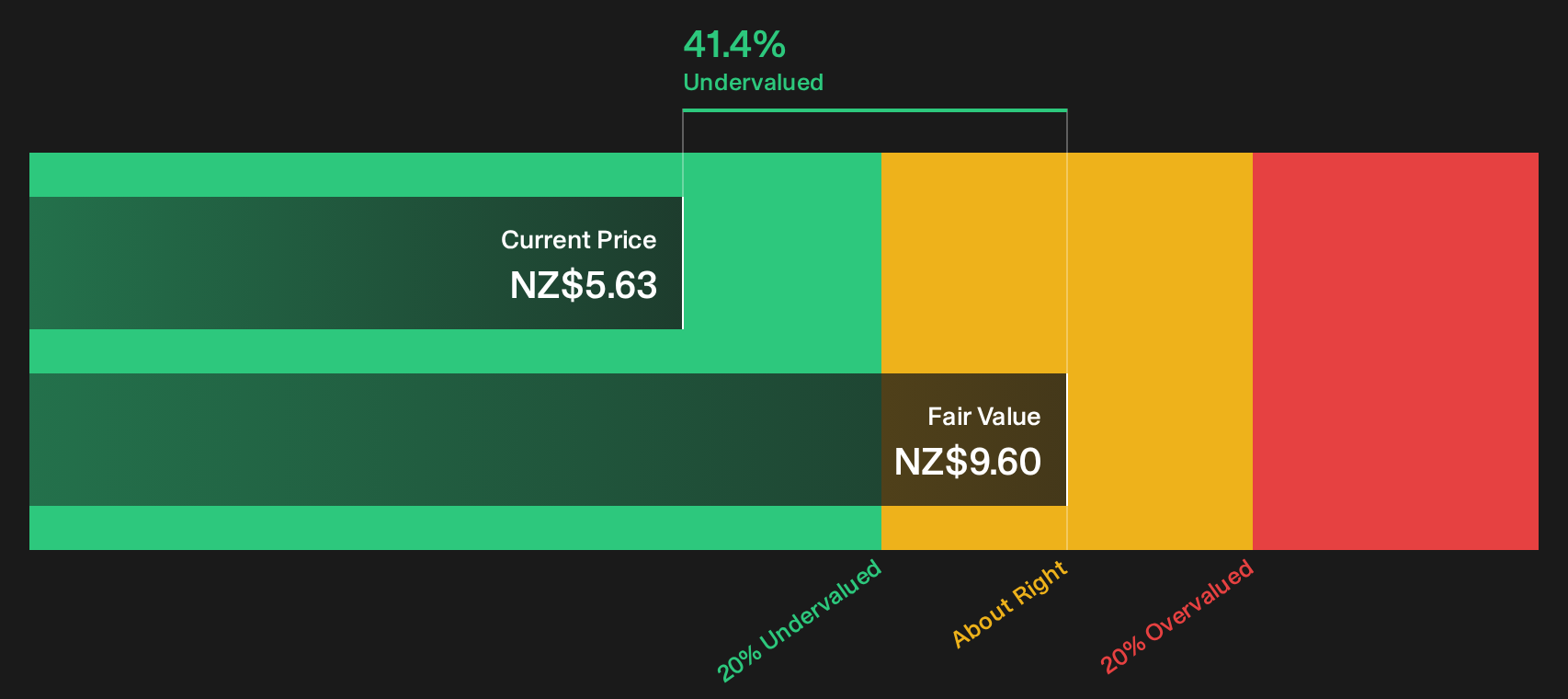
Simply Wall St performs a discounted cash flow (DCF) on every stock in the world every day (check out Meridian Energy for example). We show the entire calculation in full. You can track the result in your watchlist or portfolio and be alerted when this changes, or use our stock screener to discover 267 high quality undervalued stocks. If you save a screener we even alert you when new companies match - so you never miss a potential opportunity.
Next Steps
With mixed signals around Meridian Energy’s valuation and outlook, it helps to move quickly, review the underlying data, and decide what matters most to you. To weigh both the positives and the risks side by side, start with 2 key rewards and 1 important warning sign.
Looking for more investment ideas beyond Meridian Energy?
If Meridian Energy has sharpened your focus on opportunities, do not stop here. Broader ideas from other sectors can help balance risk, income, and growth potential.
- Target potential mispricing by reviewing companies highlighted in the 267 high quality undervalued stocks.
- Strengthen income potential by scanning stocks featured in the 423 dividend fortresses.
- Dial back risk while staying invested by checking companies within the 295 resilient stocks with low risk scores.
This article by Simply Wall St is general in nature. We provide commentary based on historical data and analyst forecasts only using an unbiased methodology and our articles are not intended to be financial advice. It does not constitute a recommendation to buy or sell any stock, and does not take account of your objectives, or your financial situation. We aim to bring you long-term focused analysis driven by fundamental data. Note that our analysis may not factor in the latest price-sensitive company announcements or qualitative material. Simply Wall St has no position in any stocks mentioned.
Have feedback on this article? Concerned about the content? Get in touch with us directly. Alternatively, email editorial-team@simplywallst.com