
Coupang (CPNG) Stock May Trade At A Discount As Q2 Losses Persist
Coupang stock presents a valuation puzzle for investors, with the share price down about 45.1% over the past five years while both the Discounted Cash Flow (DCF) intrinsic value estimate and market-based multiples currently point to the shares trading at a discount.
- Coupang has declined around 45.1% over five years, which means long-term holders have seen significant value erode even as the current checks now suggest the stock screens as cheap.
- The recent focus on expanding newer offerings and international operations can support future cash generation, but ongoing operating losses and integration costs may keep pressure on margins and delay when that cash shows up for shareholders.
- The company scores 5 out of 6 on the valuation checks, so the broader assessment leans toward Coupang being undervalued on the current fundamentals.
For investors, the debate is whether Coupang's discounted valuation properly reflects its current losses and execution risks or whether the market is underpricing its potential cash flow recovery.
Find out why Coupang's -42.8% return over the last year is lagging behind its peers.
Is Coupang a Bargain on Cash Flow?
The Discounted Cash Flow (DCF) model for Coupang uses its cash flow projections to estimate what the stock could be worth today. Based on the latest twelve month numbers, Coupang generated free cash flow of about $241.7 million, and the model assumes these cash flows continue growing rather than shrinking.
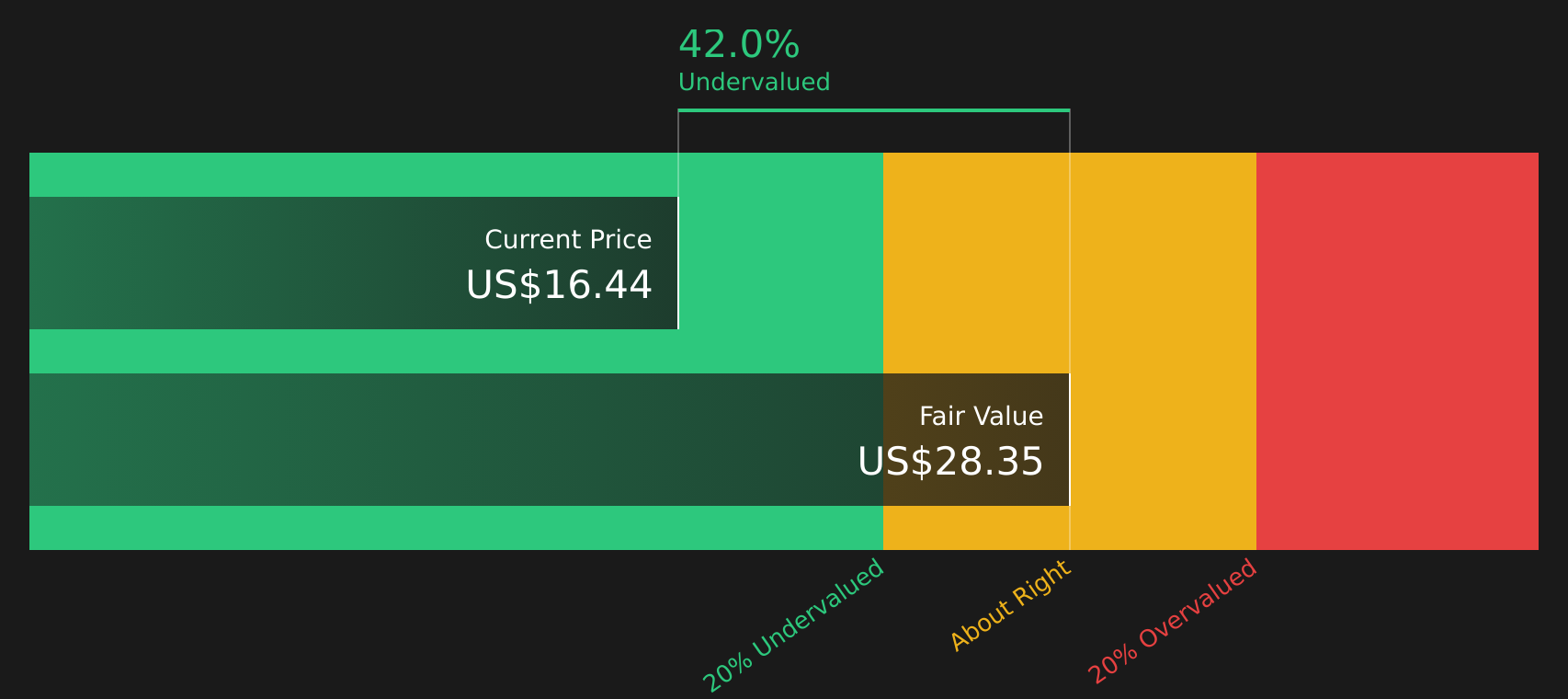
On that basis, the 2 Stage Free Cash Flow to Equity model points to an intrinsic value of about $28.40 per share. This implies the stock screens around 42.1% undervalued relative to the current market price. Coupang’s recent report of revenue growth alongside ongoing operating losses helps explain why the market keeps a discount in place, even though the cash flow outlook in the model is more optimistic than the income statement would suggest.
Overall, the DCF workup indicates that Coupang stock may currently appear undervalued compared with the cash flows analysts expect it to generate.
Our Discounted Cash Flow (DCF) analysis suggests Coupang is undervalued by 42.1%. Track this in your watchlist or portfolio, or discover 48 more high quality undervalued stocks.
Does Coupang Look Undervalued on Sales?
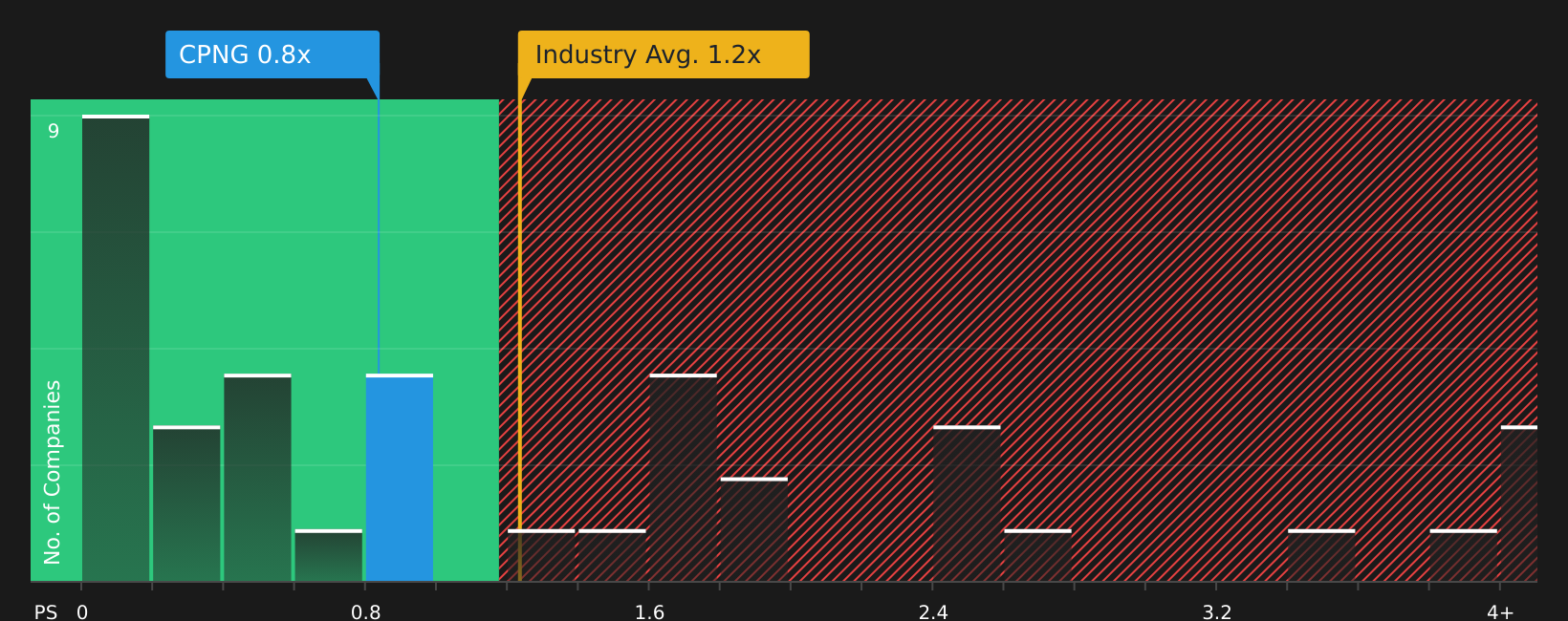
P/S works reasonably well for Coupang because investors often focus on revenue-based metrics while the company is still reporting operating losses. On this basis, Coupang trades on a P/S ratio of about 0.8x, compared with an industry average of roughly 1.2x and a peer group average near 2.0x.
The fair P/S multiple implied by the model is about 1.3x, which is higher than where Coupang is currently priced. That gap suggests the market is assigning a discount to the stock relative to what might be expected given its size, margins and risk profile, even after accounting for ongoing losses in newer offerings and international expansion.
Overall, Coupang stock appears undervalued on the P/S multiple when set against both industry benchmarks and the modelled fair ratio.
See what the numbers say about this price — find out in our valuation breakdown.
The Coupang Narrative: What Would Justify Today's Price?
Simply Wall St Narratives pick up where this Coupang valuation puzzle leaves off by spelling out what growth, margin and earnings paths would need to hold for the stock to be worth materially more or less than today’s price. They sit on the company’s Community page. Each Narrative ties a specific fair value estimate to a clear story about Coupang's potential catalysts and risks, so you can see over time which version appears closer to reality.
Community views on Coupang sit far apart, with some investors leaning into the upside story while others focus hard on the risk side of the ledger.
Bull case: 36% undervalued
"Ongoing investments in automation, AI, and logistics technology are already driving major improvements in operational efficiency and gross margins, and management sees significant further upside as these technologies are scaled..."
Read the full Bull Case to see why Coupang could be undervalued
Bear case: 10% overvalued
"Coupang's long-term profitability is threatened by rising labor costs and the demographic challenges in South Korea, such as a shrinking workforce, which will significantly elevate operating expenses and strain last-mile logistics, leading to compressed net margins regardless of near-term gains in automation or process improvements..."
Read the full Bear Case to see why Coupang could be overvalued
Do you think there's more to the story for Coupang? Head over to our Community to see what others are saying!
The Bottom Line
Coupang screens as undervalued on both the Discounted Cash Flow (DCF) intrinsic value estimate and on sales based multiples, which is a rare level of agreement between frameworks. That discount only closes if the company can turn its revenue base into more consistent free cash flow while absorbing the costs of newer offerings and international expansion. The key question for investors is whether current losses and execution risks are temporary growing pains or a more persistent drag that keeps the stock cheap for an extended period.
This article by Simply Wall St is general in nature. We provide commentary based on historical data and analyst forecasts only using an unbiased methodology and our articles are not intended to be financial advice. It does not constitute a recommendation to buy or sell any stock, and does not take account of your objectives, or your financial situation. We aim to bring you long-term focused analysis driven by fundamental data. Note that our analysis may not factor in the latest price-sensitive company announcements or qualitative material. Simply Wall St has no position in any stocks mentioned.
Have feedback on this article? Concerned about the content? Get in touch with us directly. Alternatively, email editorial-team@simplywallst.com