
Tesla Stock Leads 3 Founder Led AI Infrastructure Picks Investors Should Watch
Energy markets are on edge as the Middle East conflict and Strait of Hormuz risks keep oil prices and inflation expectations in focus. That environment puts a spotlight on leadership quality because policy missteps and cost pressures can quickly hit weaker companies. Founder-led businesses often show higher commitment to long-term decisions. This article highlights three founder-led stocks from the screener that investors may want on their radar now.
The three founder-led stocks below are only a small sample of what this idea can cover, and the full screen surfaced 344 more companies with equally compelling founder stories that are not included here.
To go further, head straight into the Founder-Led Companies screener to identify, filter and analyze the founder-led companies that best match your own conviction and risk profile.
Tesla (TSLA)
Overview: Tesla is a founder-led company where Elon Musk’s role as CEO and controlling shareholder shapes everything from its core electric vehicle business to Autopilot and energy products like Powerwall and Megapack, with automotive still providing the bulk of revenue. The company designs, builds and sells EVs, charging infrastructure and energy storage systems, and also develops in-house AI and self-driving software that aim to turn today’s car buyers into long term software and services users.
Operations: Tesla generates about US$90.8b from Automotive and US$12.8b from Energy Generation and Storage, with revenue of US$49.4b from the United States, US$21.2b from China and US$33.0b from other international markets.
Market Cap: US$1.38t
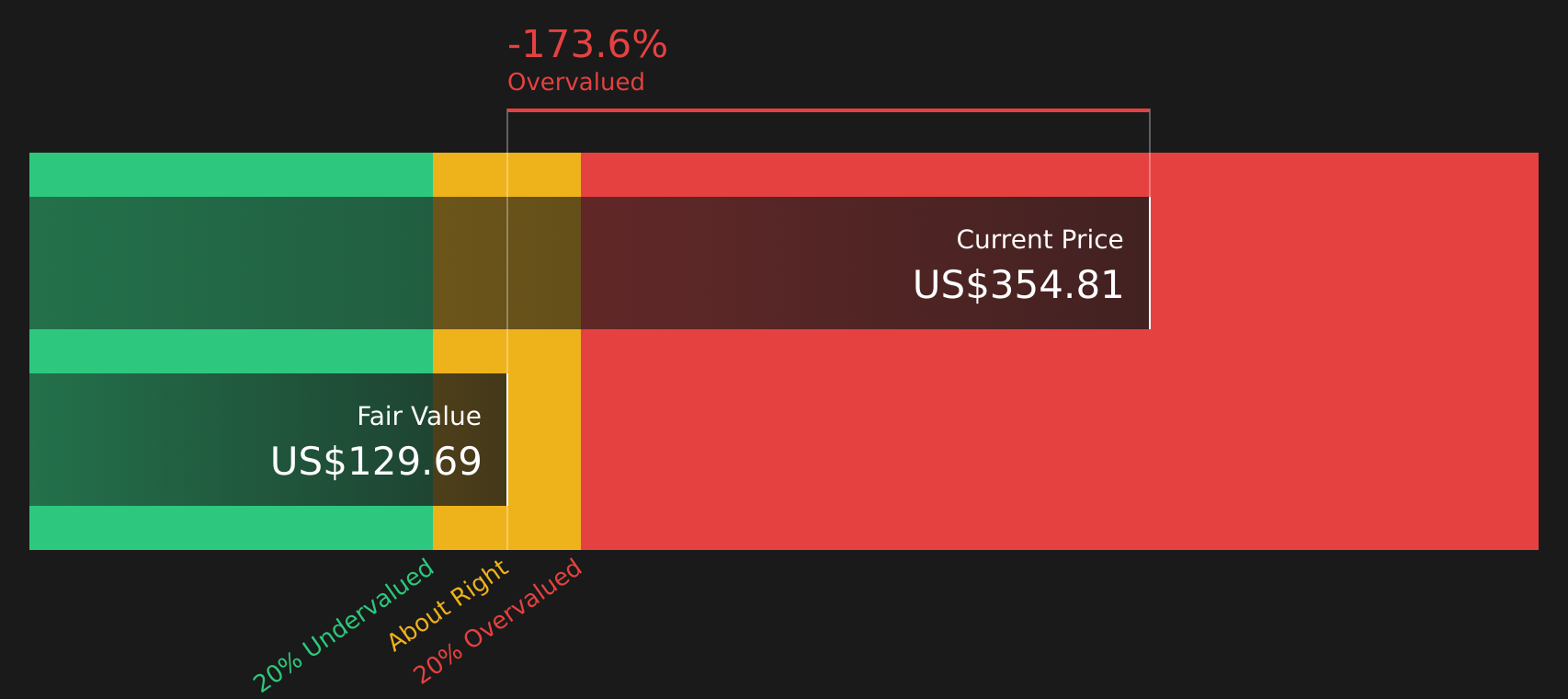
Tesla draws investor attention because it compresses the promise and the risk of founder-led investing into one stock. Elon Musk’s direct influence is visible in the push into Full Self Driving, robotaxis and the Optimus humanoid robot, as well as the huge Terafab chip project that aims to supply AI hardware for Tesla’s own products. Expectations of higher future return on equity reflect confidence in that vision, even though current margins are only 3.7% and have come under pressure. The valuation already prices in a lot of success and the balance sheet relies fully on external liabilities, so the question is how much belief you place in Musk’s ability to turn these ambitious bets into durable cash flows.
Tesla’s large investments in Full Self Driving, robotaxis and AI chips raise a key question: How does the current price compare with those ambitions? Get the DCF valuation analysis for Tesla to see what the market might be missing.
Klarna Group (KLAR)
Overview: Klarna Group is a founder-led digital bank and payments company that lets shoppers pay now, pay later or spread purchases over time, while merchants use its checkout and advertising tools to convert more sales. Co founder and CEO Sebastian Siemiatkowski still drives the roadmap, so the core buy now pay later and banking products that generate most revenue are closely tied to his long term vision. Extras like shopping search, cashback and memberships are built around that lending engine rather than replacing it.
Operations: Klarna Group generates US$4.0b from data processing and related services, with revenue of US$1.5b from the United States, US$921 million from Germany, US$479 million from the United Kingdom and US$1.1b from other countries.
Market Cap: US$5.4b
Investors looking at founder-led companies may find Klarna Group interesting because the core buy now pay later lending model is still shaped directly by co founder Sebastian Siemiatkowski, yet the platform now stretches into digital banking, shopping assistance and high profile partnerships with Apple and J.P. Morgan. Revenue growth tied to that pay later engine is forecast above broad market rates, while losses are shrinking and earnings are projected to improve as the business scales. At the same time, 100% reliance on external borrowings for funding, upcoming CFO and CMO departures and lower guidance for 2026 show how execution risk and funding costs can test a founder’s plan. That mix of aligned leadership, growth potential and real balance sheet questions is exactly what makes Klarna worth a closer look.
Klarna Group’s buy now pay later engine is scaling beyond pure lending, yet the real story sits in how that growth links to future profitability. Get the forward looking analyst forecasts for Klarna Group before one key funding twist changes the picture.

Super Micro Computer (SMCI)
Overview: Super Micro Computer builds high performance server and storage systems, with founder and CEO Charles Liang closely steering the move into AI focused, rack scale data center solutions that sit on top of its broader server and storage hardware business. The company sells everything from GPU based AI servers and blade systems to management software and full rack deployment services for enterprise, cloud, AI, 5G and edge customers.
Operations: Super Micro Computer generates about US$39.1b in revenue from developing and providing high performance server solutions.
Market Cap: US$24.9b
Super Micro Computer may appeal to founder focused investors because Charles Liang still drives product direction at a time when AI data center build outs are generating a record order backlog, and partnerships with companies such as Cisco and NVIDIA are broadening its reach. The same leadership approach that produced liquid cooled racks and Data Center Building Block Solutions also brings risks, including dependence on a handful of large customers, price pressure in commodity hardware, and ongoing regulatory scrutiny around export controls. For investors evaluating a founder who is closely tied to a concentrated focus on AI infrastructure, Super Micro combines notable demand indicators with execution and governance considerations that may warrant deeper research.
Super Micro Computer’s AI server momentum is hard to ignore. The real question is how concentrated customers and export rules shape the road ahead. Review the 4 key rewards and 2 important warning signs (2 are major!) to see what could shift this story next.

Seeking Alternatives Before Momentum Flies Past
Fresh stock ideas can move from quiet to breakout faster than most investors react. Use curated screeners while the data is still under the radar for now, act now.
- Spot potential turnaround stories with strong financials early by scanning the 51 high quality undervalued stocks before renewed momentum gets fully caught in the wider market.
- Ride structural demand for critical materials by tracking the 9 top copper producer stocks while these producers are still priced before the crowd connects the dots.
- Target companies building the backbone of AI growth by reviewing the 55 AI infrastructure stocks while the strongest operators are still dropping fresh clues in their numbers.
This article by Simply Wall St is general in nature. We provide commentary based on historical data and analyst forecasts only using an unbiased methodology and our articles are not intended to be financial advice. It does not constitute a recommendation to buy or sell any stock, and does not take account of your objectives, or your financial situation. We aim to bring you long-term focused analysis driven by fundamental data. Note that our analysis may not factor in the latest price-sensitive company announcements or qualitative material. Simply Wall St has no position in any stocks mentioned.
Have feedback on this article? Concerned about the content? Get in touch with us directly. Alternatively, email editorial-team@simplywallst.com