
UDR (UDR) Looks Undervalued On One Narrative, Is The Premium P E Multiple A Warning?
UDR (UDR) shares recently closed at US$37.93, with the stock mixed over recent periods, up slightly over the past week but down about 3% over the past month and broadly flat over the past 3 months.
Over the year to date, UDR’s share price return of 3.38% suggests only modest positive momentum. The 1-year total shareholder return of 1.64% and 5-year total shareholder return decline of 16.47% point to a mixed longer term experience for investors.
Compare UDR’s recent performance with a curated group of income-focused real estate stocks in the 11 dividend fortresses for ideas that balance yield with resilience.
That kind of flat but uneven share price record can point to fundamentals lagging sentiment, or sentiment lagging the underlying business. To judge which better fits UDR, the next step is to look at valuation.
Most Popular Narrative: 10.4% Undervalued
On the most followed narrative, UDR’s fair value of $42.33 sits above the recent $37.93 close, which puts the focus firmly on the assumptions behind that gap.
Analysts are assuming UDR's revenue will grow by 1.4% annually over the next 3 years. Analysts assume that profit margins will shrink from 29.3% today to 9.6% in 3 years time.
Read the complete narrative. Read the complete narrative.
Want to see how UDR can screen as undervalued while earnings are projected to contract and margins compress? The answer lies in how future cash flows, discount rates and a much richer future earnings multiple are stitched together into that single fair value line.
Result: Fair Value of $42.33 (UNDERVALUED)
Have a read of the narrative in full and understand what's behind the forecasts.
However, the UDR story can shift quickly if elevated new supply in key markets keeps rents under pressure or if fresh regulatory actions further restrict rent growth.
Find out about the key risks to this UDR narrative.
Another View: UDR’s Valuation Through Earnings Multiples
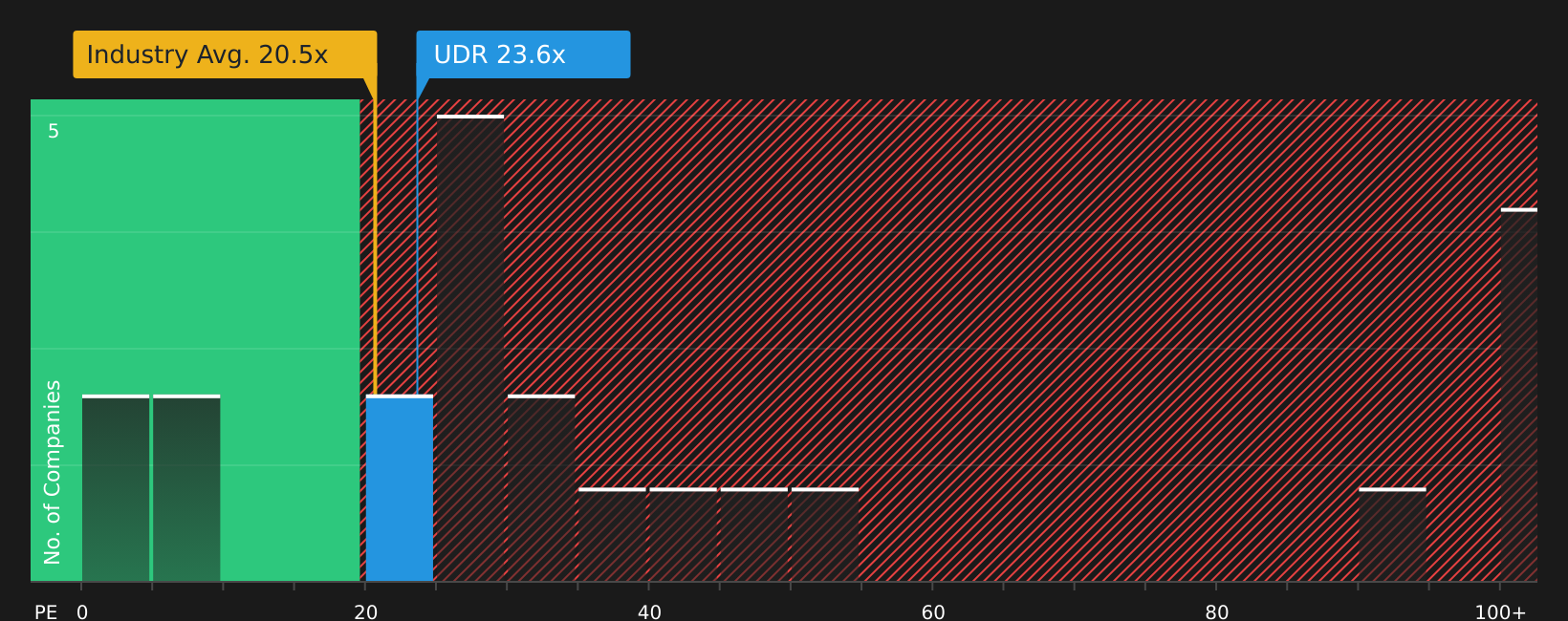
While the SWS model points to UDR trading below fair value, the earnings multiple tells a tighter story. UDR changes hands at a P/E of 23.6x, which is higher than the Global Residential REITs average of 20.6x and above its own fair ratio of 16.8x. That kind of premium can signal optimism that may not leave much room for disappointment.
If the market eventually leans closer to that fair ratio, today’s price could look less comfortable, especially if earnings follow the current analyst forecasts. The question for you is whether UDR has enough support from cash flows, rents and balance sheet strength to justify staying on the higher side of that range.
See what the numbers say about this price — find out in our valuation breakdown.
Next Steps
With mixed signals around UDR’s valuation and outlook, it makes sense to review the full picture and move quickly to form your own view. A good next step is to weigh up the 3 key rewards and 4 important warning signs.
Looking for more investment ideas beyond UDR?
Do not stop with UDR. The next strong addition to your portfolio might be hiding in plain sight, and you will not want to miss it.
- Start with stability by reviewing companies that combine robust finances with prudent leverage through our list of solid balance sheet and fundamentals (51 results).
- Target potential value by focusing on stocks that pair quality fundamentals with attractive pricing in the 51 high quality undervalued stocks.
- Strengthen your income stream by assessing companies that aim to offer higher yields and resilience via the 11 dividend fortresses.
This article by Simply Wall St is general in nature. We provide commentary based on historical data and analyst forecasts only using an unbiased methodology and our articles are not intended to be financial advice. It does not constitute a recommendation to buy or sell any stock, and does not take account of your objectives, or your financial situation. We aim to bring you long-term focused analysis driven by fundamental data. Note that our analysis may not factor in the latest price-sensitive company announcements or qualitative material. Simply Wall St has no position in any stocks mentioned.
Have feedback on this article? Concerned about the content? Get in touch with us directly. Alternatively, email editorial-team@simplywallst.com