
IPO News | Sugar GBS, the core product of the Hong Kong Stock Exchange, has received regulatory approval in 11 other countries and regions
The Zhitong Finance App learned that according to the Hong Kong Stock Exchange's disclosure on August 28, Hangzhou Tangji Medical Technology Co., Ltd. (abbreviation: Tangji Medical) submitted a listing application to the main board of the Hong Kong Stock Exchange, with ICBC International and Caitong International as co-sponsors. As of the last practical date, the company's core product GBS has received regulatory approval in 11 other countries and regions, including Hong Kong, Indonesia, Thailand, Vietnam, Saudi Arabia, Malaysia, Ecuador, Colombia, the Philippines, Singapore and Brazil.
Company profile
According to the prospectus, Tangji Medical is a medical device company headquartered in China that focuses on providing innovative solutions for the treatment and comprehensive management of metabolic diseases. As of the last practical date, the company had (i) a core product, the gastric transit stent system (GBS), a digestive endoscopic duodenal-jejunal bypass cannula (DJBL) device for obesity, and the company is expanding the approved indications for GBS for lower BMI; (ii) two other products and a digital health management platform for which the company has been approved for registration; and (iii) 13 other pipeline products.
By developing the first medical device approved for digestive endoscopic treatment of obesity in China, Tangji Medical has become a pioneer in promoting clinical application in the field of metabolic diseases, providing innovative solutions in the field of metabolic disease treatment, which has different treatment characteristics from drug treatment and invasive weight loss surgery. Looking forward to the future, the company's vision is to use the company's minimally invasive technology to bring clinical benefits to metabolic diseases and benefit patients around the world.
The company's core product, GBS, is a minimally invasive medical device developed to treat obesity. It is a bendable and recyclable cuff that is placed endoscopically to establish an impenetrable barrier between the gastric surplus and the intestinal mucosa of the duodenum and proximal jejunum to reduce nutrient absorption and promote hormone regulation, thereby achieving weight loss. GBS is the world's first commercially approved intestinal interventional medical device to treat obesity, and was approved by the State Drug Administration as a three-class innovative medical device in January 2024, making it the first medical device approved for digestive endoscopic treatment of obesity in China. The device was approved through a special review process for innovative medical devices (green channel), highlighting its novel mechanism of action and important clinical value.
Furthermore, Sugayoshi Healthcare is actively promoting the global expansion of GBS. As of the last practical date, it has also obtained regulatory approval in 11 other countries and regions, including Hong Kong, Indonesia, Thailand, Vietnam, Saudi Arabia, Malaysia, Ecuador, Colombia, the Philippines, Singapore and Brazil. Furthermore, the company is promoting the registration of GBS in other regions (such as the European Union).
Financial data
revenue
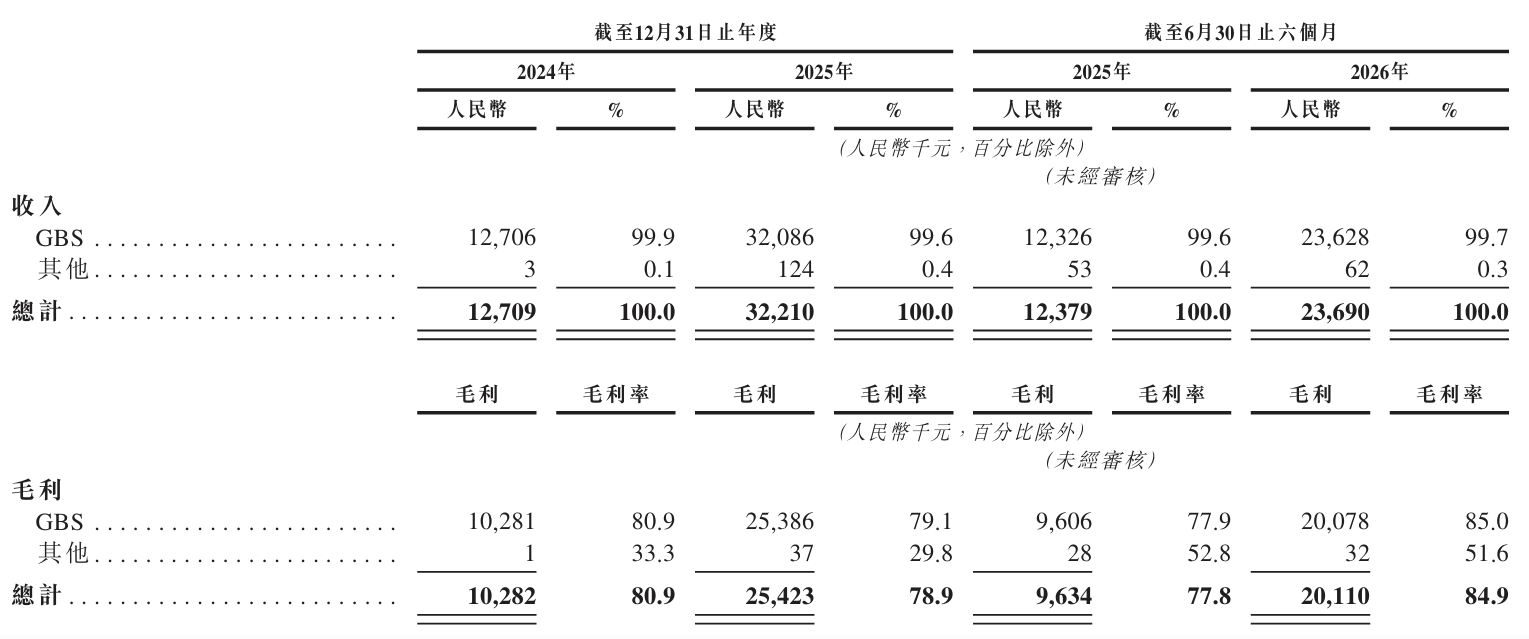
In the six months ended June 30 in 2024, 2025, and 2026, the company achieved revenue of approximately RMB 12.709 million (RMB, same below), RMB 32.21 million, and RMB 23.69 million, respectively.
Gross profit and gross profit margin
For the six months ended June 30 in 2024, 2025, and 2026, the company recorded gross profit of approximately RMB 10.282 million, RMB 25.423 million, and RMB 2011 million, respectively, with corresponding gross margins of 80.9%, 78.9%, and 84.9%, respectively.
Losses during the year/period
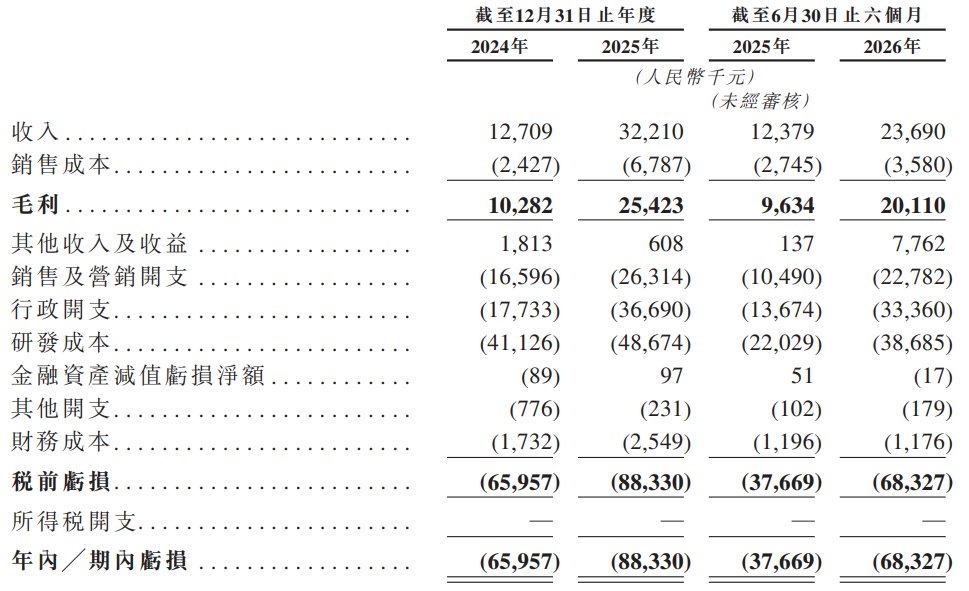
In 2024, 2025, and 2026 for the six months ended June 30, the company recorded losses of approximately 65.957 million yuan, 88.33 million yuan, and 68.327 million yuan for the year/period, respectively.
Industry Overview
EBMT covers a range of minimally invasive gastrointestinal intervention techniques aimed at achieving clinically significant weight loss and metabolic improvement. These procedures are performed entirely through a natural cavity using a flexible endoscopic platform, and no surgical incisions are required. EBMT technology works through mature mechanisms, including gastric volume limitation, gastric emptying delay, regulation of intestinal insulin hormones such as GLP-1 and PYY, altering duodenal nutrient flow, and mucosal metabolic remodeling. Taken together, these pathways reduce caloric intake, improve insulin sensitivity, and enhance metabolic control.
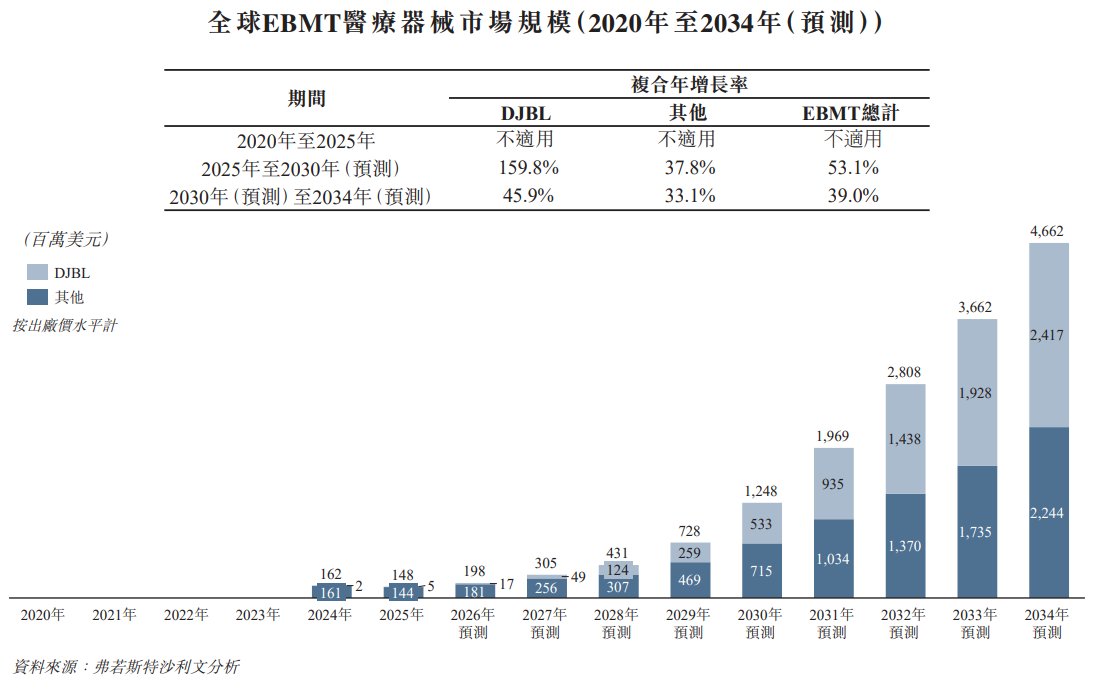
At the factory price level, the global EBMT medical device market (including DJBL and other EBMT devices) is expected to experience a temporary decline from $162 million in 2024 to $148 million in 2025 before entering a phase of rapid growth. The market is expected to expand to around $728 million in 2029, reach approximately $1,248 million in 2030 (forecast), and expand further to around $4,662 million in 2034 (forecast). The total EBMT medical device market is expected to grow at CAGR of 53.1% and 39.0% from 2025 to 2030 (forecast) and 2030 (forecast) to 2034 (forecast), respectively. From 2025 to 2030 (forecast), DJBL and other EBMT devices are expected to grow at CAGR of 159.8% and 37.8% respectively; from 2030 (forecast) to 2034 (forecast), they will grow at CAGR of 45.9% and 33.1%, respectively.
The temporary decline in 2025 mainly reflects the fact that EBMT devices are still in the early stages of commercialization and the short-term effects of evolving obesity treatment paradigms. Specifically, given that GLP-1 weight loss drugs, such as simeglutide and tirpotide, are increasingly widely available, and pricing is optimized, and drug treatment is more convenient than endoscopic intervention and has a high initial acceptance rate, some potential EBMT patients may be diverted to drug treatment in the short term. In addition, several representative global EBMT companies faced revenue pressure and a tightening financing environment in 2025, which led them to implement cost control measures, make channel adjustments, and reduce sales and marketing investments, further slowing down the pace of short-term commercialization. At the same time, although the future treatment path may gradually evolve into a complementary model between drug therapy and EBMT devices (such as initial weight loss with drugs and long-term weight maintenance and improvement of metabolism with device intervention), this combined treatment model is still in the clinical exploration and evidence accumulation stage in 2025, and has not yet been widely used clinically. Looking ahead, the global EBMT medical device market is expected to resume strong growth due to rising prevalence of obesity and metabolic diseases, increased clinical application, accelerated product approval, continued accumulation of evidence and improved outpatient treatment capabilities, and EBMT devices are increasingly recognized as a minimally invasive metabolic intervention that can complement drug treatment and provide alternatives to patients who are unfit or unwilling to undergo weight loss surgery.
The global DJBL medical device market is still in its early stages but is rapidly expanding. At the factory price level, the market size will increase from $1.8 million in 2024 to $4.5 million in 2025, and is expected to expand to $259.3 million in 2029 and $533.1 million in 2030 (forecast). From 2025 to 2030 (forecast), the global DJBL medical device market is expected to grow at a CAGR of 159.8%, reflecting the early launch stage and rapid clinical popularity of DJBL products. The growth momentum is expected to continue from 2030 (forecast) to 2034 (forecast), and the market is expected to reach USD 2,417.5 million in 2034 (forecast), with a CAGR of 45.9% during the period. This increase is expected to be driven by rising prevalence of obesity and type 2 diabetes (T2DM), increased clinical acceptance of endoscopic metabolic therapies, successive implementation of major market regulatory approvals, and the gradual integration of DJBL devices into multidisciplinary obesity and metabolic disease management pathways.
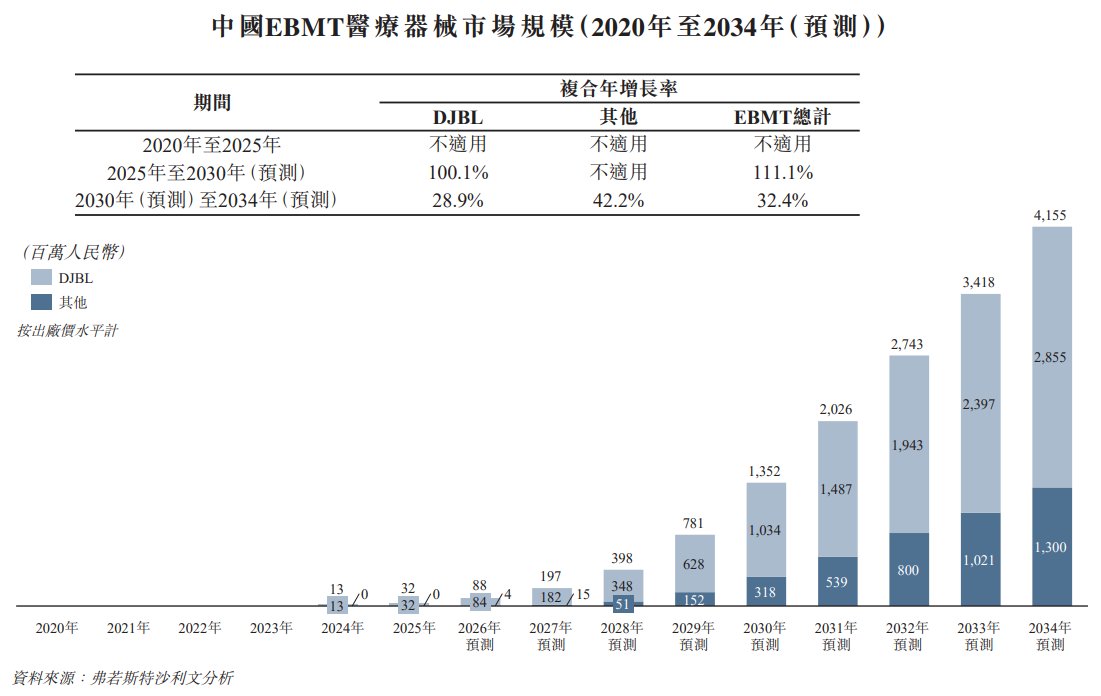
At the factory price level, China's EBMT medical device market (including DJBL and other EBMT devices) is expected to increase from RMB 13 million in 2024 to RMB 32 million in 2025, and then enter a stage of rapid growth. The market is expected to expand to RMB 781 million in 2029, reach RMB 1,352 million in 2030 (forecast), and further expand to RMB 4,155 million in 2034 (forecast). China's total EBMT medical device market is expected to grow at CAGR of 111.1% and 32.4% from 2025 to 2030 (forecast) and 2030 (forecast) to 2034 (forecast), respectively. From 2025 to 2030 (forecast), DJBL and other EBMT devices are expected to grow at a CAGR of 100.1% and not applicable, respectively; from 2030 (forecast) to 2034 (forecast), they are expected to grow at CAGR of 28.9% and 42.2%, respectively.
China's DJBL medical device market is still in its early stages but is rapidly expanding. At the factory price level, the market size will increase from RMB 12.7 million in 2024 to RMB 32.2 million in 2025, and is expected to expand to RMB 628.3 million in 2029 and RMB 1,033.5 million in 2030 (forecast). From 2025 to 2030 (forecast), China's DJBL medical device market is expected to grow at a CAGR of 100.1%, reflecting the early commercialization stage of DJBL products in China and the rapid spread of clinical applications. The growth trend is expected to continue from 2030 (forecast) to 2034 (forecast). The market is expected to reach RMB 2,855.0 million in 2034 (forecast), with a CAGR of 28.9% during the period. This increase is expected to be driven by the rise in the prevalence of obesity and type 2 diabetes (T2DM) in China, increased clinical acceptance of endoscopic metabolic therapy, successive expansion of domestic product approval, improved outpatient endoscopic treatment capabilities, and the gradual integration of DJBL devices into multidisciplinary obesity and metabolic disease management pathways.
Board Information
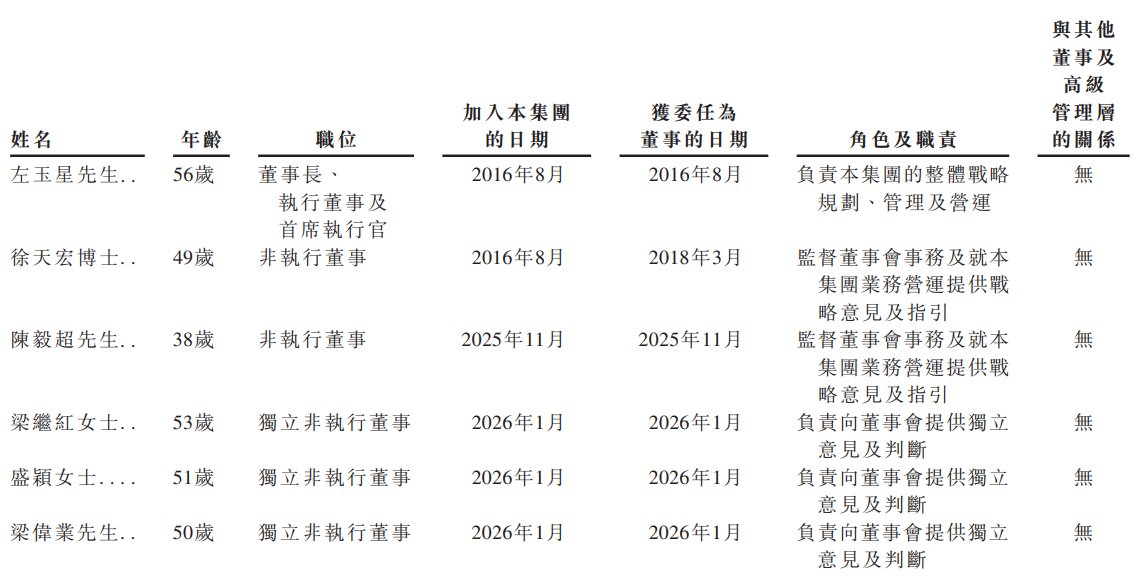
The Board consists of six directors, including one executive director, two non-executive directors and three independent non-executive directors. The term of office of the company's directors is three years, and they can be re-elected.
Shareholding structure
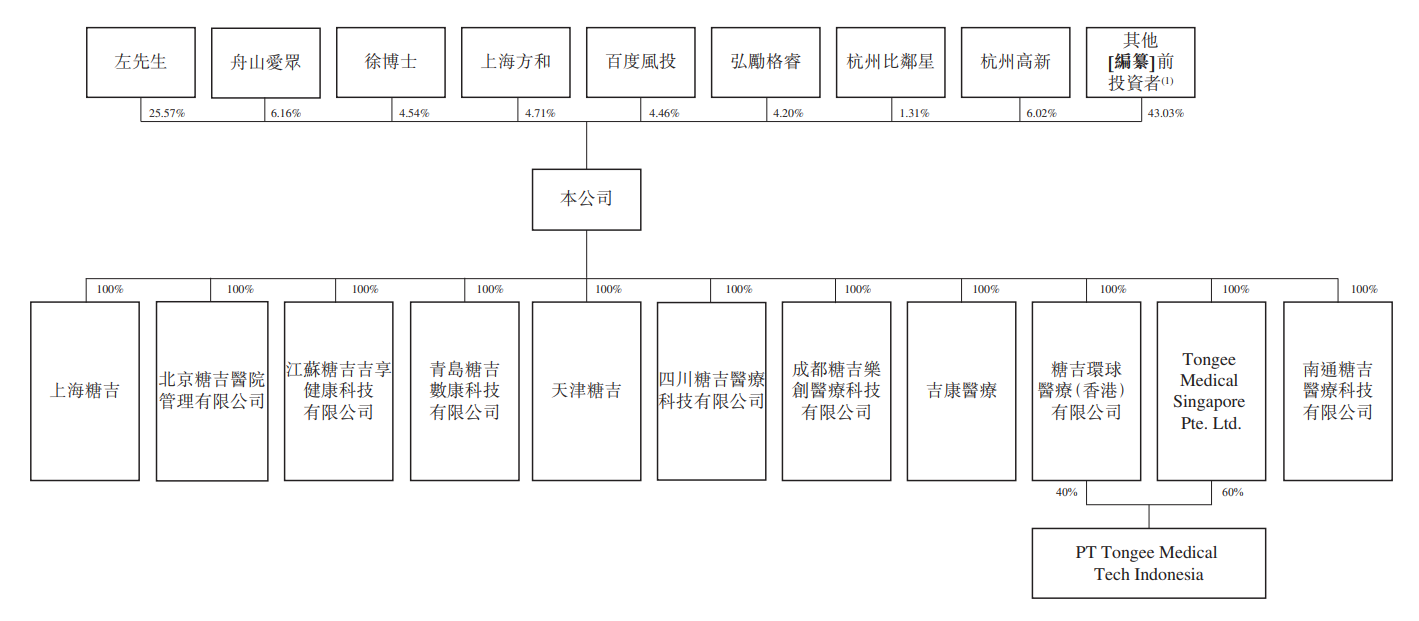
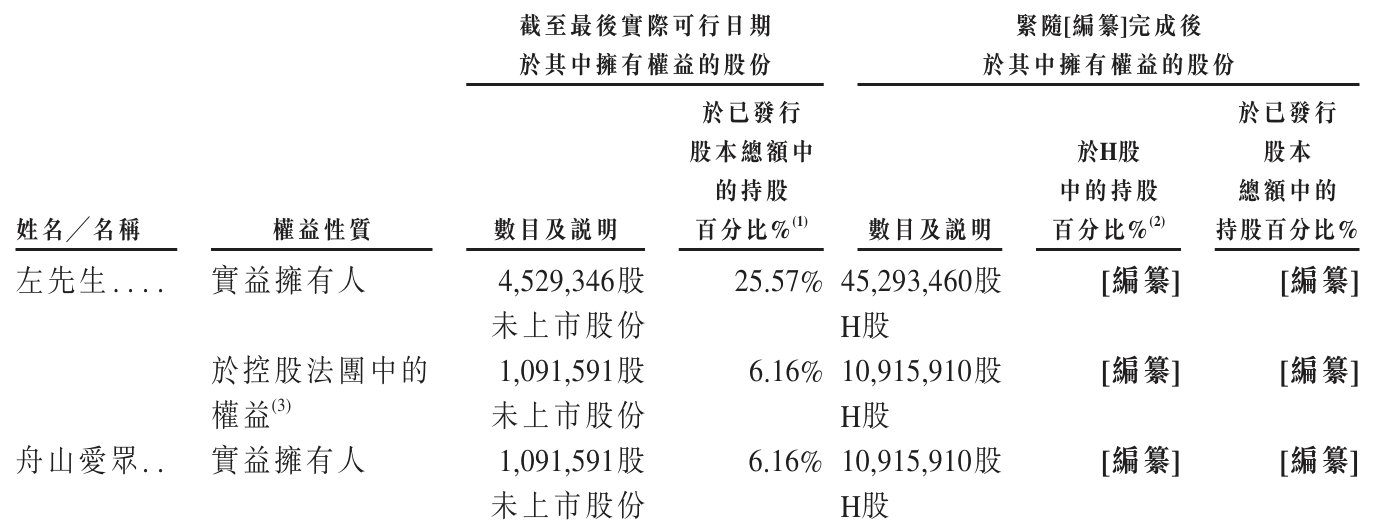
Mr. Zuo Yuxing holds 25.57% of the shares, Zhoushan Aizhong holds 6.16% of the shares, Dr. Xu holds 4.54% of the shares, Shanghai Fanghe holds 4.46% of the shares, Hongli Green holds 4.46% of the shares, Hongli Green holds 4.20% of the shares, Hangzhou Neighbor Star holds 1.31%, Hangzhou Hi-Tech holds 6.02% of the shares, and other pre-listing investors hold a total of 43.03% of the shares.
As of the last practical date, Zhoushan Aizhong is a limited partnership established under Chinese law, and its general partner is Mr. Zuo. Mr. Zuo holds approximately 12.64% of the limited partnership interest in Zhoushan Aizhong. Mr. Zuo is the largest limited partner of Zhoushan Aizhong. For the purposes of the Securities and Futures Ordinance, Mr. Zuo is considered to have an interest in shares held by Zhoushan Aizhong.
Intermediary team
Co-sponsors: ICBC International Finance Limited, Caitong International Finance Limited
Company Legal Advisors: Hong Kong and US Law: King & Wood Mallesons; Related Chinese Law: Jingtian Gongcheng Law Firm
Co-sponsor Legal Adviser: Hong Kong Law: Tianyuan Law Firm (Limited Liability Partnership); Related Chinese Law: Jun He Law Firm
Reporting Accountants and Independent Auditors: Ernst & Young
Industry Advisor: Frost & Sullivan (Beijing) Consulting Co., Ltd. Shanghai Branch
Compliance Advisor: New Berry Finance Co., Ltd.