
Higher energy prices are compounded by rising expectations of the Federal Reserve's interest rate hike! The euro fell to a new low for two weeks, and options traders increased their hedging
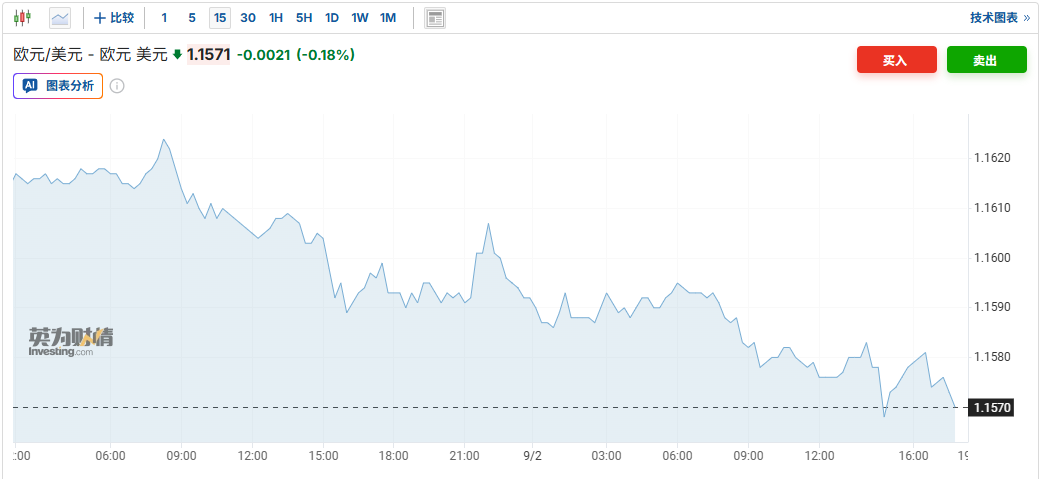
The Zhitong Finance App learned that as rising energy prices and rising expectations of the Federal Reserve's interest rate hike further increased the pressure on the euro, the EUR/USD pair fell to a two-week low — as of press release, the EUR/USD exchange rate fell 0.18% to 1.1571.
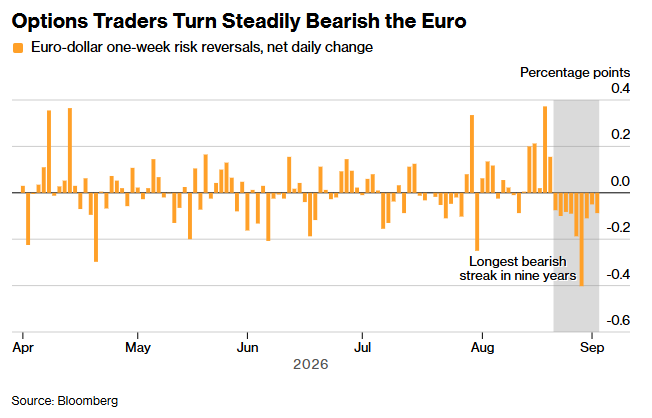
Meanwhile, options traders are scrambling to take steps to prevent the euro from falling further. The options market position index has now reached the most bearish level for the euro in nearly a month. Over the past 9 trading days, the market has continuously turned in favor of the US dollar, which is the longest running round of similar trends since 2017.
At a time when the market is beginning to hedge against further weakening of the euro, the conflict between the US and Iran has once again escalated, driving oil and natural gas prices to rise again. And rising energy costs will adversely affect the euro, as it will worsen the European region's terms of trade. Furthermore, after Federal Reserve Chairman Walsh sent hawkish signals last week, the market currently believes that the probability that the Fed will raise interest rates this month is 71%, up from 38% last week.
These two major risks prompted Chris Turner, head of global markets at Dutch International Group, to expect that the EUR/USD exchange rate may fall further to “about 1.15” by the end of this month. Kit Juckes, chief foreign exchange strategist at Société Générale, said, “The euro should fall further against the US dollar this year, but the decline will not be as big as I expected before.” He set the EUR/USD exchange rate target at 1.15 at the end of the year.
The outlook for the euro may also be “collateral damage” caused by geopolitical risks — the Russian-Ukrainian conflict and war in the Middle East show no sign of ending, and France will face a critical presidential election next year. Valentin Marinov, head of foreign exchange research and strategy at Crédit Agricole G10, said, “EUR/USD is suffering collateral damage from geopolitical risks.” “After Germany holds local elections this month, and before the 2027 French presidential election, European political and fiscal risks are also likely to increase.” Mark McCormick, chief foreign exchange strategist at the Bank of Montreal, even said that the exchange rate of the euro against the US dollar may fall to 1.12 before the French presidential election approaches.
It is worth mentioning that insufficient natural gas inventories in Europe may trigger another rise in inflation and force the ECB to tighten monetary policy at a faster pace, which may be a factor supporting the euro. At the same time, however, rising prices for natural gas and other energy sources and higher interest rates may also drag down the Eurozone's already weak economic recovery, which may in turn be a disadvantage for the euro.