
Lithium Industry Branch: The performance of listed lithium salt companies achieved a sharp overall increase in the first half of 2026, and the average revenue of the 13 sample companies was 6.724 billion yuan
The Zhitong Finance App learned that on September 3, the Lithium Industry Branch released the 2026 semi-annual report analysis of listed lithium salt companies. In the first half of 2026, the overall performance of listed lithium salt companies achieved significant growth. The average operating income of the 13 sample companies was 6.724 billion yuan, and the average net profit to mother reached 2,035 billion yuan, up 1,745 billion yuan over the same period last year. The average gross margin was 46.34%, up 20.1 percentage points year on year. The average ROE was 10.25%, and the average balance ratio was 34.19%. It shows that corporate profitability has improved dramatically, and the industry continued its good momentum in the first quarter.
I. Business performance in the first half of the year
1. Operating income and operating costs
In terms of revenue, the average revenue of 13 companies in the first half of the year was 6.724 billion yuan, and the maximum value was 23.097 billion yuan. The year-on-year growth rate was between -1.87% and 402.35%, and 12 companies achieved positive revenue growth.
In terms of operating costs, the average operating cost of 13 companies in the first half of the year was 4.215 billion yuan, and the maximum value was 18.2 billion yuan. The year-on-year growth rate was between -24.01% and 139.31%. The growth rate of operating costs basically matched the revenue growth rate.
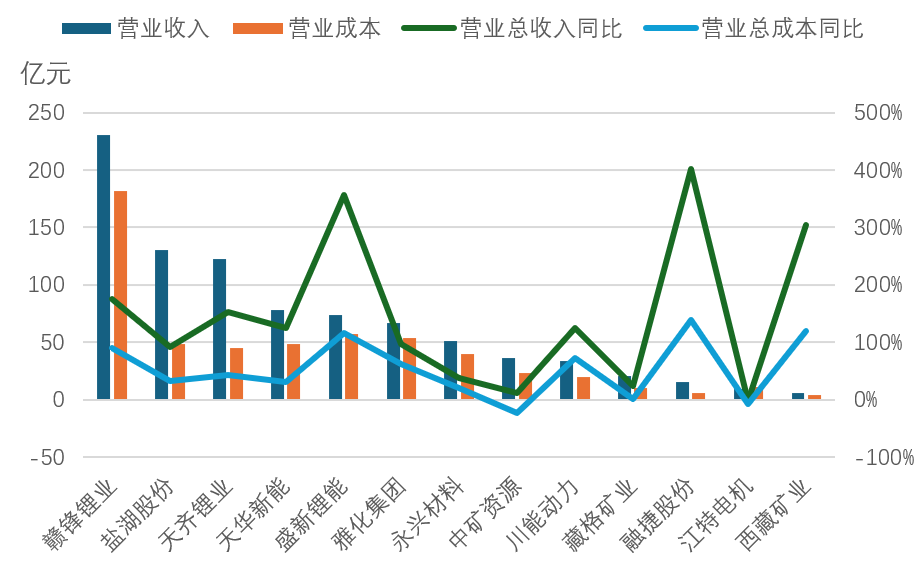
Figure 1. Revenue and operating costs of listed lithium salt companies in the first half of 2026
2. Profit
In terms of profit, the average net profit of 13 companies in the first half of the year was 2,035 billion yuan, an increase of 1,745 billion yuan over the same period last year, and the maximum value was 6.169 billion yuan. Of these, 12 companies made a profit, and 1 lost money. Of these, 12 companies' profits all increased compared to the same period last year, and 12 had net profit growth rates of more than 100%.
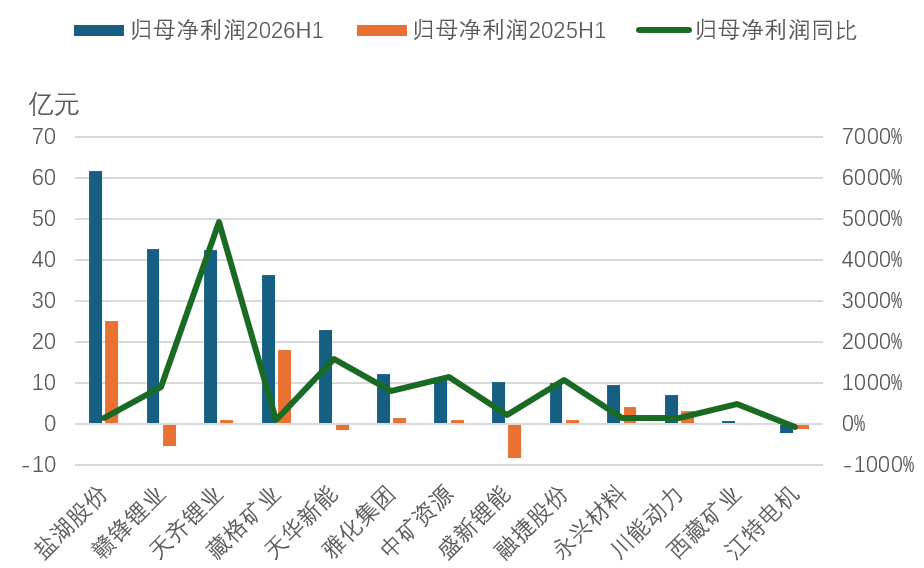
Figure 2 Profit of listed lithium salt companies in the first half of 2026
3. Gross profit margin
In terms of gross margin, the average gross margin of the 13 companies in the first half of the year was 46.34%, up 20.1 percentage points from the previous year. The maximum value was 76.36%. There were 11 companies over 30%, and 6 companies with more than 50%. The gross margin of all 13 companies increased compared to the same period last year.
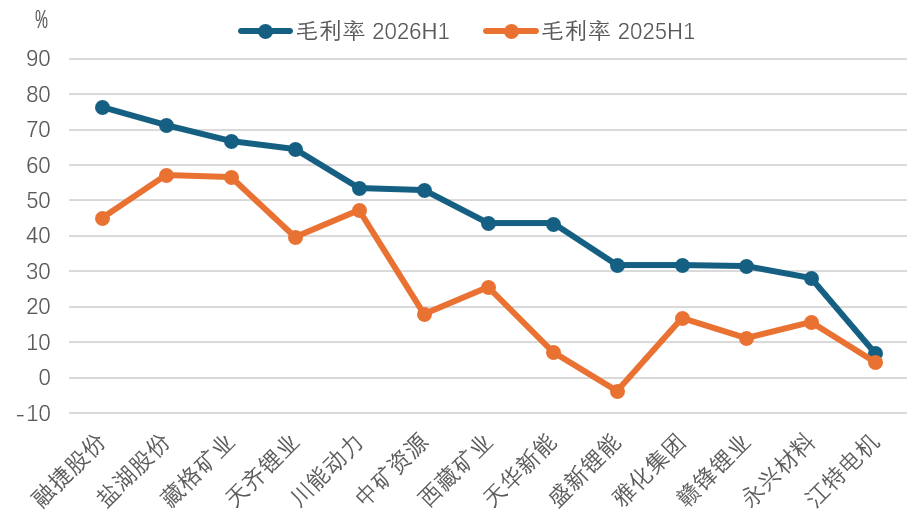
Figure 3. Gross profit margin of listed lithium salt companies in the first half of 2026
4. ROE (return on net assets)
In terms of ROE, the average ROE of 13 companies in the first half of the year was 10.25%, and the maximum value was 24.58%. There were 12 companies that exceeded 2%, and 5 companies that exceeded 10%. There was a big difference in growth rate, and the ROE of 12 companies increased compared to the same period last year.
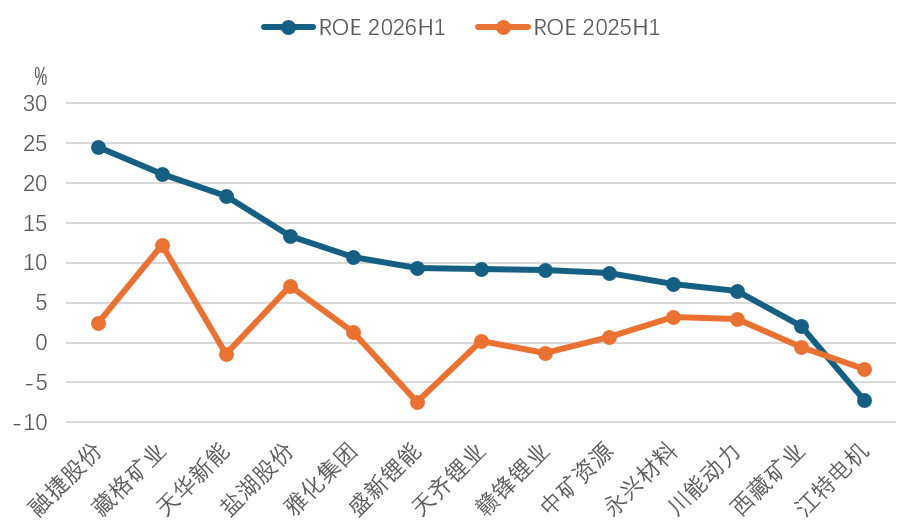
Figure 4 ROE of listed lithium salt companies in the first half of 2026
5. Asset liability ratio
Looking at the balance ratio, the average balance ratio of 13 companies in the first half of the year was 34.19%, an increase of 2.17 percentage points over the previous year. The maximum value was 58.85%, and there were 6 companies below 30%. The balance ratio of nine companies increased compared to the same period last year.
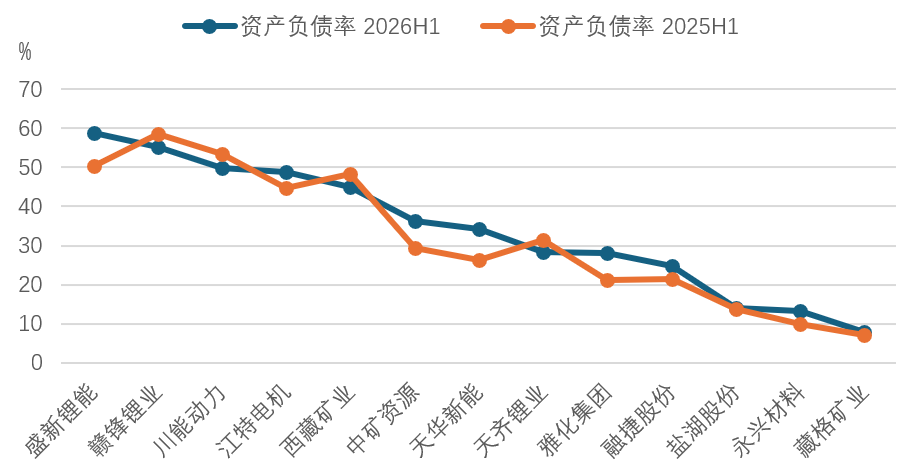
Figure 5 Balance ratio of listed lithium salt companies in the first half of 2026
II. Analysis of performance in the first half of the year
Looking at specific enterprises, in the first half of the year, Tianqi Lithium achieved revenue of 12.2 billion yuan and net profit of 4.24 billion yuan, up 153% and 4925%, respectively. Benefiting from the rebound in lithium prices in the first half of the year, it led to an increase in the gross margin and profit scale of the company's lithium concentrate and lithium salt products; at the same time, it also led to a marked increase in profits of the joint venture Chilean SQM, thus further amplifying the company's profit elasticity.
Ganfeng Lithium achieved revenue of 23.1 billion yuan in the first half of the year, up 176% year on year. Among them, revenue from lithium products was 14.2 billion yuan, up 199% year on year, and realized net profit of 4.3 billion yuan, up 901% year on year, mainly due to the rebound in sales prices of lithium series products and increased sales volume of lithium battery products. In terms of capital expenditure, the company continued to invest in various projects such as Goulamina in Mali, Marichari-Olaroz, and Argentina.
Net profits of Salt Lake Shares and Zangge Mining were 6.17 billion yuan and 3.64 billion yuan respectively, ranking first and fourth among 13 companies, with year-on-year increases of 145% and 102%, respectively. As representative companies for lithium extraction in Salt Lake, the two companies have benefited from the low cost of lithium extraction in Salt Lake and the release of their own production capacity, which fully demonstrates the competitive advantage of lithium extraction in Salt Lake in the upward cycle of lithium prices. China Mining Resources achieved revenue of 3.7 billion yuan and net profit of 1.1 billion yuan to mother, an increase of 12% and 1147% over the previous year.
The core reason for the sharp increase in performance was the sharp year-on-year increase in lithium carbonate prices. The average price of lithium carbonate in the first half of the year was 159,400 yuan/ton, an increase of 128% over the same period last year, and surpassed 200,000 yuan/ton in May. Against the backdrop of rising prices, lithium carbonate production increased. According to statistics from the Lithium Branch of the China Nonferrous Metals Industry Association, the country's lithium carbonate production in the first half of the year was about 563,000 tons, an increase of 33.9% over the previous year. In the first half of the year, the industry showed the following characteristics: first, volume and price rose sharply, downstream customer demand for lithium salt procurement was strong, inventory was removed for a long time, lithium salt companies' capacity utilization rate increased, and revenue growth was driven by strong production and sales; second, cost side was optimized; third, gross margin improved drastically, reflecting a substantial recovery in corporate profitability.
III. Market review for the first half of the year
In the first half of 2026, the lithium carbonate market price fluctuated widely, and the overall price center moved upward. It rose sharply in January, fell slightly in February, then rose again in March. Prices reversed in a V-shape in April, fluctuated upward in May, broke through the 200,000 yuan/ton mark, and has fluctuated downward since June. The reflection behind this is a continuous game of marginal changes in supply and demand in the market. In the first half of this year, the core driving factors for large fluctuations in lithium prices were mainly the following four aspects:
1. Supply-side constraints continue to be tightened. Domestically, production of Lepidolite in Yichun, Jiangxi was discontinued due to a change in mining rights, making it difficult to resume production in the short term. Overseas, Zimbabwe suddenly announced the suspension of lithium concentrate exports. Last year, China's lithium concentrate imports from Zimbabwe accounted for about 15.5% of imports. After May, the company received Zimbabwean export quota, but due to the complicated export review process, the actual return of lithium concentrate fell short of expectations, leading to a rise in market expectations of a contraction in supply;
2. Accelerate the release of energy storage demand. By the end of June 2026, the total installed capacity of China's new energy storage system was 168.3 GW/448.7 GWh, and the scale of power and electricity increased by 59% and 71% year-on-year respectively. The growth rate continued to lead the new energy circuit and became the second growth pole driving lithium demand;
3. Overseas demand continues to increase. As a result of the US-Iran conflict and the Russian-Ukrainian conflict, global oil supply was blocked, and European gas prices continued to rise, boosting expectations for future new energy alternatives. The scale of overseas orders signed by domestic energy storage companies increased 83% year-on-year in the first half of the year. The global layout became an important support for incremental breakthroughs in energy storage and improving quality and efficiency;
4. The reduction in export tax rebates has triggered “export grabbing”. Affected by the reduction in battery export tax rebates from April 1, downstream manufacturers completed export orders ahead of schedule, triggering a “export grab” boom in the first quarter. Lithium carbonate futures contracts continued to rise after the policy was announced, breaking through the 170,000 yuan/ton mark within half a month, and lithium battery exports completed the reversal from off-season to peak season.
Entering the second half of the year, lithium carbonate prices completed a small cycle of falling and then rising. Since July of this year, due to various factors such as progress in the resumption of production of lithium mine projects related to Jiangxi, the release of signals of resumption and expansion of production by some overseas mines, and the arrival of imported lithium concentrate in Hong Kong one after another, market expectations for a subsequent increase in supply have further increased, and lithium prices have gradually weakened. In August, the price of lithium carbonate gradually reversed to 160,000 yuan/ton after hitting 130,000 yuan/ton due to factors such as the resumption of production in Jiangxi lithium mines and overseas lithium mines falling short of expectations, downstream demand continued to be strong, and market inventories continued to decline.
Looking at both the supply and demand sides, the fundamentals of the lithium industry as a whole being in a tight balance did not change in the second half of the year. The supply side mainly focused on changes such as the arrival of Zimbabwean lithium concentrate in Hong Kong and domestic lithium carbonate production, while the demand side is expected to remain strong. In terms of policy, the levy of lithium battery consumption tax and the complete cancellation of battery export tax rebates on January 1 next year will affect the cost structure and production pace of subsequent downstream battery companies. Overall, the lithium salt industry is expected to continue the good trend of the first half of the year in the second half of the year, and corporate profitability is expected to continue to improve.