
Hedge fund giant Citadel accelerates its entry into shale oil! Laying out physical energy assets under geopolitical risk
The Zhitong Finance App learned that against the backdrop of global geopolitical tension continuing to drive up oil prices and traditional energy supply corridors facing the risk of disruptions, hedge fund giant Citadel founded by Ken Griffin (Ken Griffin) is entering the US shale oil production sector in a big way. According to reports, Citadel has recently negotiated with a number of private equity firms to acquire US oil production assets and participated in the bid for WildFire Energy, an operator of the Eagle Ford shale oil and gas field in Texas. Although the bid was ultimately lost to Magnolia Oil & Gas (MGY.US) for $4.06 billion, this series of moves marks an acceleration in the expansion of the institution known for financial transactions into the field of physical commodity ownership.
According to people familiar with the matter, the bid for WildFire is only one of several deals Citadel has had with a number of private equity companies holding oil and gas exploration and production companies in recent weeks. These deals mainly revolve around the acquisition of petroleum-based assets.
This trend indicates that this financial giant founded by Ken Griffin is expanding its physical asset footprint from natural gas to the petroleum sector after acquiring Paloma Natural Gas for 1.2 billion US dollars and setting up the Apex Natural Gas platform last year.
From “paper trading” to “physical hedging”: Citadel's energy landscape expansion logic
As a major trader in commodities such as petroleum, natural gas, and electricity, Citadel's entry into the shale oil production field follows a clear strategic logic. For financial companies that trade commodities through futures and derivatives, owning physical production assets can form a natural hedge. Physical crude oil can often increase in value under market conditions such as supply disruptions or geopolitical shocks, and these conditions may cause losses in paper trading positions.
Citadel's current expansion strategy is the same as its approach to entering the US gas production sector in 2025. In February 2025, Citadel acquired Paloma Natural Gas from EnCap Investments, then changed its name to Apex Natural Gas, and used it as a platform to further acquire assets from Comstock Resources and Azul Resources supported by Carnelian Energy Capital. By acquiring platforms like WildFire, Citadel not only has access to oil well assets that have already been put into production, but also has an existing management team to operate these assets and any future acquisitions.
Geopolitical Premium and Security of Supply: The Strategic Value of US Shale Assets
As crude oil prices soar and Middle East tensions continue to disrupt global energy markets, US oil and gas assets are attracting unprecedented buyer interest. Its core advantage is that these assets can deliver oil without passing through major channels such as the Strait of Hormuz, thus avoiding the risk of potential supply chain disruptions due to geopolitical conflicts.
Since this year, US crude oil prices hit a six-week high on Thursday (September 3) due to the escalation of tension in the Middle East. Oil producers benefited greatly from this high oil price environment, and many companies recorded their best quarterly results in years in the second quarter. Industry executives also warned that even if hostilities cease immediately, the tight supply situation could take months to ease.
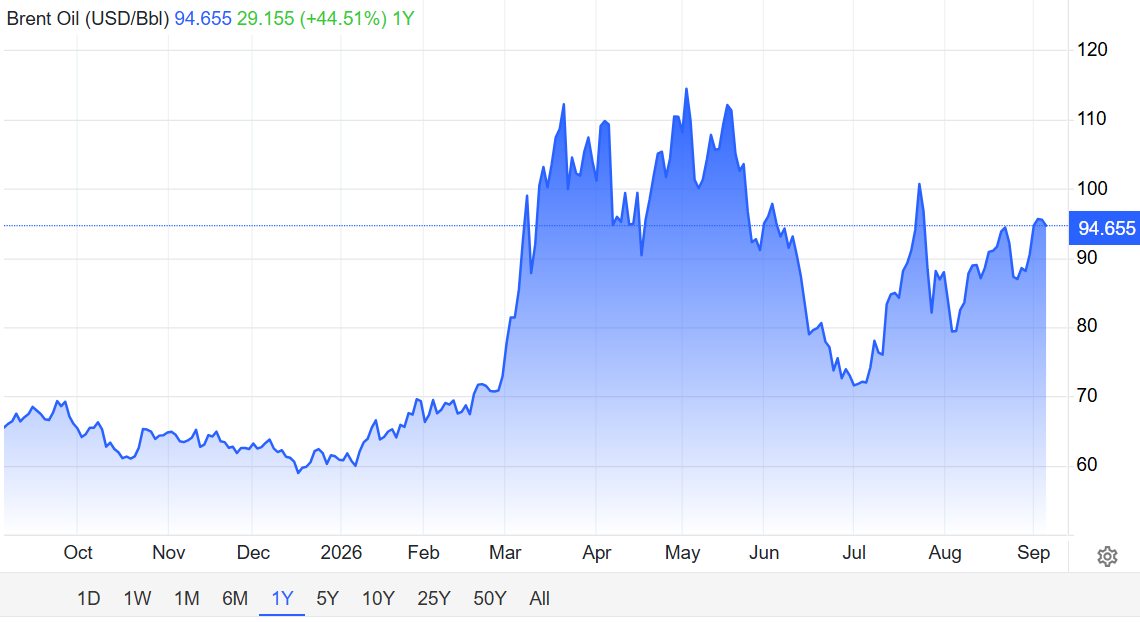
Industry executives also warned that even if hostilities cease immediately, the tight supply situation could take months to ease. This further enhances the strategic value of physical oil assets.
Industry trends: the collective shift of commodity traders, from pure trading to asset holding
Citadel's move is not an exception; it reflects the trend of large commodity traders collectively expanding into the production sector. Vitol Group (Vitol) agreed to sell its US shale oil joint venture VTX Energy Partners in July; Reuters reported last week that Gunvor (Gunvor) is in talks to buy Hinesville shale assets for more than $1 billion.
This series of developments reflects a general trend where the boundaries between financial transactions and physical asset control are becoming increasingly blurred. This trend shows that in the context of open market multiples, institutional investors are increasingly interested in directly holding physical commodities, which may support the valuation of US shale oil producers and maintain the activity of the energy M&A market.
When hedge fund giant Citadel transitioned from a pure financial trader to a physical asset owner, it was not betting on the direction of oil prices, but on a more fundamental structural change: in a context where global supply chains are increasingly fragmented and energy transportation corridors face geopolitical risks, it has become a strategic investment logic. From gas platform Apex in 2025 to today's chase for shale oil, Citadel is taking this logic from paper to reality.