
Dear Kroger Stock Fans, Mark Your Calendars for September 11
Kroger (KR) is set to report its second-quarter results before the market opens on Sept. 11, 2026. Analysts are looking for adjusted earnings of $1.05 per share for the quarter ending July 2026. That would mark a small 1% rise from the EPS of $1.04 the company reported in the same period last year.
Kroger reported adjusted EPS of $1.58 on June 18, 2026, which came in just below the $1.59 consensus estimate. Annual sales are about $147.6 billion, while Kroger's market capitalization sits near $35.7 billion.
In the days leading up to the report, Kroger has stayed in the news with its ongoing Wellness Tour and has been mentioned alongside other consumer names as dollar-store operators have shown signs of recovery. With earnings just days away, how will the latest numbers and any updated guidance shape the near-term path for KR stock? Let’s take a closer look.
A Look at Kroger's Performance
Kroger is one of the United States' largest grocery retailers. The company runs a wide network of supermarkets, multi-department stores, pharmacies, and fuel centers that serve millions of customers every day through both physical stores and its growing digital platform.
Over the past 52 weeks, KR stock is down 14%, and shares have fallen 6% year-to-date (YTD).
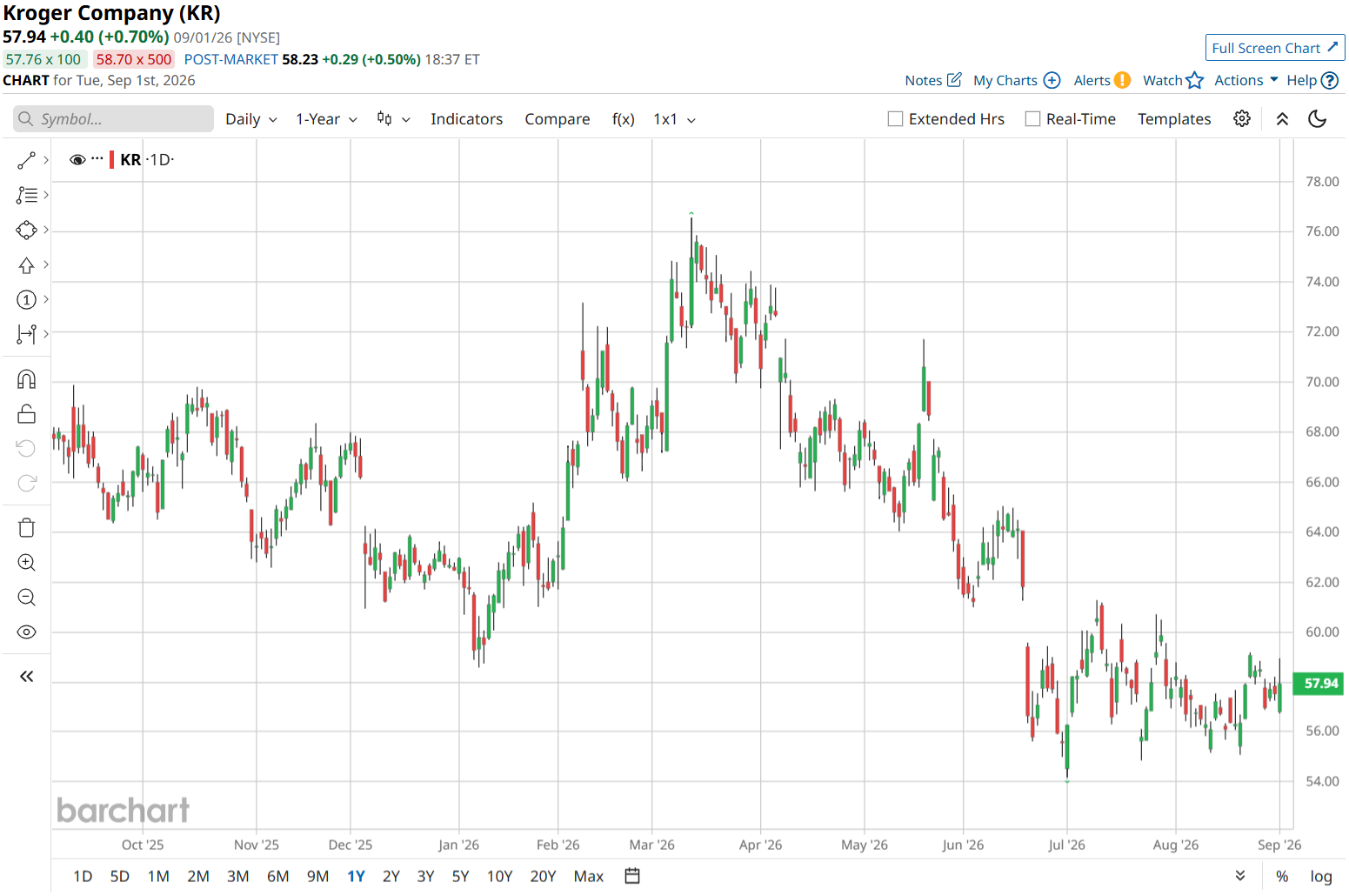
Right now, the stock trades at a forward price-to-earnings (P/E) ratio of 11.1 times, which sits well below the consumer staples sector average.
Shareholders still get a solid capital-return program. KR stock yields about 2.5%, while the most recent quarterly dividend of $0.39 was paid on Sept. 1. The forward payout ratio is 27.62%, and the company has raised its dividend for 20 years in a row on a quarterly schedule.
The latest quarterly results, reported on June 18, showed total sales of $46.1 billion, up from $45.1 billion a year earlier. Identical sales without fuel rose 1%. Adjusted e-commerce sales jumped 19% while Kroger Precision Marketing profit grew more than 20%. Operating profit came in at $1.41 billion while adjusted FIFO operating profit reached $1.54 billion.
Gross margin was 22.7%, down from 23% in Q2 2025. The FIFO gross-margin rate fell 9 basis points while the OG&A rate rose 16 basis points. GAAP EPS was $1.46 while adjusted EPS was $1.58, up 6% year-over-year (YOY). Management maintained full-year guidance for identical sales without fuel at 1% to 2%, adjusted EPS at $5.10 to $5.30, and free cash flow at $2.7 billion to $2.9 billion.
What Is Powering Kroger’s Growth?
On July 1, Kroger announced a definitive agreement to acquire Giant Eagle for $1.65 billion. That breaks down to $1.25 billion in cash plus the assumption of about $400 million in liabilities. Giant Eagle runs roughly 197 supermarkets and 11 standalone pharmacies that generate around $9 billion in annual sales across northern Ohio, western Pennsylvania, West Virginia, Maryland, and Indiana.
Management pointed to a strong strategic fit. Giant Eagle’s strengths in fresh products, pharmacy, private-label brands, and customer loyalty programs line up well with what Kroger already does. The deal expands the company’s reach into nearby markets and opens the door to faster growth both in stores and online by bringing in Kroger’s e-commerce tools, data and personalization capabilities, and operating approach.
On Aug. 11, Kroger also named Nate Faust as Executive Vice President and Chief eCommerce Officer, effective Sept. 1, 2026. Faust co-founded Jet.com, which was later bought by Walmart (WMT), and helped lead Walmart’s U.S. e-commerce supply chain transformation, among other accomplishments.
CEO Greg Foran highlighted Faust’s record as matching the same standard Kroger is focused on as it grows its digital business. Faust also noted that the company’s relationship with customers, loyalty data, and store network give it a solid base for more digital growth.
Kroger is still working its core growth pillars. Recent updates demonstrate e-commerce sales growth, progress on pharmacy integration, and expanded wellness efforts such as the 2026 Kroger Wellness Tour.
What Do Analysts Expect Next?
Kroger is scheduled to report Q2 results before the market opens on Sept. 11. Analysts expect EPS of $1.05 per share, up roughly 1% YOY from $1.04 per share. Looking further ahead, the consensus points to more than 7% YOY growth in fiscal 2027 to earnings of $5.21 per share.
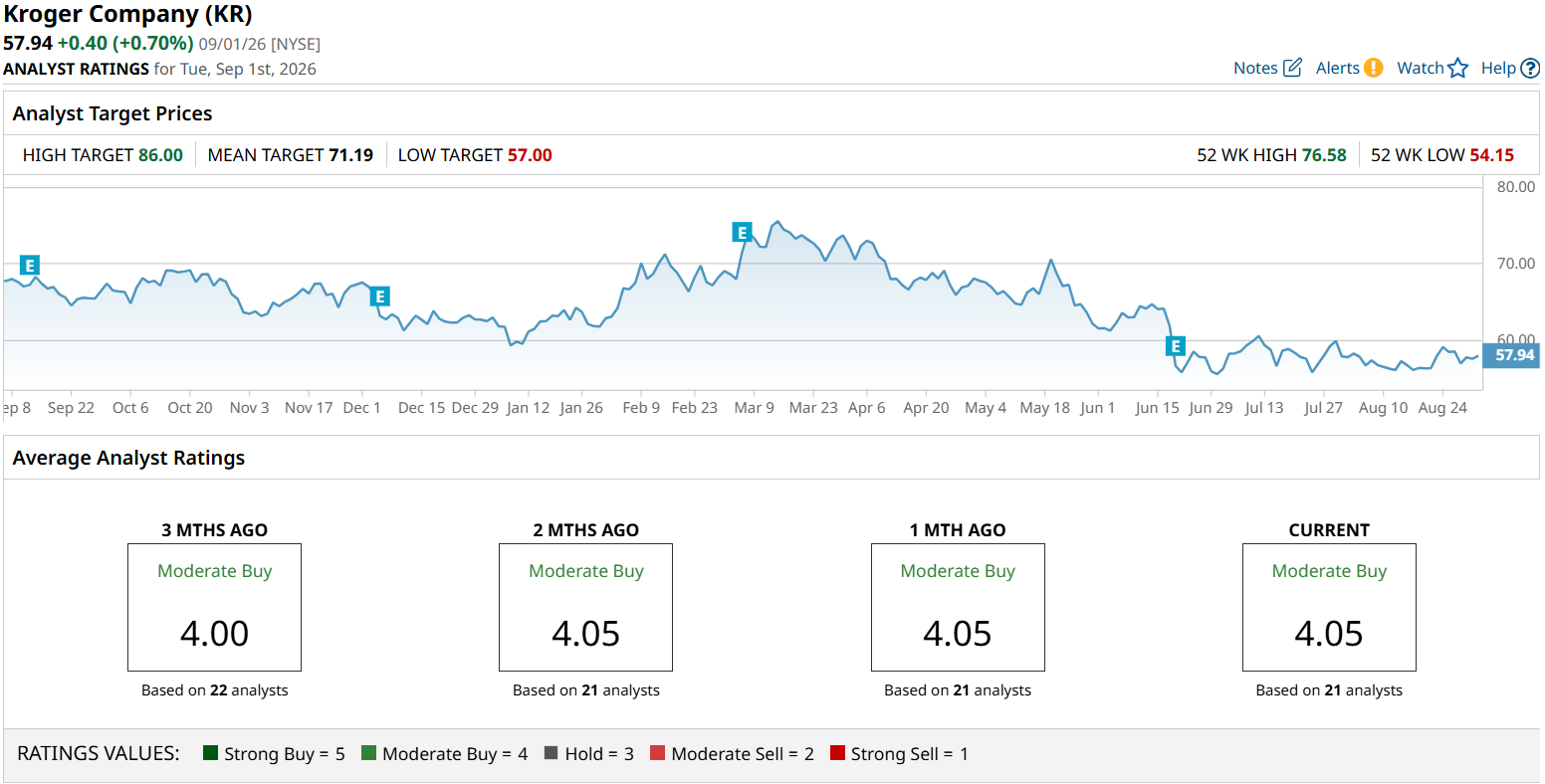
On Sept. 1, Citigroup analyst Paul Lejuez kept a “Neutral” rating on KR stock but cut his price target to $57 from $61. The analyst also added a downside 30-day catalyst watch on Kroger stock. On Aug. 11, however, Evercore analyst Michael Montani maintained an "Outperform" rating while lowering his price target to $75 from $78. The move showed a slightly softer near-term stance while still reflecting longer-term confidence.
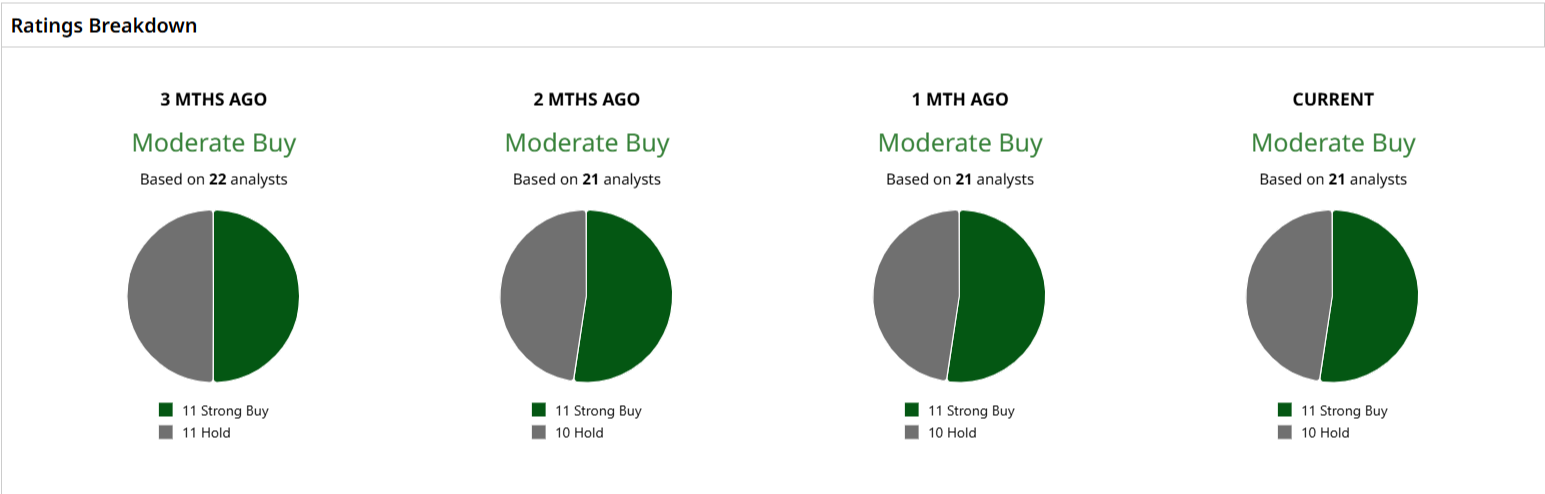
Overall, Wall Street remains constructive on Kroger. KR stock has a consensus “Moderate Buy” rating based on 21 analysts with coverage. The average price target of $71.19 points to about 22% potential upside from recent levels.
Conclusion
Kroger heads into the Sept. 11 report with modest expectations and a stock that already sits at a discount to the sector. If the company delivers the anticipated $1.05 in adjusted EPS and offers steady commentary on the Giant Eagle integration as well as e-commerce progress under Faust, shares should find support. The more important signal will be any update to full-year guidance and management’s tone on competitive pricing pressure. Given the “Moderate Buy” consensus rating and implied potential upside of 22%, the path of least resistance looks modestly higher, provided the second-half outlook does not turn overly cautious.
On the date of publication, Ebube Jones did not have (either directly or indirectly) positions in any of the securities mentioned in this article. All information and data in this article is solely for informational purposes. For more information please view the Barchart Disclosure Policy here.