
Apple Stock And 2 Defensive US Large Caps For A Gridlock Market
Political gridlock in Washington is back in focus after legal fights over Missouri’s House map raised fresh questions about which party may control the U.S. House and how easily new laws might pass. For investors, that kind of policy stalemate can shift attention toward large, established stocks that some see as steadier when big policy swings are harder to push through. This article walks through three U.S. large caps exposed to this latest round of political uncertainty and explains how the current headlines could matter for their share prices and business risks.
The stocks covered below are just a sample, and the full screen surfaced 19 more large cap companies with equally compelling stories that are not discussed in this article. To go straight to the full list, identify your preferred risk and income mix, and analyze potential high conviction ideas, head into the U.S. Large-Cap Equities Benefiting from Policy Gridlock screener.
Cardinal Health (CAH)
Overview: Cardinal Health is one of the largest distributors of pharmaceuticals and medical products in the U.S., supplying hospitals, health systems, pharmacies and home care providers, which can appeal when big healthcare reforms are harder to pass under policy gridlock. It combines massive drug distribution with its own branded medical and lab products, as well as services that help manufacturers and providers manage supply chains, specialty drugs and at home care.
Operations: Cardinal Health generates the bulk of its revenue from Pharmaceutical and Specialty Solutions at about US$234.8b, with Global Medical Products and Distribution adding roughly US$12.7b and Other operations about US$6.8b. Revenue is driven primarily by the United States at roughly US$252.6b, with a smaller international contribution of about US$1.7b.
Market Cap: US$57.8b
Cardinal Health gives you exposure to the backbone of U.S. healthcare, with scale in drug distribution and higher margin specialty and at home services that many investors associate with steadier demand when broad policy shifts are harder to pass. At the same time, the company carries meaningful debt, runs on slim margins around 0.7% and faces ongoing regulatory and tariff questions, so the balance between growth in higher margin areas and pressure from reimbursement and funding costs is important. The company also has a regular dividend, active share buybacks and growing interest in its automation and specialty platforms. As a result, the investment case often focuses on cash flows, capital returns and potential resilience to policy gridlock, alongside the ongoing risks.
Cardinal Health’s slim margins and heavy debt can mask what is really driving the story. Get a clearer view of its cash generation, balance sheet pressures and potential resilience in the Cardinal Health financial health report

Apple (AAPL)
Overview: Apple is a mega cap U.S. technology company that designs and sells iPhones, Macs, iPads, wearables and accessories, and increasingly earns high margin revenue from services like the App Store, Apple Music, Apple TV and Apple Pay. Its large global customer base and embedded ecosystem fit the screener’s focus on established U.S. large caps that some investors associate with steadier conditions when rapid policy shifts are less likely.
Operations: Apple generates most of its revenue from the Americas at about US$193.6b, followed by Europe at roughly US$124.3b, Greater China at about US$79.3b, Japan at around US$31.0b and the Rest of Asia Pacific at approximately US$38.6b.
Market Cap: US$4.8t
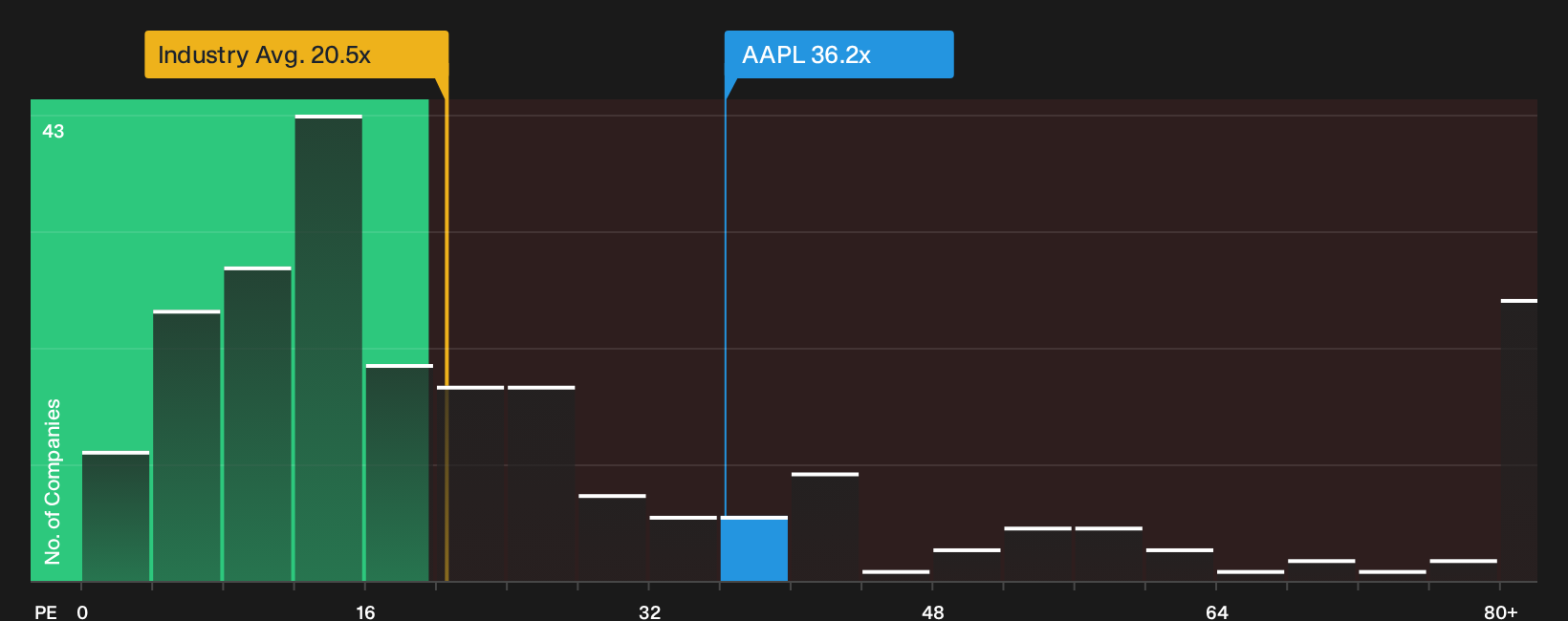
Apple interests investors who want a globally known brand with a huge hardware base that now supports a fast growing, high margin services business. Earnings quality metrics, including margins above 27% and very strong returns on equity, point to a business that can generate significant cash in a period when U.S. policy change may be slower and more incremental. At the same time, the stock trades on a premium P/E and faces questions around whether new devices like a foldable iPhone or Apple Intelligence driven upgrades can justify that valuation while regulatory and antitrust pressure continues to build. For many readers, the key question is whether that premium still looks reasonable once growth, risks and gridlock stability are assessed side by side.
Apple’s premium P/E and high margins suggest a story many investors only see at the surface. Get the full context on growth, regulation and gridlock resilience in the analyst forecasts for Apple
Motorola Solutions (MSI)
Overview: Motorola Solutions is a Chicago based company that supplies mission critical radios, video security, access control, and public safety software to governments and enterprises, with a heavy focus on U.S. police, fire, emergency services and other public agencies that often operate on multi year budgets. That government tilt and mix of hardware plus recurring software and services is why Motorola Solutions fits a policy gridlock theme, where funding priorities tend to change slowly.
Operations: Motorola Solutions generates about US$7.5b of revenue from its Products and Systems Integration segment and roughly US$4.7b from Software and Services.
Market Cap: US$78.2b
Motorola Solutions provides exposure to public safety radios, video surveillance and command center software that governments often treat as essential infrastructure. This can appeal to investors who view political gridlock as a factor that may support relatively steady budgets rather than rapid policy swings. The current narrative emphasizes a growing mix of higher margin, recurring software and services, a record order backlog and acquisitions in areas such as drone and counter drone technology that could broaden its role in security. On the other hand, the stock trades at a premium P/E, carries meaningful debt and relies heavily on U.S. and other government contracts, so any slowdown in public safety funding or contract renewals could have a significant impact on results. For investors, a central consideration is whether that contract visibility and public safety focus adequately balance the valuation and balance sheet risks.
Motorola Solutions’ premium P/E and record backlog suggest investors might be missing how its software and services story is evolving. Get the full picture on contract risk and balance sheet pressure in the analysis report for Motorola Solutions.

Seeking Alternatives Before The Crowd?
Fresh ideas can move fast. Some stocks are gaining momentum, and others are quietly setting up for a potential breakout while they stay under the radar for now. Consider acting early rather than waiting.
- Look for strong income opportunities before yields start dropping by scanning a curated set of resilient payers with the 11 dividend fortresses.
- Track where real earnings momentum meets AI, not hype, by reviewing a focused group of 72 profitable AI stocks that aren't just burning cash that already generate meaningful cash.
- Explore opportunities related to the next metals cycle by checking a filtered pool of 9 top copper producer stocks tied to long term electrification and infrastructure themes.
This article by Simply Wall St is general in nature. We provide commentary based on historical data and analyst forecasts only using an unbiased methodology and our articles are not intended to be financial advice. It does not constitute a recommendation to buy or sell any stock, and does not take account of your objectives, or your financial situation. We aim to bring you long-term focused analysis driven by fundamental data. Note that our analysis may not factor in the latest price-sensitive company announcements or qualitative material. Simply Wall St has no position in any stocks mentioned.
Have feedback on this article? Concerned about the content? Get in touch with us directly. Alternatively, email editorial-team@simplywallst.com