
3 U.S. Municipal Bond Stocks That Could Benefit From Higher Bond Yields
Rising U.S. bond yields and worries about federal borrowing are pushing investors to rethink where they take risk and where they seek stability. When government financing starts to dominate capital markets, the ripple effects can touch everything from growth stocks to municipal-bond asset managers and insurers. This article explores how that story connects to three U.S. municipal focused stocks that appear positively exposed to the latest bond market reset, and what that could mean for your portfolio decisions.
The stocks highlighted below are only a starting sample, and the full municipal focused screen surfaced 12 more U.S. listed companies with similarly interesting stories that are not covered in this article. If you want to identify and analyze the highest conviction municipal bond asset managers and insurers that fit your view, head straight to the U.S. Municipal-Bond Asset Managers and Insurers screener.
GCM Grosvenor (GCMG)
Overview: GCM Grosvenor is a Chicago based alternative asset manager that builds customized portfolios across hedge funds, private equity, real assets, credit and other strategies for institutions, high net worth investors and public entities, including state and municipal clients. Its ability to design muni focused and tax aware mandates ties it directly to the municipal bond theme in this screener.
Operations: GCM Grosvenor generates all of its US$566.9 million in revenue from asset management activities, entirely from clients in the United States.
Market Cap: US$2.7 billion
Investors looking at municipal bond related opportunities may find GCM Grosvenor interesting because it combines a broad alternatives platform with the ability to run tailored municipal and credit focused mandates at scale. Strong fee paying AUM growth, credit driven fundraising and large unrealized carry are described as creating a pipeline of potential future earnings, while recent wins such as the SpaceX position are cited as examples of how its private markets access can influence results. At the same time, a high debt load, reliance on external funding and recent insider selling are cited by some observers as factors that raise questions about resilience if financing conditions tighten further. Anyone considering GCM Grosvenor may want to weigh those funding and fee risks against the appeal of institutional grade muni and credit exposure inside a diversified alternatives manager.
GCM Grosvenor’s pipeline of fee paying AUM and unrealized carry could be masking an underappreciated earnings profile. Get the full picture in the 3 key rewards and 2 important warning signs

Interactive Brokers Group (IBKR)
Overview: Interactive Brokers Group is a global electronic brokerage that gives individual and institutional clients access to a wide range of assets, including stocks, options, futures, foreign exchange, bonds and cryptocurrencies, across multiple trading platforms. Its broad bond marketplace, which includes municipal bonds alongside Treasuries and corporates, links the company directly to rising interest in fixed income and tax aware strategies.
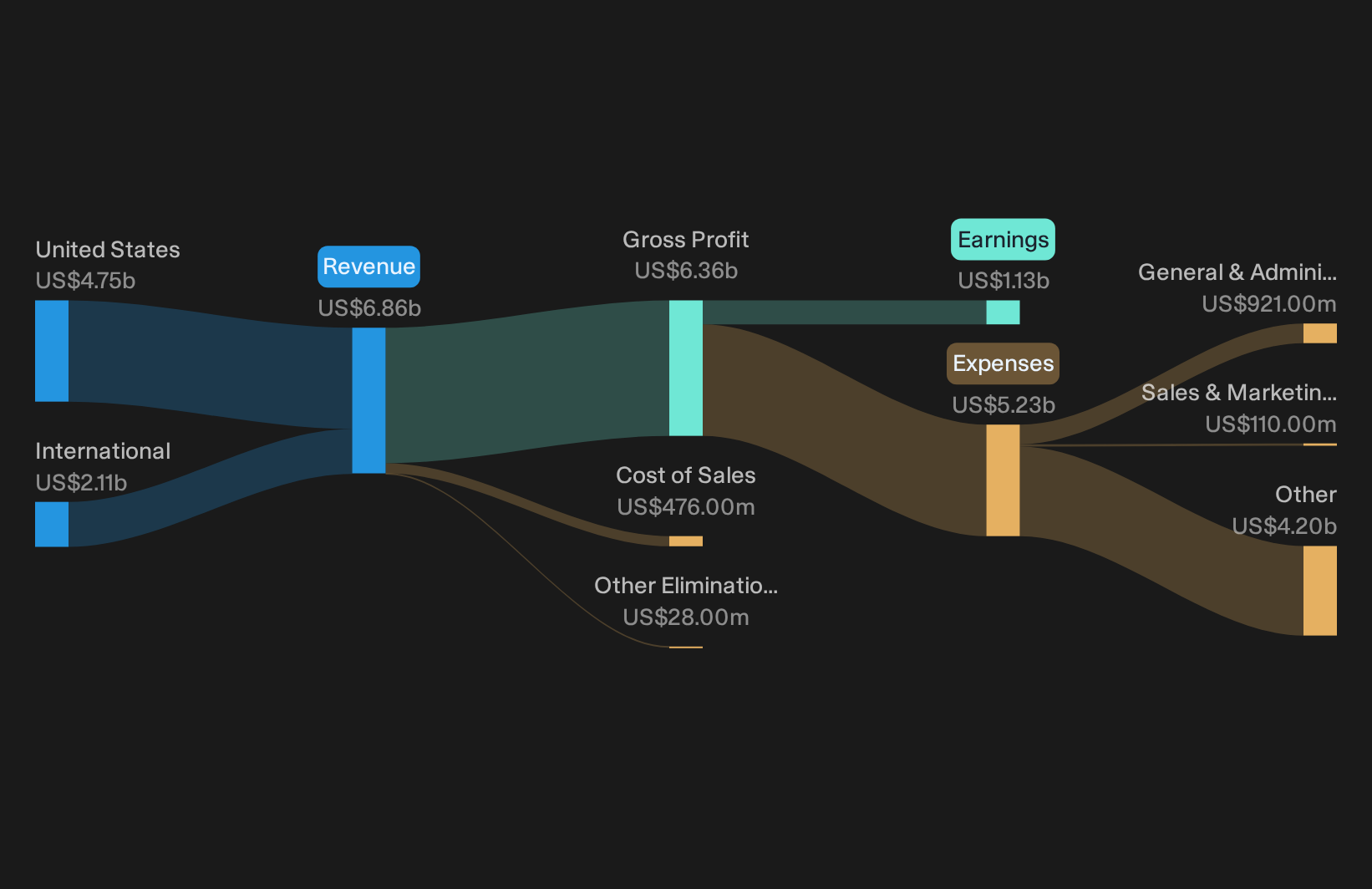
Operations: Interactive Brokers generates US$6.8 billion in brokerage revenue, with about US$4.8 billion from the United States and US$2.1 billion from international markets.
Market Cap: US$157.6 billion
Investors watching the reset in U.S. bond markets may find Interactive Brokers Group worth attention because its platform sits where rising demand for income products, including municipal bonds, can translate directly into higher trading volumes, margin loans and fee income. The company combines scale, with millions of active accounts and nearly US$1 trillion of client equity, with a long record of product rollouts and global access that keeps clients transacting across asset classes. That strength comes with trade offs, including reliance on active trading conditions, external funding sources and sensitivity to interest rate swings that influence net interest income. Some investors who expect higher yields to keep market participants engaged in fixed income and derivatives may see the full Interactive Brokers story as more complex and potentially more interesting than headline metrics alone suggest.
Interactive Brokers Group appears to have a broad bond and derivatives engine that could be masking an underappreciated story. See how the detailed analyst forecasts for Interactive Brokers Group frames both the upside and the one twist that could change everything.
MBIA (MBI)
Overview: MBIA is a U.S. based financial guarantee insurer that focuses on backing municipal bonds and other public finance obligations, giving cities, states and agencies an extra layer of protection for their debt. The company also provides guarantees on certain international public finance and structured finance deals, which keeps MBIA closely tied to credit conditions in the broader bond market.
Operations: MBIA reports US$86 million of revenue from its U.S. Public Finance Insurance segment, US$64 million from its Corporate segment and a US$2 million loss in International and Structured Finance, with US$74 million of eliminations across the group.
Market Cap: US$243 million
MBIA provides direct exposure to the municipal bond market, since its core business is insuring U.S. public finance issuers that may seek more credit enhancement as muni yields rise relative to Treasuries. That focus comes with notable tension. Recent results show revenue in the tens of millions alongside sizeable losses, negative equity and reliance on external funding, which all raise questions about how much stress the balance sheet can comfortably absorb. At the same time, progress on complex legacy issues such as Puerto Rico, the ongoing runoff of older risk and continued discussion of special dividends and buybacks point to a potential balance sheet cleanup story. For investors who follow municipal credit, MBIA is a stock where the eventual outcome may depend heavily on how these legacy exposures are resolved.
MBIA’s shrinking legacy book and talk of special dividends suggest a balance sheet story that many investors may be underestimating. Get the full context in the MBIA financial health report
Seeking Fresh Alternatives Before The Crowd
Markets move fast and the next breakout group of stocks often flies under the radar. Scan fresh ideas before momentum fully develops and consider acting early if they fit your strategy.
- Target durable income first and focus less on every dip by screening for companies in the 11 dividend fortresses that aim to keep cash flowing while others hesitate.
- Look at companies building tomorrow’s infrastructure today by scanning the 55 AI infrastructure stocks where demand for compute, power and networking may influence which stocks stand out.
- Evaluate the next energy build out by surveying the 91 nuclear energy infrastructure stocks that focuses on businesses tied to long term power and grid upgrades.
This article by Simply Wall St is general in nature. We provide commentary based on historical data and analyst forecasts only using an unbiased methodology and our articles are not intended to be financial advice. It does not constitute a recommendation to buy or sell any stock, and does not take account of your objectives, or your financial situation. We aim to bring you long-term focused analysis driven by fundamental data. Note that our analysis may not factor in the latest price-sensitive company announcements or qualitative material. Simply Wall St has no position in any stocks mentioned.
Have feedback on this article? Concerned about the content? Get in touch with us directly. Alternatively, email editorial-team@simplywallst.com