
Apple Scraps Plans for 2 MacBook Models. What This Actually Means for AAPL Stock Investors.
There are reports that Apple (AAPL) is cutting some items off its future MacBook roadmap. Research firm Omdia stated that the tech company has pulled the plug on two future MacBooks, including a large foldable MacBook and a mid-sized OLED MacBook. The former was reportedly set to sport a screen size of 16.1 to 18 inches, whereas the latter one was supposed to have a 14.4 to 16.1 inch OLED display.
While this may appear as bad news, I don't think there is much to worry about it. It is said that Apple still has plans to transition to OLED technology for MacBooks, including 14.3-inch and 16.3-inch OLED MacBook Pro models that should hit shelves by late 2026. Moreover, Omdia also believes that in 2029 Apple will release a new 13.8-inch OLED MacBook. So, this appears to be more like Apple cleaning up its product roadmap rather than cutting off innovation in Macs.
About Apple Stock
Located in Cupertino, California, Apple is one of the biggest tech companies with a wide range of products, including the iPhone, Mac, iPad, Apple Watch, and wearables, as well as a fast-growing Services ecosystem. With the Friday closing price of $319.97, Apple boasts a market capitalization of approximately $4.67 trillion.
AAPL stock has performed well, despite Friday's decline of 2.5% and today's slightly over 1% decline. It has traded in the range of $225.95 and $344.57 during the past 52 weeks, sitting roughly 7% below its all-time high. During the last year, AAPL gained about 33% in comparison with the 18% 12-month return of the S&P 500 Index ($SPX).
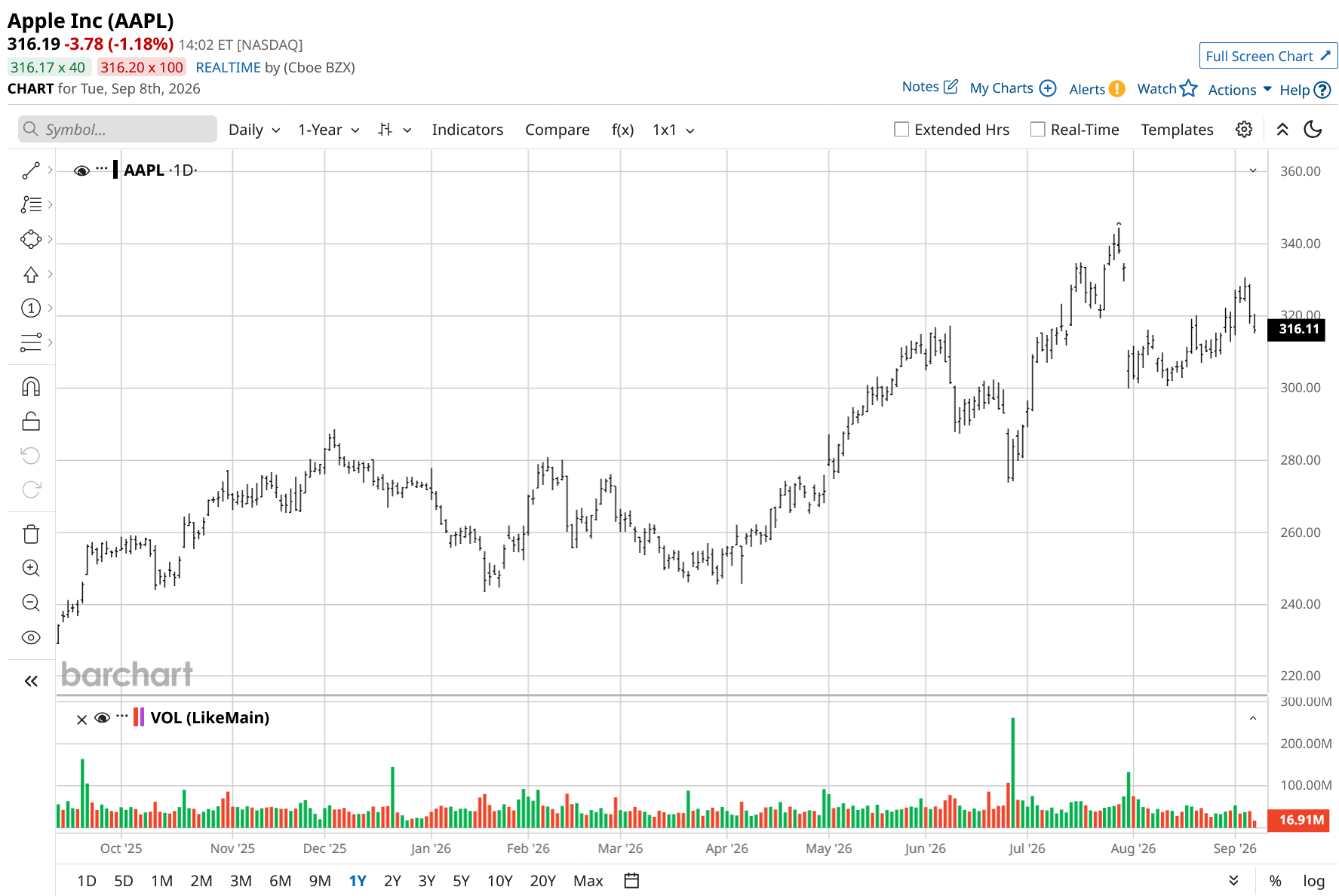
The issue is that it will take a lot for AAPL stock to disappoint from a valuation standpoint. Apple has a forward price-earnings ratio of 36.6x and a price-sales ratio of 11.22x. These multiple levels provide little margin for error, especially for a company whose growth rate lags that of many of its high-growth peers. Apple's stock valuation increasingly takes for granted that the firm can maintain its premium margins and drive its next round of hardware and AI cycles into solid earnings growth.
The dividend is basically inconsequential to the bull case. Apple's $1.08 annualized dividend gives it a forward yield of just around 0.34%.
Apple Beats on Earnings as Mac Sales Surge
Moreover, these MacBook cancellations come in light of a very solid underlying performance of the company's operations. In fiscal Q3, Apple reported $109.4 billion in revenue, which represented a year-over-year (YoY) increase of 16% and slightly beat Wall Street's expectations of around $109.0 billion. Diluted EPS amounted to $2.02, representing a jump of 29% from $1.57 in the corresponding quarter last year and beating the consensus estimate of $1.89.
Certainly, Mac sales do not appear to be the company's problem. Mac revenue rose to the June-quarter high together with the record high total company revenue, EPS, iPhones, and Services revenues. Apple also reported that the installed base of its active devices grew to new highs in all its product categories as well as geographical segments.
For the upcoming quarter, management guided for the revenue growth of 9% to 11% on a YoY basis, while gross margin is projected to stay between 47% and 48%. At the same time, Barchart's Apple earnings estimates suggest that Q4 EPS is likely to come in at $1.98, representing 7% growth YoY.
As such, the MacBook news is interesting, yet not very thesis-changing. Apple is scaling back on two experimental/overlap form factors while continuing with its overall OLED transition. On the contrary, keeping the 14-inch to 16-inch range focused around MacBook Pro models might actually help avoid the overlap of products. However, the key drivers for investors continue being Mac demand, margins, Apple's AI success, and whether upcoming hardware products will be able to live up to its premium stock valuation.
What Do Analysts Expect for AAPL Stock?
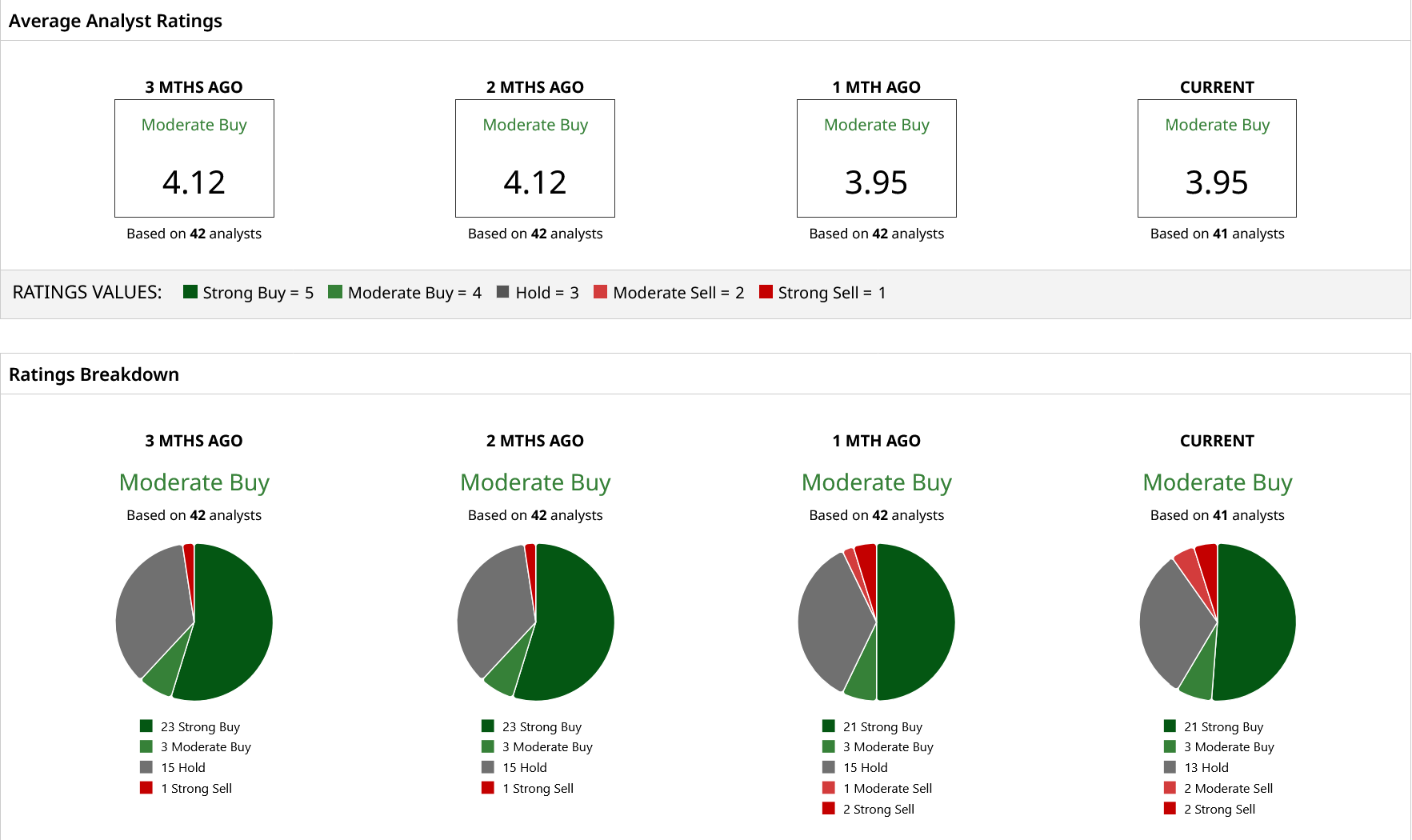
Despite this, analysts are still positive, although conviction has slightly weakened. AAPL stock currently has a "Moderate Buy" rating consensus from 41 analysts, having declined to an average score of 3.95 from 4.12 three months ago. At the mean price target of $328.70, it has just 2.7% upside from its closing price of $319.97 on Friday. On the other hand, Apple has a Street-high target of $400, representing upside of about 25%, while the lowest target of $240 indicates considerable downside.
Overall, this should not be taken as a bearish signal for Apple. The tech giant is continuing with its OLED Mac plans, while its last quarter was marked by solid demand across its entire ecosystem. The near-term risk for AAPL investors is the valuation. Trading at a multiple of 36.6x and with its price already near the mean Wall Street target, Apple needs to drive its next product cycle to see much progress in its stock.
On the date of publication, Yiannis Zourmpanos did not have (either directly or indirectly) positions in any of the securities mentioned in this article. All information and data in this article is solely for informational purposes. For more information please view the Barchart Disclosure Policy here.