
3 U.S. Financial Stocks That Could Gain From Higher Short Term Rates
Talk of a fresh US$5,000 “Trump dividend” for every adult has pushed the spotlight back onto cash, interest rates and who quietly profits when idle balances start earning more. That mix of stimulus hopes, inflation worries and bond market nerves creates real fear of missing out for investors who ignore where customer cash actually sits. This article unpacks three stocks that screen for meaningful exposure to this story.
The three stocks highlighted below are only a starter pack for this cash-and-rates theme, and the full screen surfaced 16 more U.S.-listed financials with similarly interesting stories that are not covered here. To identify and analyze the highest-conviction ideas in this niche, head straight to the U.S. Cash-Rich Financials Benefiting from Higher Short-Term Rates screener.
Voya Financial (VOYA)
Overview: Voya Financial helps employers and institutions run retirement plans and employee benefits programs, while managing and investing the cash sitting inside those arrangements.
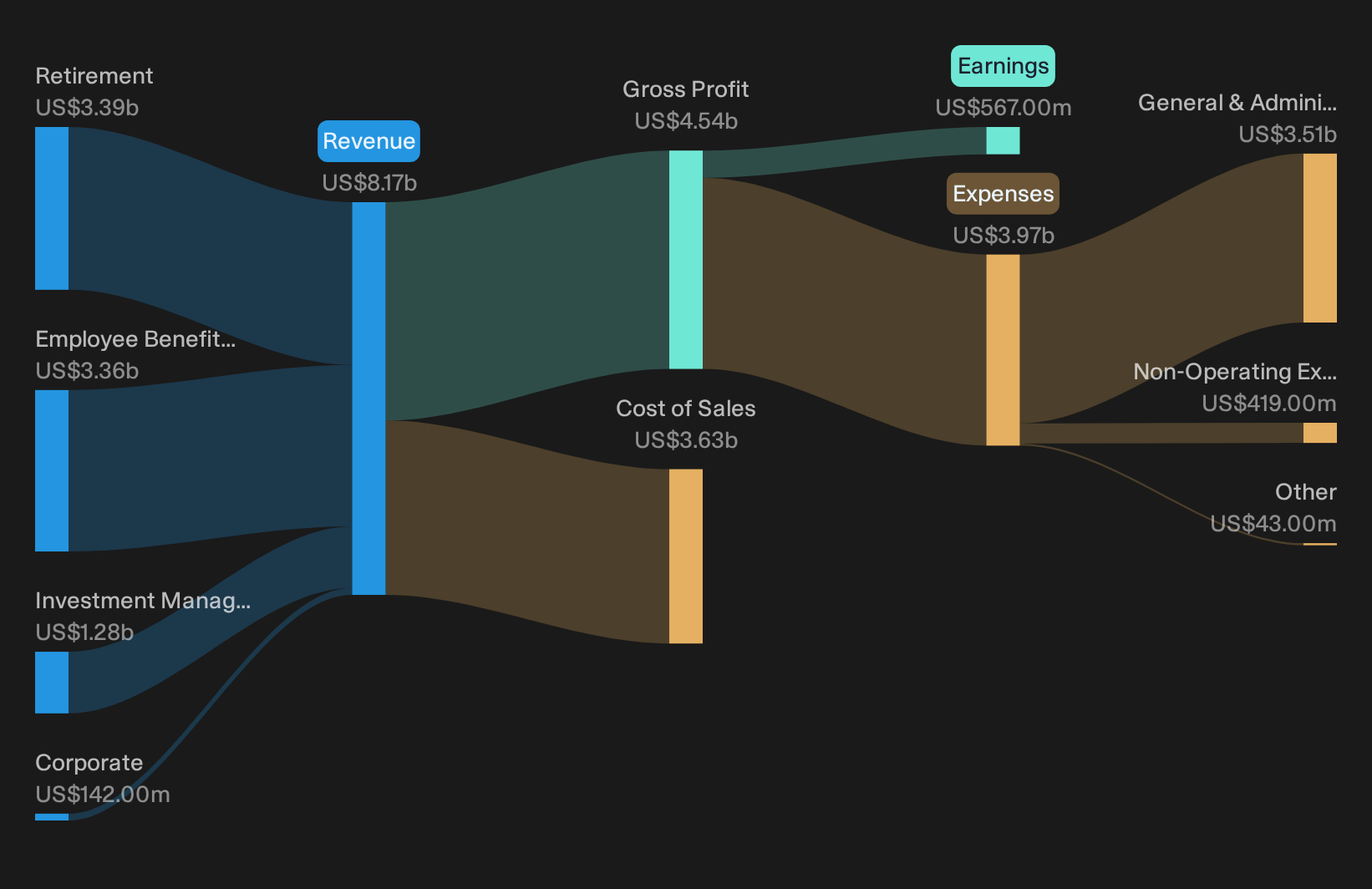
Operations: Voya generates about US$3.4b from Retirement, US$3.4b from Employee Benefits, US$1.3b from Investment Management and US$142m from Corporate, almost entirely in the United States.
Market Cap: US$9.3b
Voya Financial matters for this screener because it sits where workplace savings, employee benefits and sizeable pools of idle participant cash all meet. This positioning gives the firm meaningful leverage to how short-term rates and household balances behave.
"The strategic focus on holistic financial wellness and bundled employee benefit solutions (including in-sourced leave management and expanded voluntary offerings) is expected to increase client retention and cross-selling, supporting higher net revenues and improved customer lifetime value."
What really moves the needle from here is how one unresolved pressure on future earnings margins resolves as those cash flows mature.
As that margin puzzle plays out, the full narrative for Voya Financial shows how Voya Financial could turn cash yields, benefit design and capital return into a stronger long term story.
Mastercard (MA)
Overview: Mastercard runs a global payments network that routes card and digital transactions, earning fees on every purchase rather than taking credit risk.
Operations: Mastercard generates US$35.1b from Payment Solutions, with about US$15.1b from the Americas and US$20.0b from Asia Pacific, Europe, Middle East and Africa.
Market Cap: US$500.1b
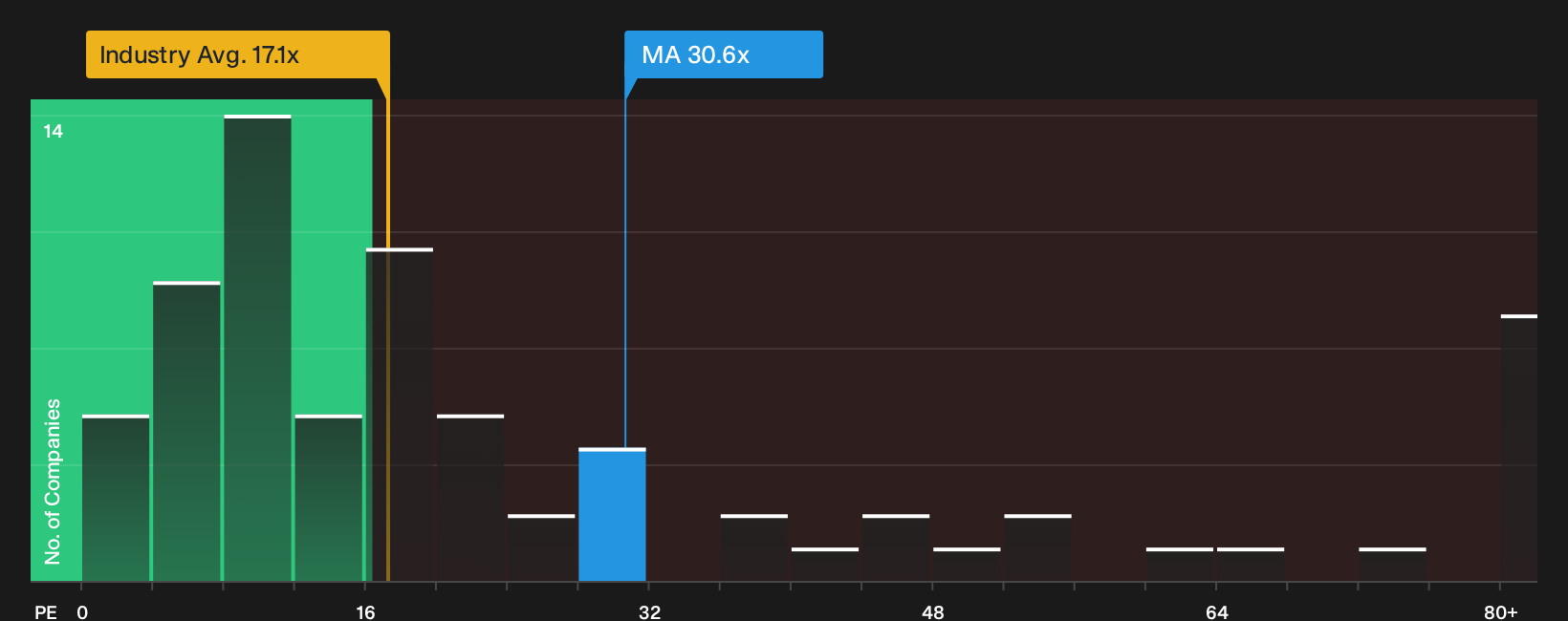
Mastercard matters for this screener because while it earns only modest interest on settlement float, its main exposure is to how much and how often consumers and businesses spend through its rails when higher short-term rates and potential cash injections change spending patterns.
"Mastercard is not standing still while stablecoins reshape payments. It is building settlement infrastructure and tools for "agentic commerce" around them instead of fighting the trend."
The key variable is how that newer payments plumbing ultimately feeds through to pricing power and the pace of fee growth over time.
That pricing puzzle is where it gets interesting, and the full narrative for Mastercard maps how Mastercard’s fee engine could accelerate, stall or quietly decouple from old payment models.
Western Union (WU)
Overview: Western Union runs a global network that moves money and offers digital financial services, giving it direct exposure to customer cash flows and short-term rates.
Operations: Western Union generates about US$3.5b from Consumer Money Transfer and US$576m from Consumer Services, with revenue spread across North America, Europe and CIS, Latin America and the Caribbean, Asia Pacific, Middle East, Africa, and South Asia.
Market Cap: US$2.2b
Western Union matters in this cash-and-rates theme because it regularly holds and routes customer funds, so elevated short-term yields and any extra consumer liquidity can influence what those idle balances earn in the background.
"Early strategic engagement with stablecoins and on-chain settlement technologies offers the potential to materially lower capital requirements, accelerate settlement speed, and potentially increase revenue opportunities by serving as a global on/off-ramp between fiat and digital currencies as global payments infrastructure modernizes."
The real swing factor is how one emerging piece of that money-movement engine ultimately feeds through to profitability when funding costs shift.
That swing factor is exactly what the full narrative for Western Union unpacks, showing how Western Union could turn on-chain settlement into accelerating cash economics while managing real-world risks.

Seeking Fresh Alternatives Before They Fly
Fresh ideas move first. Once momentum hits, prices can be flying before most investors even notice. Scan curated lists now, while the data still matters, and get in early.
- Target durable income by reviewing a curated mix of higher-yield payers in the 6 dividend fortresses before yields drop and the crowd starts chasing them.
- Hunt for future standouts using the hand-picked 17 high quality undiscovered gems that remain under the radar for now but may not stay quiet for long.
- Track the backbone of tomorrow’s computing shift with the focused 25 quantum computing stocks before market momentum crowds into the same small group.
This article by Simply Wall St is general in nature. We provide commentary based on historical data and analyst forecasts only using an unbiased methodology and our articles are not intended to be financial advice. It does not constitute a recommendation to buy or sell any stock, and does not take account of your objectives, or your financial situation. We aim to bring you long-term focused analysis driven by fundamental data. Note that our analysis may not factor in the latest price-sensitive company announcements or qualitative material. Simply Wall St has no position in any stocks mentioned.
Have feedback on this article? Concerned about the content? Get in touch with us directly. Alternatively, email editorial-team@simplywallst.com