
Does Fund Lineup Expansion Change The Bull Case For Manulife (TSX:MFC)?
- Manulife Financial, through Manulife Canada, expanded its segregated fund lineup by adding eight new funds and broadening access to 11 existing options, giving advisors and clients more ways to use mutual fund and ETF based strategies within insurance wrapped solutions that support protection, estate planning and wealth transfer needs.
- This broader menu of segregated funds shows Manulife Financial leaning further into fee based wealth and retirement solutions, where product breadth, tax and estate features, and advisor shelf space can influence long term asset gathering, cost efficiency and customer retention more than headline performance numbers alone.
- The focus now turns to how Manulife Financial's wider segregated fund shelf might shape its investment narrative around wealth and retirement.
Scan how Manulife Financial's segregated fund expansion compares with other insurers leaning into fee based wealth platforms by reviewing our curated list of list of solid balance sheet and fundamentals (7 results).
Manulife Financial Investment Narrative Recap
Owning Manulife Financial means believing its mix of insurance, wealth and retirement franchises can keep converting demographic demand into growing fee based and underwriting income while managing regulatory and credit headwinds. The immediate swing factor is how well Global Wealth and Asset Management offsets coming fee pressure from Hong Kong's eMPF changes and credit risk in U.S. below investment grade and commercial real estate portfolios. The segregated fund expansion in Canada helps broaden fee based offerings but does not materially change those core near term catalysts or the main earnings risks.
The most relevant update around this theme is Manulife Financial's appointment of Sarah Chapman as Global Chief Marketing & Customer Experience Officer, effective January 1, 2027. A unified marketing and customer experience lead across the group ties directly into the push to grow fee light, retirement focused products like segregated funds and private markets offerings. Strong execution here could support assets under management growth and deepen advisor relationships. The flip side is execution risk if marketing, digital and sustainability priorities do not translate into engagement and profitable sales across Asia, Canada and the U.S.
Yet even with these product moves and leadership changes, there is a separate pressure point that deserves closer attention before getting too comfortable with Manulife Financial's story.
Read the full Manulife Financial narrative to see the case behind these numbers.
Manulife Financial's current narrative assumes revenue will grow by 22.9% a year and that earnings will rise from CA$6.2b today to CA$8.5b by 2029, which is an increase of about CA$2.3b in profit, with revenues projected to reach CA$61.5b in the same year.
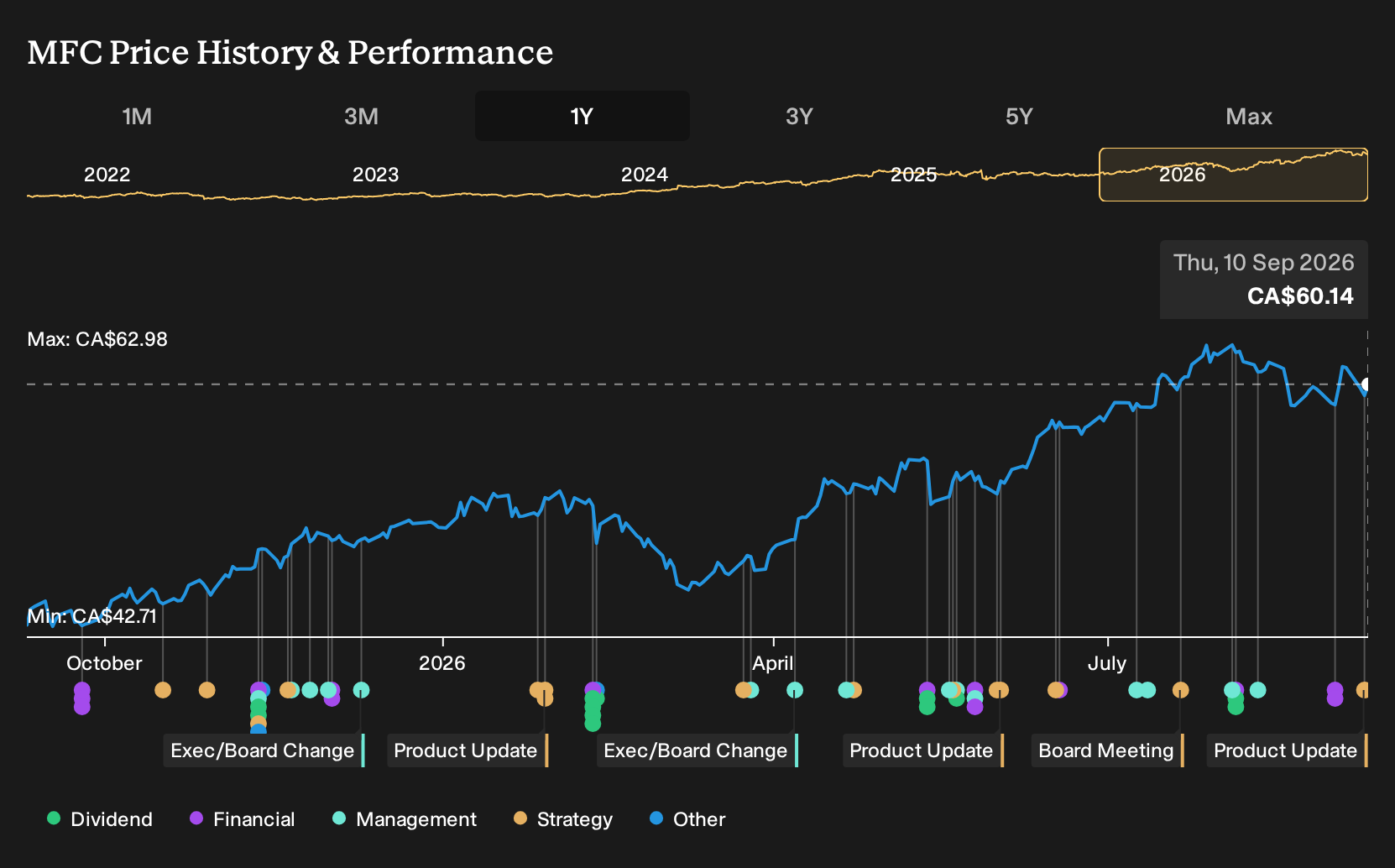
Manulife Financial's forecasts place fair value at CA$65.20 versus the CA$60.14 share price, indicating an 8% upside to its current price that could narrow quickly.
Exploring Other Perspectives
Four fair value estimates from the Simply Wall St Community span from CA$65.20 to about CA$124.36, so some retail investors see Manulife Financial trading near intrinsic value while others price in a far richer future. Consider those views alongside risks such as Hong Kong fee compression and U.S. credit exposure, then explore these contrasting opinions yourself.
If you want to see how other investors are framing Manulife Financial's upside, review the 3 other fair value estimates for Manulife Financial.
Form Your Own Verdict
Disagree with existing narratives? Extraordinary investment returns rarely come from following the herd, so trust your own analysis and judgment.
- A great starting point for your Manulife Financial research is our analysis highlighting 4 key rewards that could impact your investment decision.
- See our latest analysis for Manulife Financial. The report includes a comprehensive fundamental analysis summarized in a single visual, the Snowflake, making it easy to evaluate Manulife Financial's overall financial health at a glance.
Looking for more Manulife Financial sized investment ideas?
If the Manulife Financial story has you thinking about what else might fit your portfolio, it can help to scan a broader list of stocks that share similar quality or income traits, then compare how each one lines up against your goals and risk tolerance.
- For investors who want resilient businesses that focus on balance sheet strength, start with a list of solid balance sheet and fundamentals (7 results) that can act as potential core holdings beside Manulife Financial.
- If your priority is limiting downside risk rather than chasing every upswing, filter for companies with steadier profiles through a 1 resilient stocks with low risk scores that can complement more cyclical positions.
- When you are hunting for underappreciated opportunities backed by solid fundamentals, scan a 9 high quality undiscovered gems that may not yet be widely followed but still warrant a closer look.
This article by Simply Wall St is general in nature. We provide commentary based on historical data and analyst forecasts only using an unbiased methodology and our articles are not intended to be financial advice. It does not constitute a recommendation to buy or sell any stock, and does not take account of your objectives, or your financial situation. We aim to bring you long-term focused analysis driven by fundamental data. Note that our analysis may not factor in the latest price-sensitive company announcements or qualitative material. Simply Wall St has no position in any stocks mentioned.
Have feedback on this article? Concerned about the content? Get in touch with us directly. Alternatively, email editorial-team@simplywallst.com