
Should Strong Half Year Earnings Require Action From Rubis Stock Investors?
- Rubis reported half year 2026 results, with sales of €4,067.52 million, net income of €191.41 million and basic EPS from continuing operations of €1.85, all higher than the figures a year earlier.
- The alignment of rising sales, stronger net income and unchanged basic and diluted EPS indicates operating performance that kept the share count stable while improving profitability per share.
- We will now assess how Rubis' higher half year net income could influence the existing investment narrative investors have been using.
Scan how Rubis' earnings story compares with other companies showing resilient profitability and balance sheets in our hand-picked list of solid balance sheet and fundamentals (193 results) for fresh ideas beyond this stock.
Rubis Investment Narrative Recap
To own Rubis, you need to be comfortable with an energy distributor that leans on resilient volumes in Europe, Africa and the Caribbean while absorbing periodic shocks from inflation, currencies and regulation. The latest half year, with higher sales, net income and EPS, supports the idea that the current operating model can handle that mix.
In the near term, the key catalyst is whether management can keep converting higher turnover into stable margins while funding solar and other projects on a balance sheet already flagged for high debt. The biggest risk remains pressure in markets like Kenya, Nigeria and Haiti, where political or pricing changes could quickly hit earnings.
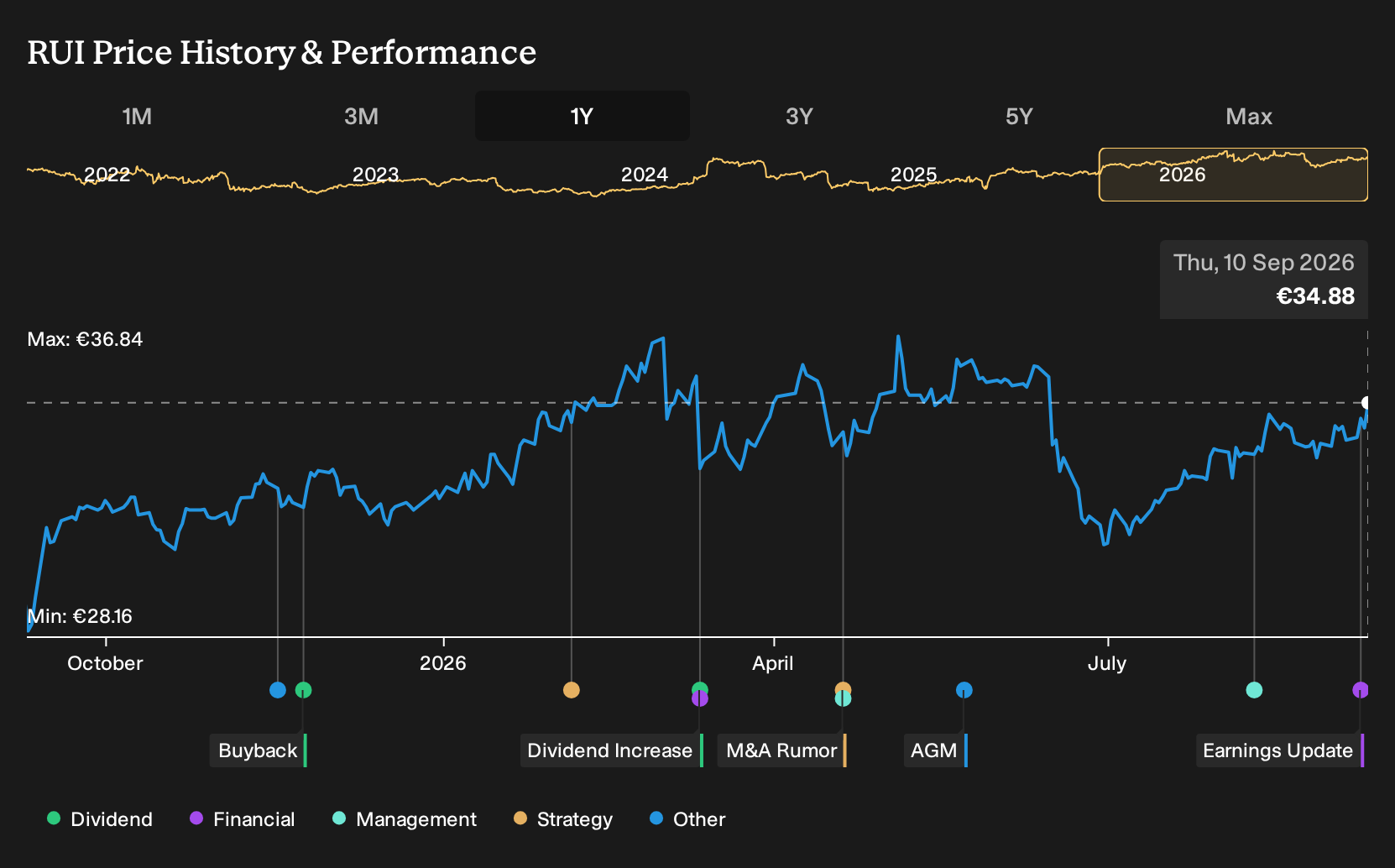
The half year 2026 report is the clearest recent marker for that thesis. Rubis delivered €4,067.52 million in sales and €191.41 million in net income, with basic and diluted EPS from continuing operations of €1.85. Those figures were all higher than a year earlier, which shows the current footprint can still support earnings per share.
For your own view on catalysts, it helps to line those results up against the existing expectations that earnings grow in the low single digits and that returns on equity remain relatively modest. The latest numbers do not remove the known risks around leverage, funding mix and regional instability, but they give you fresher evidence to judge whether those trade offs still feel acceptable.
Rubis' current analyst story points to revenues of €7.8b and earnings of €353.2 million by 2029. That outlook rests on 5.9% yearly revenue growth and an earnings increase of about €44.4 million from €308.8 million today.
Uncover why Rubis' fair value indicates a 12% potential upside to its current price that could narrow quickly.
Exploring Other Perspectives
One alternate view puts long term fossil fuel demand risk at the center of the Rubis story. Those more cautious analysts were only pencilling in revenue reaching about €7.3b and earnings of €339.7 million by 2029 before this half year release. That is a tighter, more pessimistic path than consensus, and the latest results may prompt some to revisit those assumptions. You can use that spread in expectations to test where your own view really sits.
Explore 4 other Rubis fair value estimates, including one that suggests as much as 5% downside from the current price.
The Verdict Is Yours
Disagree with existing narratives? Extraordinary investment returns rarely come from following the herd, so trust your own analysis.
- A great starting point for your Rubis research is our analysis highlighting 4 key rewards and 1 important warning sign that could impact your investment decision.
- See our latest analysis for Rubis. The report includes a comprehensive fundamental analysis summarized in a single visual, the Snowflake, making it easy to evaluate Rubis' overall financial health at a glance.
Looking For More Investment Ideas Beyond Rubis?
Once you have a view on Rubis, it often helps to compare it with other businesses that share similar qualities or offer very different risk and reward profiles. The Simply Wall St screener can surface a wide range of alternatives that fit your own preferences on quality, balance sheet strength and income potential.
- If you want potential mispricing combined with solid fundamentals, scan a curated 181 high quality undervalued stocks that match strong cash generation with disciplined financial structures.
- For investors who care most about capital resilience, filter for companies in the 99 resilient stocks with low risk scores that score well on volatility, debt and earnings stability.
- If reliable income is the priority, focus on dividend-focused opportunities inside the 167 dividend fortresses that pair higher yields with fundamental checks.
This article by Simply Wall St is general in nature. We provide commentary based on historical data and analyst forecasts only using an unbiased methodology and our articles are not intended to be financial advice. It does not constitute a recommendation to buy or sell any stock, and does not take account of your objectives, or your financial situation. We aim to bring you long-term focused analysis driven by fundamental data. Note that our analysis may not factor in the latest price-sensitive company announcements or qualitative material. Simply Wall St has no position in any stocks mentioned.
Have feedback on this article? Concerned about the content? Get in touch with us directly. Alternatively, email editorial-team@simplywallst.com