
Can Bending Spoons (NasdaqGS:BSP) Stay Undervalued After Its Latest Deals?
Bending Spoons stock has dropped about 20.4% over the past month, yet the valuation picture is split, with an intrinsic value estimate pointing to upside while market multiples lean the other way. Recent acquisitions such as Airtable and the agreed purchase of Miro add another layer, since they can reshape both near term earnings metrics and long term cash flow potential.
- The share price declined 20.4% over the past month, which puts recent trading under pressure even before any new valuation work.
- The agreed cash acquisition of Miro at about US$1.35b, alongside the completed Airtable deal, can support long range cash flow but may also weigh on near term reported metrics and integration risk.
- The company scores a middling value profile, with the broader checks showing a mixed picture rather than a clear bargain or clear overvaluation, and a value score of 3.
The issue now is whether Bending Spoons' current market price already reflects the intrinsic value estimate from the Discounted Cash Flow model or still leaves a meaningful valuation gap.
Spot potential rebound candidates alongside Bending Spoons by scanning our hand picked list of 31 high quality undervalued stocks.Does Bending Spoons Look Undervalued on Cash Flow?
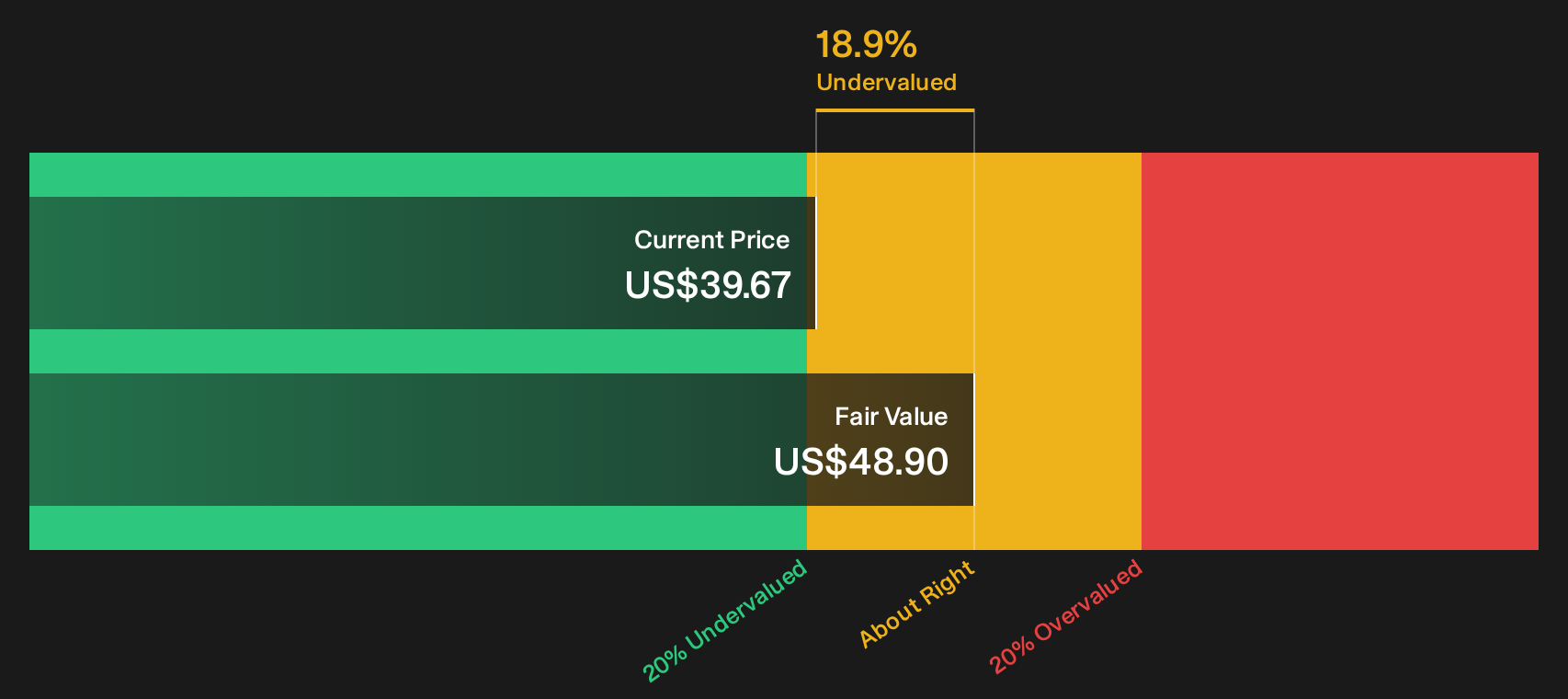
The Discounted Cash Flow (DCF) model here values Bending Spoons by projecting future free cash flows and discounting them back to today. On the latest twelve month numbers, the company generated about $359 million in free cash flow, with the DCF using a growing cash flow profile that steps up toward projected figures above $1b over the next decade.
On those assumptions, the DCF points to an intrinsic value of about $49 per share, which sits above the current market price and implies the stock trades at roughly a 21.2% discount. The agreed $1.35b cash acquisition of Miro, along with the Airtable deal, helps explain why the market might be pricing in execution and integration risk even as the model points to higher long term cash generation.
On balance, the DCF work suggests Bending Spoons stock currently appears undervalued relative to its projected cash flows.
Our Discounted Cash Flow (DCF) analysis suggests Bending Spoons is undervalued by 21.2%. Track this in your watchlist or portfolio, or discover 31 more high quality undervalued stocks.
Is Bending Spoons Getting Expensive on Earnings?
P/E fits Bending Spoons because earnings are now a central reference point for how investors price mature software groups.
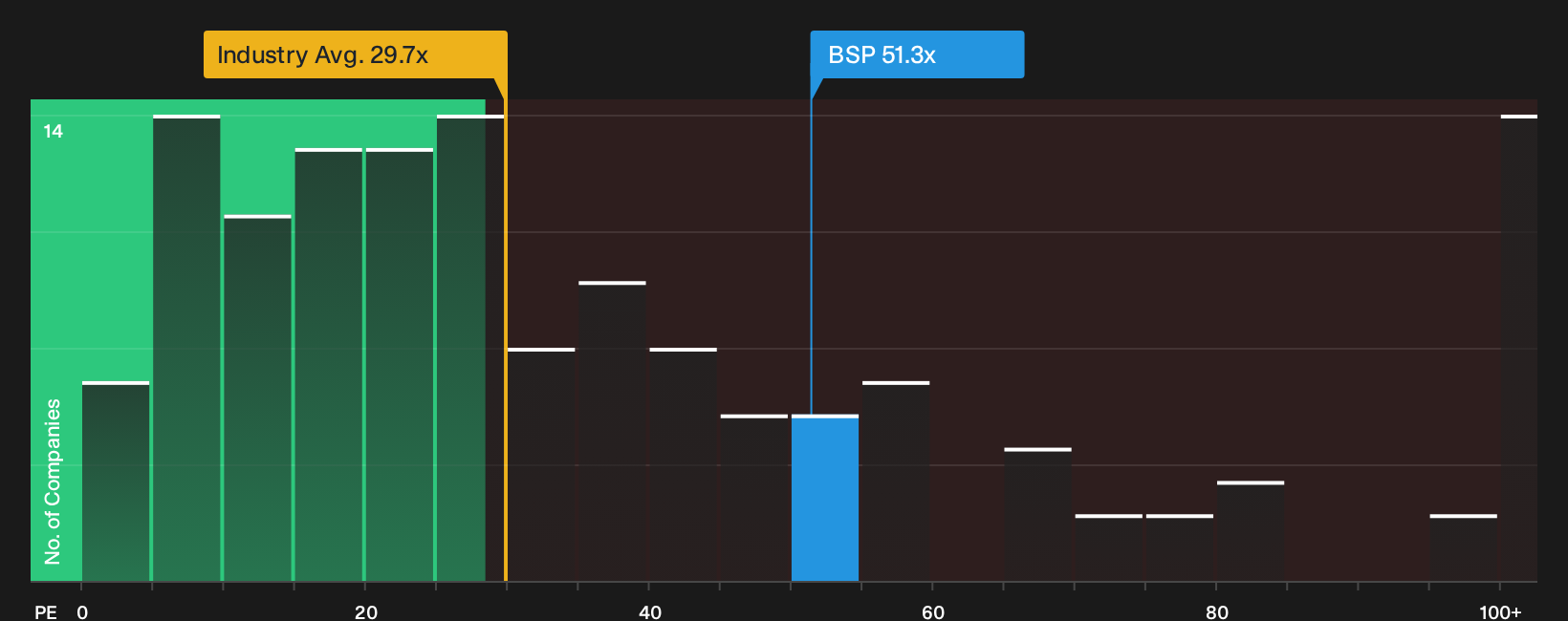
The stock trades on a P/E of about 50.4x, which is well above the broader software industry average of roughly 29.7x. Against a peer group average of about 66.8x, the multiple sits in the middle of the pack, so Bending Spoons is not the most aggressively priced software play, but it is far from cheap relative to the sector as a whole.
This higher P/E means buyers today are paying a richer price for each dollar of earnings than the typical software company. That premium suggests the market is already baking in a stronger earnings profile or a higher quality business model than the industry average, even before any benefits or risks from the Airtable and Miro deals fully show up in reported results.
On this P/E yardstick, Bending Spoons stock looks overvalued compared with the wider software industry.
See what the numbers say about this price — find out in our valuation breakdown.
The Bending Spoons Narrative: What Would Justify Today's Price?
Narratives pick up where the Bending Spoons valuation puzzle leaves off by spelling out which paths for growth, margins and earnings would need to hold for the share price to move meaningfully higher or lower from here. Each scenario on Simply Wall St's Community page links a fair value estimate to a distinct set of potential catalysts and downside risks, so you can track over time which storyline is getting closer to reality.
Community views on Bending Spoons sit far apart, with one camp leaning into the acquisition engine and another focused on how fragile that model could be.
Bull case: 19% undervalued
"The availability of a large pool of digital businesses that Bending Spoons views as potential targets, combined with expanded access to term loans, revolving credit facilities and IPO proceeds, supports ongoing M&A capacity..."
Read the full Bull Case to see why Bending Spoons could be undervalued
Bear case: roughly fairly valued
"The acquisition-led model depends on a continued supply of large digital assets at attractive terms, which would weigh on revenue growth and earnings compounding..."
Read the full Bear Case to see why Bending Spoons could be overvalued
Do you think there's more to the story for Bending Spoons? Head over to our Community to see what others are saying!
The Bottom Line
Bending Spoons now screens as undervalued on a Discounted Cash Flow (DCF) basis, yet looks overvalued on simple earnings multiples, so the valuation story is conflicted rather than clearly cheap. The gap comes from cash flow models giving credit for future scale, while the P/E ratio reflects what investors are currently willing to pay for growth and perceived quality versus other software groups. Broader checks sit in the middle, which tempers how much weight any single signal should carry. The key consideration from here is whether management can turn the Airtable and Miro deals into durable cash generation without eroding market confidence in the process.
This article by Simply Wall St is general in nature. We provide commentary based on historical data and analyst forecasts only using an unbiased methodology and our articles are not intended to be financial advice. It does not constitute a recommendation to buy or sell any stock, and does not take account of your objectives, or your financial situation. We aim to bring you long-term focused analysis driven by fundamental data. Note that our analysis may not factor in the latest price-sensitive company announcements or qualitative material. Simply Wall St has no position in any stocks mentioned.
Have feedback on this article? Concerned about the content? Get in touch with us directly. Alternatively, email editorial-team@simplywallst.com