
Goldman Sachs (GS) Stock May Be 9% Undervalued On AI IPO Roles
Goldman Sachs Group has turned a very large 3 year gain into a fresh valuation puzzle, with the Excess Returns intrinsic value estimate suggesting the stock is roughly in line with fair value, while market multiples still flag it as potentially cheap.
- The share price has delivered about 221.2% over three years, which puts extra weight on whether current expectations already bake in much of that improvement.
- Exposure to high profile capital markets work in areas like AI related deals and digital assets can support optimism on future fee and trading power. At the same time, new ventures such as stablecoins and crypto products may add regulatory and reputational risk that investors need to price in.
- The broader valuation checks, with a mixed score of 4.0, point to a stock that is neither a clear bargain nor clearly overpriced. This leaves the current Goldman Sachs Group valuation open to interpretation for different investment styles.
The issue now is whether Goldman Sachs Group at around US$1,029 a share still offers enough potential upside over the next few years to justify the risk implied by that mixed valuation picture.
Spot opportunities that echo Goldman Sachs Group’s mix of AI fueled capital markets exposure and mixed valuation signals by scanning our curated list of 89 AI infrastructure stocks.Where Does Goldman Sachs Group Sit on Excess Returns?
The Excess Returns model values Goldman Sachs Group by comparing the earnings power supported by its equity base with what shareholders require as a minimum return. For Goldman Sachs Group, that means weighing a relatively high projected return on equity against the cost of that capital.
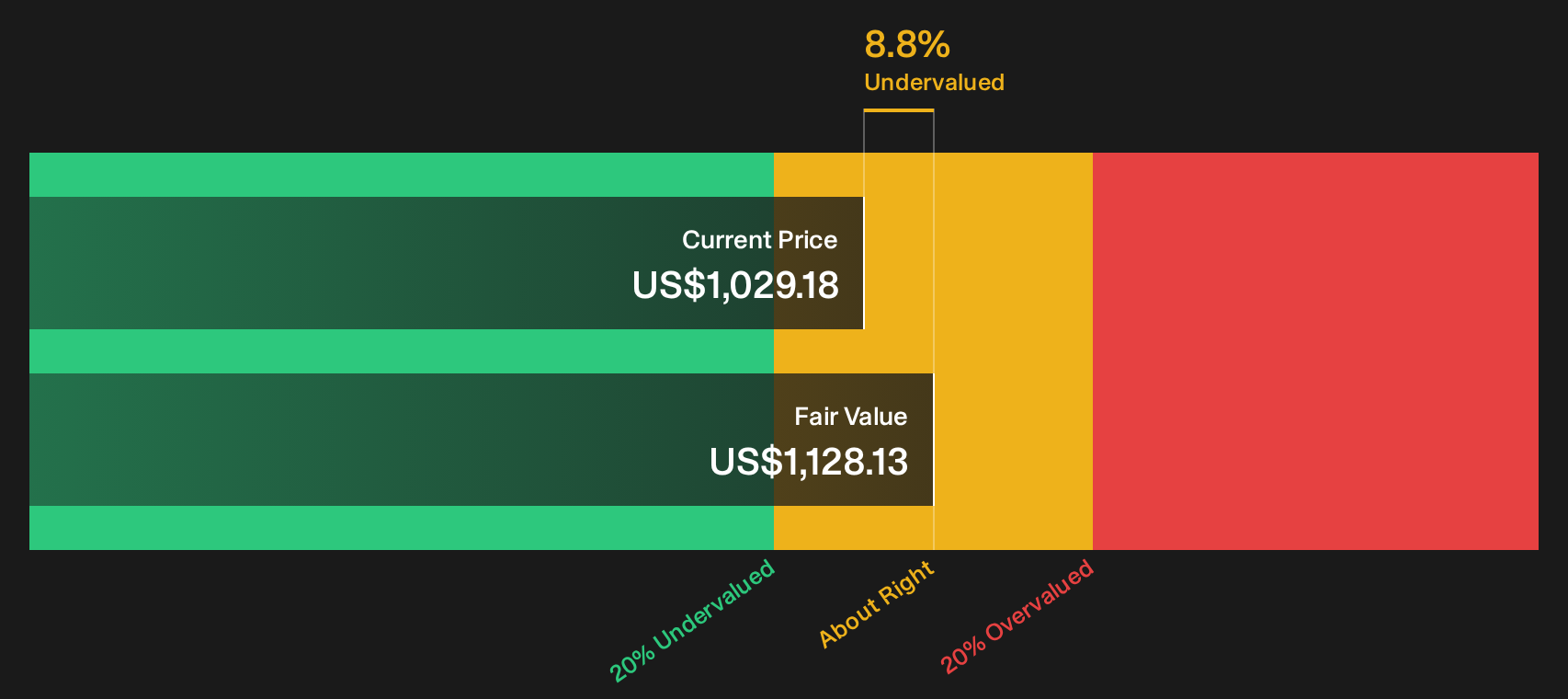
The inputs point to a business expected to earn stable EPS of $78.12 per share on a stable book value of $406.56 per share, with an average return on equity of 19.21% versus a cost of equity of $37.77 per share. That spread translates into excess return of $40.34 per share and an intrinsic value estimate of about $1,128 per share, compared with a recent price near $1,029. This implies the stock screens roughly fairly valued overall with an 8.8% discount. The Goldman Sachs led consortium plan to launch a regulated USD stablecoin by 2027 helps explain why some investors may be willing to pay close to intrinsic value for this mix of traditional capital markets earnings and new digital asset ventures.
On this Excess Returns view, Goldman Sachs Group currently looks about fairly valued rather than clearly cheap or expensive.
Goldman Sachs Group is fairly valued according to our Excess Returns, but this can change at a moment's notice. Track the value in your watchlist or portfolio and be alerted on when to act.
Does Goldman Sachs Group Look Undervalued on Earnings?
P/E fits Goldman Sachs Group quite well because earnings remain a central yardstick investors use for large, mature financial institutions.
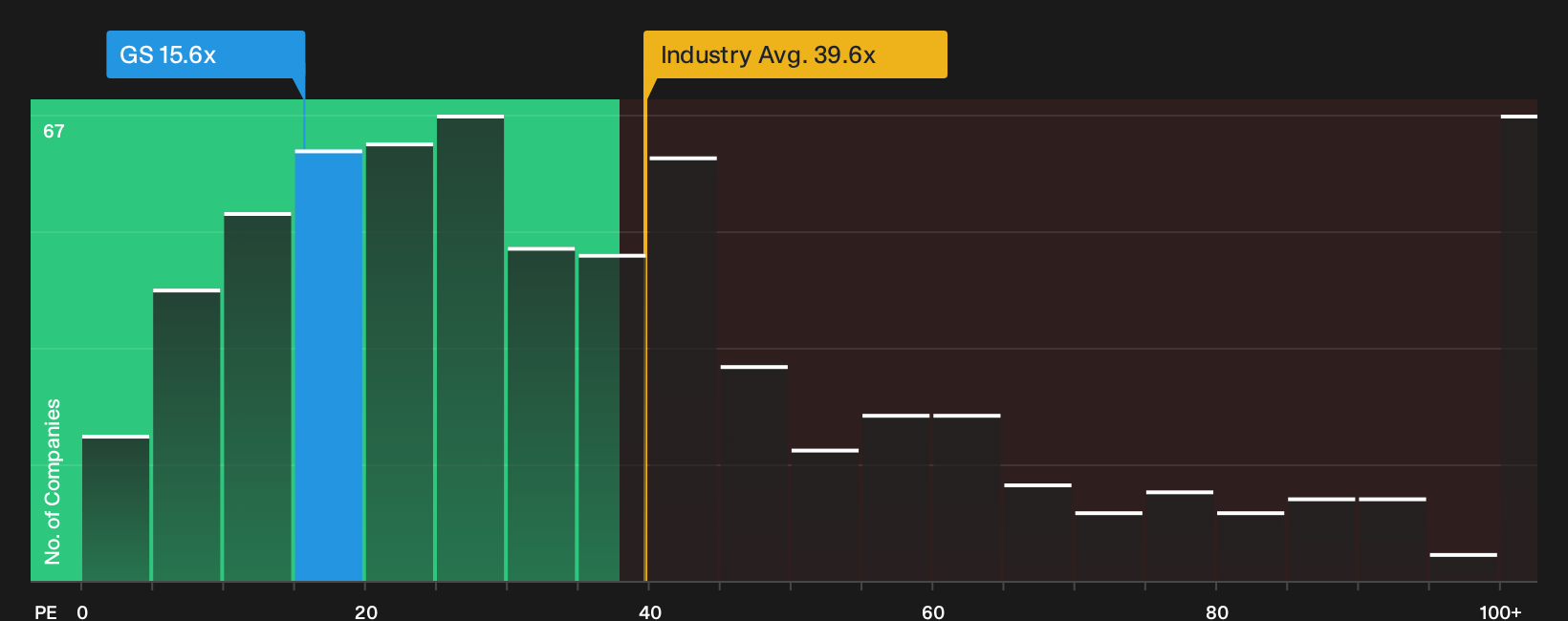
The stock trades on about 15.6x P/E, which is below both the Capital Markets industry average of roughly 39.6x and a peer group closer to 30.5x. The bespoke fair P/E ratio, which adjusts for Goldman Sachs Group’s size, profitability profile and risk inputs, is estimated at 18.9x. That is meaningfully higher than where the shares change hands today.
This gap means the market is valuing Goldman Sachs Group at a discount to what those fundamentals would typically support on this framework, even with its exposure to high profile AI related capital markets mandates and digital asset experiments already well flagged. The current multiple indicates that investors are demanding a margin of safety compared with that tailored fair P/E estimate.
On the P/E yardstick, Goldman Sachs Group currently appears undervalued relative to the earnings multiple implied by this fair value framework.
See what the numbers say about this price — find out in our valuation breakdown.
The Goldman Sachs Group Narrative: What Would Justify Today's Price?
Simply Wall St Narratives act as the missing link in Goldman Sachs Group's story, explaining which paths for growth, profitability and earnings would need to unfold for the stock to be worth meaningfully more or materially less than where it trades today. These narratives sit on the Community page. Each narrative ties a specific fair value view to a clear set of potential drivers and risks so you can track over time which storyline appears to be gaining traction.
Community views on Goldman Sachs Group split sharply, with one camp focusing on AI and fee income resilience and the other on disruption and regulation pushing returns lower.
Bull case: 10% undervalued
"Record growth and momentum in Asset & Wealth Management, including strong fee-based net inflows for 30 consecutive quarters and rising demand for alternative assets from high-net-worth and institutional clients, are shifting the revenue mix toward less volatile, high-margin streams…"
Read the full Bull Case to see why Goldman Sachs Group could be undervalued
Bear case: 19% overvalued
"Goldman Sachs faces long-term earnings headwinds as rising digitization and the proliferation of fintech disruptors are expected to steadily erode the firm's margins across investment banking, trading, and wealth management, with digital-first competitors and technology giants threatening to displace legacy offerings and compress fees…"
Read the full Bear Case to see why Goldman Sachs Group could be overvalued
Do you think there's more to the story for Goldman Sachs Group? Head over to our Community to see what others are saying!
The Bottom Line
Goldman Sachs Group screens close to intrinsic value on the Excess Returns framework, while the P/E work still points to an undervalued earnings multiple. That gap comes down to cash flow and capital needs looking reasonably covered, yet the market keeps a discount on growth expectations and sentiment around AI related deal flow and digital assets. The core issue for investors is whether that discount reflects genuine concern about regulatory and disruption risk, or whether it overstates those threats to long term fee and trading power.
This article by Simply Wall St is general in nature. We provide commentary based on historical data and analyst forecasts only using an unbiased methodology and our articles are not intended to be financial advice. It does not constitute a recommendation to buy or sell any stock, and does not take account of your objectives, or your financial situation. We aim to bring you long-term focused analysis driven by fundamental data. Note that our analysis may not factor in the latest price-sensitive company announcements or qualitative material. Simply Wall St has no position in any stocks mentioned.
Have feedback on this article? Concerned about the content? Get in touch with us directly. Alternatively, email editorial-team@simplywallst.com