
Oshkosh (OSK) Stock Looks Undervalued On Cash Flow And Earnings
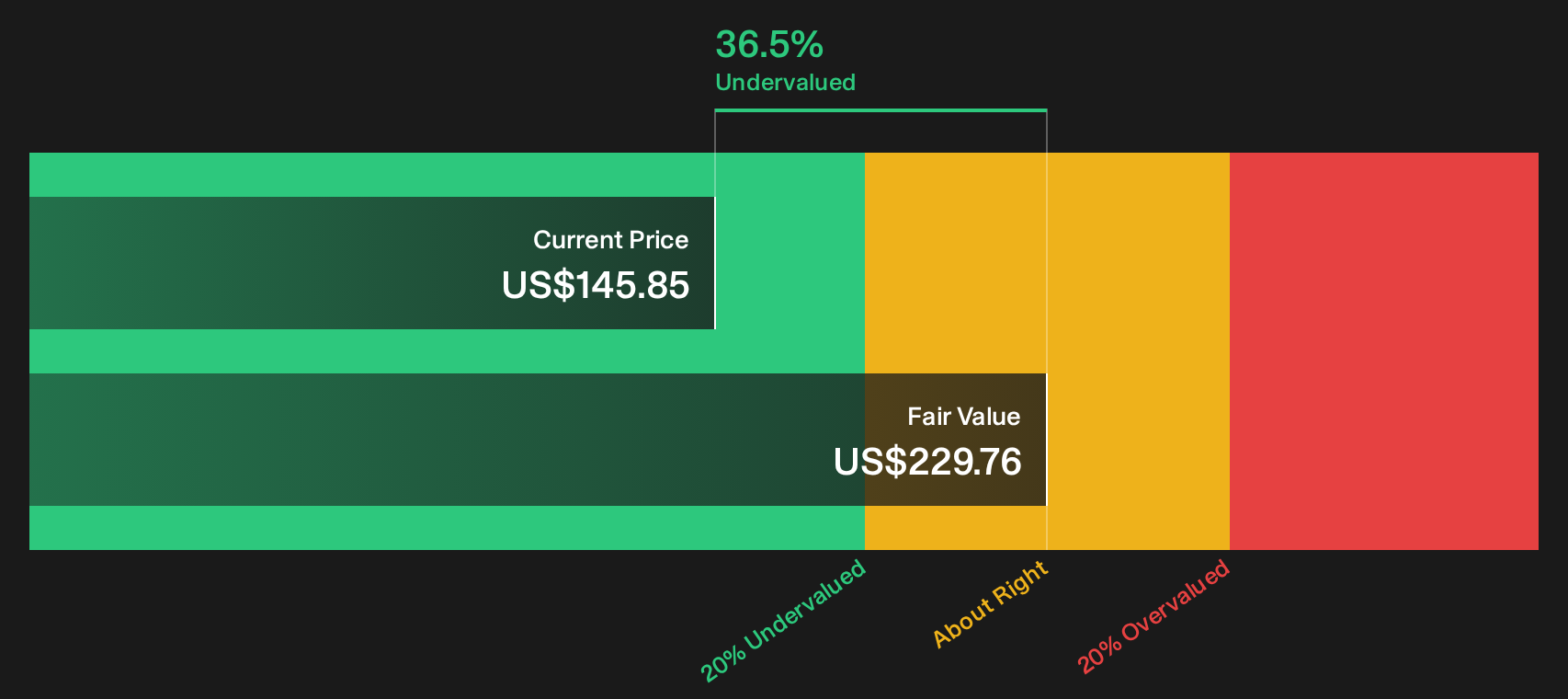
Oshkosh stock has delivered a 56.1% gain over the past three years, yet current valuation checks suggest the shares still trade at a discount to what the underlying cash flows imply. The Discounted Cash Flow (DCF) intrinsic value estimate points to meaningful upside compared with the recent US$145.85 close, and market multiple checks tell a similar story.
- A 56.1% return over three years points to a business that has rewarded patient holders, while the latest move still leaves room for valuation debate.
- Expectations for steady cash generation from specialty vehicles and access equipment can support the intrinsic value case. However, swings in capital spending by customers remain a key risk for Oshkosh.
- The broader checks lean cheap, with Oshkosh scoring 5 out of 6 on value, which lines up with both the DCF and earnings multiple signals.
The issue now is whether the current share price already captures these cash flow prospects, or if Oshkosh still offers a meaningful valuation gap for long term investors.
Compare Oshkosh's valuation gap with a curated group of companies that also screen as potentially cheap on cash flows and fundamentals via the 31 high quality undervalued stocks.
Is Oshkosh a Bargain on Cash Flow?
The Discounted Cash Flow (DCF) model here is built on cash flow projections rather than short term earnings swings. Oshkosh has produced latest twelve month free cash flow of about $1.0b, and the model assumes that future free cash flows grow steadily from that base rather than increasing sharply or declining significantly.
On those inputs, the DCF points to an intrinsic value of about $230 per share, compared with the recent $145.85 price. That difference, together with the use of moderate long run growth assumptions, indicates that the current quote may not fully reflect the cash Oshkosh is expected to generate for equity holders over time.
On this DCF view, Oshkosh stock appears undervalued relative to the cash flows implied in the model.
Our Discounted Cash Flow (DCF) analysis suggests Oshkosh is undervalued by 36.5%. Track this in your watchlist or portfolio, or discover 31 more high quality undervalued stocks.
Does Oshkosh Look Undervalued on Earnings?
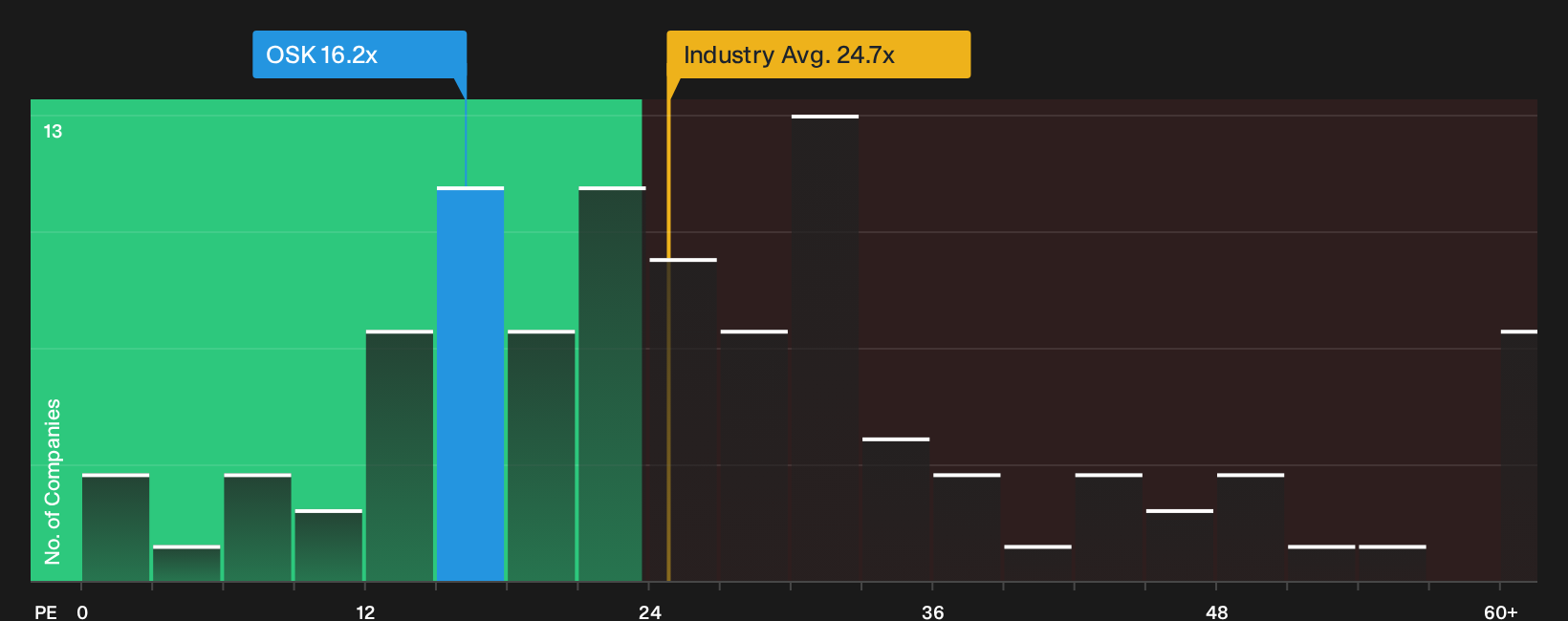
P/E works well for Oshkosh because earnings quality and capital intensity matter a lot in machinery, and investors often anchor on what they are paying for each dollar of profit. On this score, Oshkosh trades on a P/E of about 16.2x, which is well below the wider machinery group at roughly 24.7x and also below the peer set near 27.3x.
The fair P/E ratio implied by the model is about 27.7x, which is much closer to the industry and peer averages than to where Oshkosh stock currently changes hands. That gap suggests the present price does not fully align with what the model implies for earnings power, risk profile and sector context.
On this P/E check, Oshkosh appears undervalued compared with both its industry and the model’s fair multiple.
See what the numbers say about this price — find out in our valuation breakdown.
The Oshkosh Narrative: What Would Justify Today's Price?
Oshkosh's valuation puzzle only really comes into focus once the story behind the numbers is spelled out. Simply Wall St Narratives sit on the Community page and link the current share price with the assumptions investors are effectively making about Oshkosh's future growth, margins and earnings power. Each narrative ties a fair value to a particular mix of potential catalysts and risks so you can track which version of Oshkosh's future appears to be taking shape over time.
Community views on Oshkosh are split between a margin driven upside story and a tariff and execution risk overhang.
Bull case: 13% undervalued
"Recent multi-year government contract wins (FMTV, FHTV, and the USPS NGDV program) provide improved pricing, recurring high-visibility revenue, and create a stable foundation for further earnings growth..."
Read the full Bull Case to see why Oshkosh could be undervalued
Bear case: 6% overvalued
"Expected increase in tariff rates, raw material prices, or supply chain disruptions might strain Oshkosh's costing models, leading to increased pressure on net margins and potentially impacting revenue forecasts..."
Read the full Bear Case to see why Oshkosh could be overvalued
Do you think there's more to the story for Oshkosh? Head over to our Community to see what others are saying!
The Bottom Line
For Oshkosh, both the Discounted Cash Flow (DCF) intrinsic value estimate and the earnings multiple work in the same direction, suggesting an undervalued stock rather than a fully priced one. The fact that these two different lenses broadly agree reduces the chance that the apparent discount is just a model quirk. What really matters from here is whether Oshkosh can sustain the cash generation and earnings profile that underpin those models while managing swings in customer capital spending and cost pressures. The gap is more likely to narrow if the market grows more comfortable that those cash flows are both durable and repeatable.
This article by Simply Wall St is general in nature. We provide commentary based on historical data and analyst forecasts only using an unbiased methodology and our articles are not intended to be financial advice. It does not constitute a recommendation to buy or sell any stock, and does not take account of your objectives, or your financial situation. We aim to bring you long-term focused analysis driven by fundamental data. Note that our analysis may not factor in the latest price-sensitive company announcements or qualitative material. Simply Wall St has no position in any stocks mentioned.
Have feedback on this article? Concerned about the content? Get in touch with us directly. Alternatively, email editorial-team@simplywallst.com