
Denali Therapeutics (DNLI) Stock Looks Stretched On Fair Value Yet Reasonable On Book Value
Denali Therapeutics has delivered a strong 1 year rebound for shareholders, yet multiple valuation checks suggest the current share price sits above where an intrinsic value estimate and market based comparisons would place it. The stock therefore looks priced for meaningful execution on its drug pipeline even after a difficult 5 year stretch.
- Over 5 years, Denali Therapeutics shareholders have seen the investment fall about 60%, which hints that earlier optimism has not yet translated into durable long term returns.
- Future cash flow depends heavily on how efficiently the company can turn its neurology research into commercial products. The risk is that development setbacks or slower than expected uptake delay or shrink those potential cash streams.
- The broader checks give Denali Therapeutics a value score of 2 out of 6, which leans expensive rather than offering a clear bargain at current levels.
The issue now is whether Denali Therapeutics shares around US$21 fairly reflect the intrinsic value estimate or leave investors paying a premium for the story.
Balance your Denali Therapeutics view by scanning 31 high quality undervalued stocks that combine pressured share prices with stronger valuation checks and potentially more conservative expectations baked into today’s quotes.
Is Denali Therapeutics Getting Expensive on Cash Flow?
The Discounted Cash Flow (DCF) model here uses projected free cash flows to gauge what Denali Therapeutics might be worth today. On the latest twelve month figures, the business is burning cash, with free cash flow of about $458.4 million flowing out rather than in. Analysts then assume that cash generation eventually recovers into positive territory, which is typical for a research heavy biotech that is still working to commercialize its pipeline.
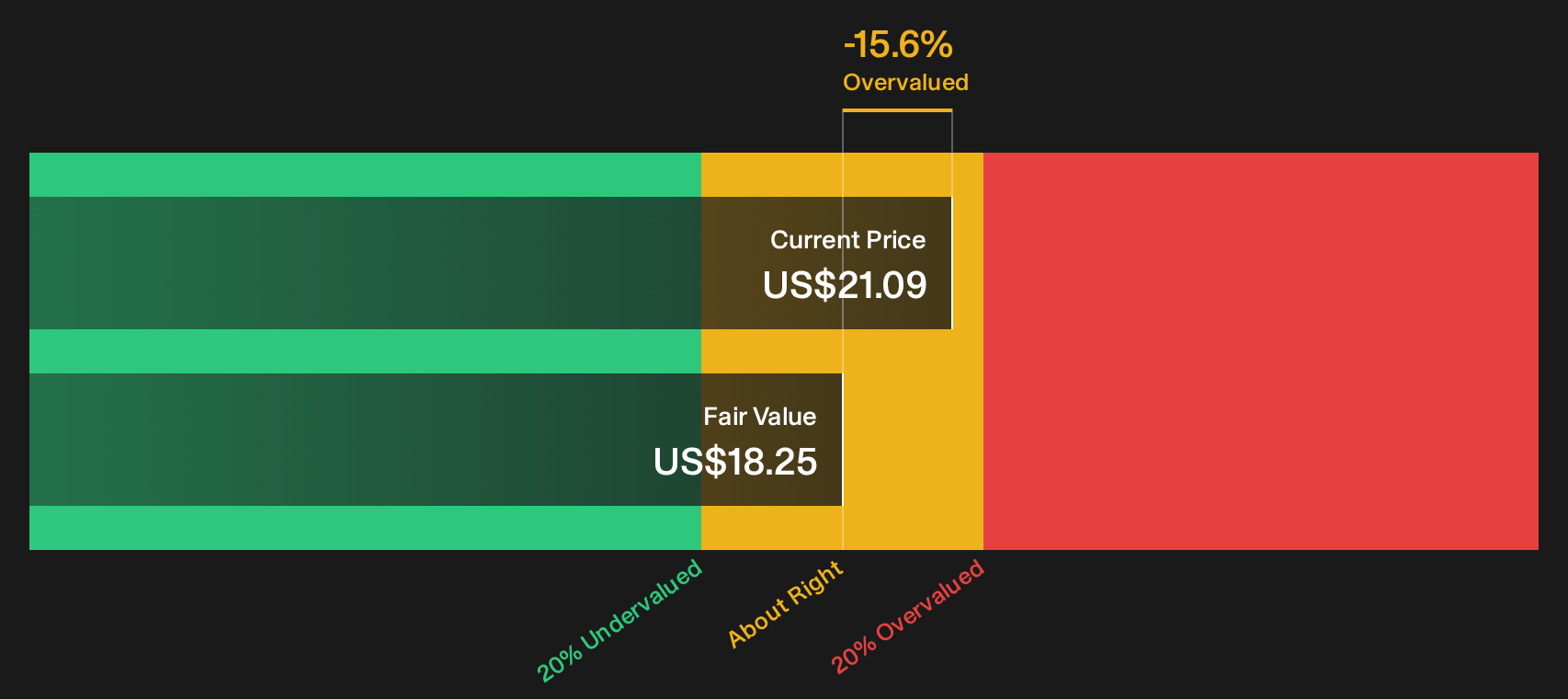
Feeding those projections into the 2 Stage Free Cash Flow to Equity framework gives an estimated intrinsic value of about $18 per share. With Denali Therapeutics currently around $21, the DCF points to the stock trading at roughly a 15.6% premium to that estimate. This suggests that the market is already pricing in a fair amount of optimism around future execution.
On this cash flow view, Denali Therapeutics appears overvalued relative to the DCF based intrinsic value estimate.
Our Discounted Cash Flow (DCF) analysis suggests Denali Therapeutics may be overvalued by 15.6%. Discover 31 high quality undervalued stocks or create your own screener to find better value opportunities.
Has Denali Therapeutics Run Too Far on Book Value?
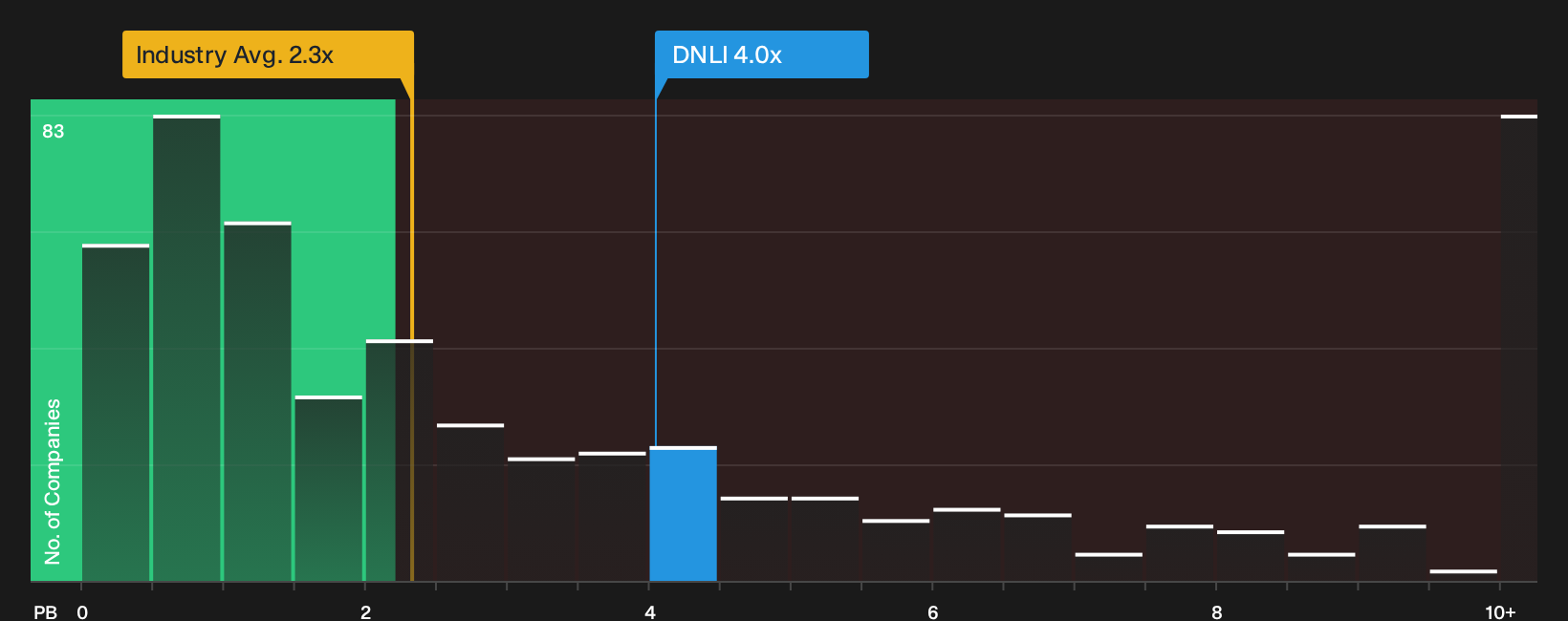
P/B can be a useful metric for Denali Therapeutics because much of the investment case relates to the value of its research assets and balance sheet rather than current earnings power. On this measure, the stock trades on a P/B of about 4.0x, compared with an industry average near 2.3x for biotechs. That means investors are paying a noticeably higher price for each dollar of Denali Therapeutics equity than is typical across the sector.
The peer group appears even richer overall, with an average P/B around 5.3x, but Denali Therapeutics still sits above the broader biotech benchmark. For anyone considering fresh capital, that gap indicates the market is already attaching a premium to the company’s asset base and pipeline potential, rather than offering a clear discount that might cushion execution risk.
On balance, the P/B comparison suggests Denali Therapeutics may be valued at a higher level than the wider biotech sector.
See what the numbers say about this price — find out in our valuation breakdown.
The Denali Therapeutics Narrative: What Would Justify Today's Price?
Simply Wall St Narratives for Denali Therapeutics pick up where the valuation work leaves off by spelling out which future paths for growth, profitability and earnings would need to unfold for the share price to end up meaningfully higher or lower than it is today on the screen. Instead of a single output from a ratio or model, Narratives unpack the specific future that number assumes, so you can watch how Denali Therapeutics' real world progress lines up over time.
One of the top community narratives on Denali Therapeutics: 22% undervalued
"Denali Therapeutics develops biologic medicines designed to cross the blood brain barrier for rare genetic and common neurodegenerative diseases..."
Read one of the top narratives on Denali Therapeutics
Do you think there's more to the story for Denali Therapeutics? Head over to our Community to see what others are saying!
The Bottom Line
For Denali Therapeutics, both the Discounted Cash Flow (DCF) view and the market multiple checks lean toward the shares looking overvalued rather than cheap. The intrinsic value estimate sits below the current price, and the P/B premium signals that investors are already paying up for the pipeline story. With broader valuation checks scoring on the weaker side, the key question is whether future drug development progress can justify that optimism. The crux of the debate is simple: either the neurology portfolio matures fast enough to support the current valuation, or the market reassesses the premium if execution proves slower or bumpier than hoped.
This article by Simply Wall St is general in nature. We provide commentary based on historical data and analyst forecasts only using an unbiased methodology and our articles are not intended to be financial advice. It does not constitute a recommendation to buy or sell any stock, and does not take account of your objectives, or your financial situation. We aim to bring you long-term focused analysis driven by fundamental data. Note that our analysis may not factor in the latest price-sensitive company announcements or qualitative material. Simply Wall St has no position in any stocks mentioned.
Have feedback on this article? Concerned about the content? Get in touch with us directly. Alternatively, email editorial-team@simplywallst.com