
What Callaway Golf Stock's Weak Demand Means For Shareholders
- Callaway Golf has seen revenue decline over the past five years, with analysts now expecting weaker free cash flow margins and flat returns on new investments.
- The combination of shrinking sales, pressure on cash generation, and stagnant return on invested capital points to deeper questions about the business model’s ability to convert spending into durable profitability.
- We will examine how Callaway Golf's investment narrative holds up against this revenue weakness and pressure on future free cash flow.
Balance Callaway Golf's revenue and cash flow pressures by scanning hand picked 31 high quality undervalued stocks that pair healthier fundamentals with more resilient cash generation profiles.
Callaway Golf Investment Narrative Recap
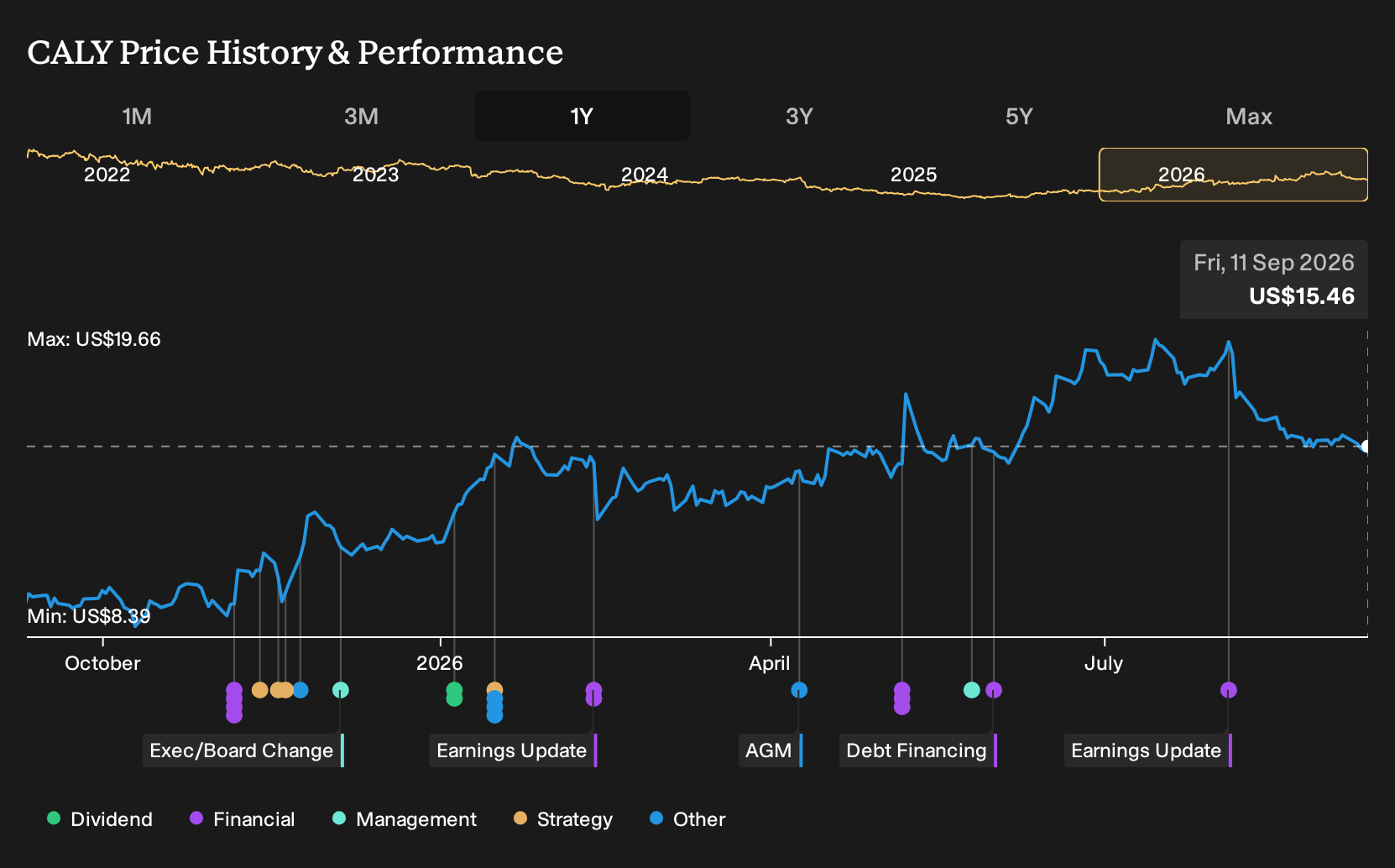
To own Callaway Golf today, you need to believe the business can turn weaker demand and flat returns on new projects into a steadier cash engine. The immediate swing factor is whether traffic and spending at Topgolf venues, together with appetite for golf gear and apparel, can support cash generation while free cash flow margins face pressure.
The biggest near term risk is straightforward: revenue softness is persisting as tariffs, discounting and a more competitive product cycle pinch profitability. If new investments continue to earn only flat returns on capital, management may need to slow expansion, rethink pricing or cut costs more deeply to keep returns from sliding.
One of the most important recent developments is the return to the Callaway Golf Company name, with the Topgolf Callaway Brands label retired in January 2026. That repositioning puts the golf equipment and apparel identity back in front, while Topgolf remains a major operational driver inside the group.
For investors, the relevance is about where future execution risk and potential upside sit. Brand focus around Callaway Golf sharpens the story around clubs, balls and lifestyle gear, just as the business manages lower free cash flow margins and flat returns on invested capital. How effectively management balances venue growth, discounting and capital spending now will shape how meaningful that rebrand feels over time.
Callaway Golf's narrative projects US$2.2b revenue and US$205.1 million earnings by 2029. This rests on 1.1% yearly revenue growth and an earnings increase of about US$124.5 million from US$80.6 million today.
Uncover why Callaway Golf's fair value indicates a 33% potential upside to its current price, which could narrow quickly.
Exploring Other Perspectives
One alternate view on Callaway Golf leans heavily on digital leisure risk. The most cautious analysts worry that e-sports and at home entertainment could drag on venue traffic and equipment demand. Before this news, they were modeling revenue to decline 0.9% a year and still saw earnings at a US$1.5b loss base. That is a very different story. Use that gap to stress test your own assumptions, since this update may push forecasts in either direction.
Explore 2 other Callaway Golf fair value estimates, including one that suggests it could be worth just $20.50!
Decide For Yourself
Don't just follow the ticker; dig into the data and build a conviction that's truly your own.
- A great starting point for your Callaway Golf research is our analysis highlighting 3 key rewards and 2 important warning signs that could impact your investment decision.
- See our latest analysis for Callaway Golf. The report includes a comprehensive fundamental analysis summarized in a single visual, the Snowflake, making it easy to evaluate Callaway Golf's overall financial health at a glance.
Looking for more Callaway Golf style investment ideas?
If the Callaway Golf narrative has you rethinking how you balance quality, risk and income in your portfolio, you can broaden your watchlist using the Simply Wall St Screener to compare other businesses on the same cash flow and balance sheet questions.
- For investors who want quality at a discount, scan a hand picked set of 31 high quality undervalued stocks that pair stronger fundamentals with more appealing pricing.
- If resilience matters most to you, filter for companies with steadier financial footing using a list of solid balance sheet and fundamentals (23 results) that can better support long term plans.
- When you want ideas the market may be overlooking, hunt for under followed opportunities with a 16 high quality undiscovered gems that already show solid business characteristics.
This article by Simply Wall St is general in nature. We provide commentary based on historical data and analyst forecasts only using an unbiased methodology and our articles are not intended to be financial advice. It does not constitute a recommendation to buy or sell any stock, and does not take account of your objectives, or your financial situation. We aim to bring you long-term focused analysis driven by fundamental data. Note that our analysis may not factor in the latest price-sensitive company announcements or qualitative material. Simply Wall St has no position in any stocks mentioned.
Have feedback on this article? Concerned about the content? Get in touch with us directly. Alternatively, email editorial-team@simplywallst.com