
3 Payment Stocks Facing The Next Fed Rate Decision
With the Federal Reserve set to decide where interest rates go next, cash suddenly feels anything but boring. Short-duration cash and money-market platforms sit squarely at the intersection of policy moves, retail sales trends and shifting views on inflation. That mix can reshape how investors think about parking cash or seeking yield. This article walks through 3 stocks exposed to these currents and how each might respond to the coming data and Fed signals.
The three stocks in focus below are only a preview, and the full screen surfaced 11 more U.S. short duration cash and money market platforms with equally compelling stories that are not covered here. If you want to go straight to the source and identify which listings best fit your own cash management playbook, analyze the U.S. Short-Duration Cash & Money-Market Platforms screener.
Repay Holdings (RPAY)
Repay Holdings gives this cash focused screen exposure to the plumbing of electronic payments, where short duration flows, transaction volumes and rate sensitive balances all meet. The real question is how effectively the business can turn those flows into lasting value.
"KUBRA needs to hold its earning power. Some of the savings management has identified need to appear in cash generation."
What happens to margins if a single pressure on that cash engine shifts direction?
If that margin question has your attention, read the full narrative for Repay Holdings to see how Repay Holdings could convert those cash flows into accelerating long term value.
DLocal (DLO)
DLocal plugs this cash focused screen into the traffic of emerging market digital payments, where short duration balances can build briefly on the platform before moving on to merchants. That link to payment flows is only part of the story the company is trying to write.
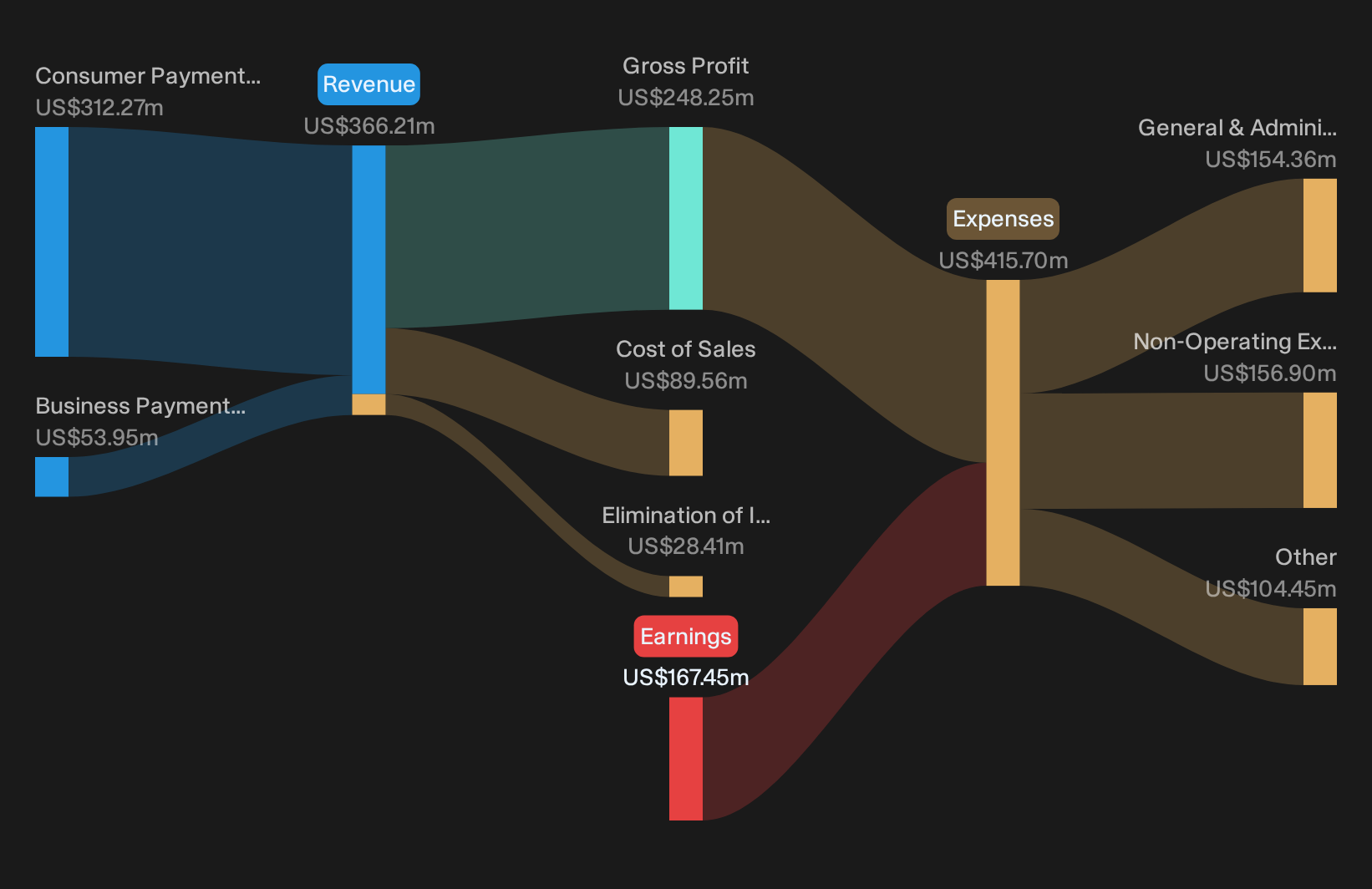
DLocal runs a global payment processing platform that helps merchants accept and send money using cards, bank transfers, cash and alternative methods, generating about US$1.4b from payment processing, and the stock carries a market value near US$4.4b.
"Progress in acquiring new licenses (UAE, Turkey, Philippines) and product innovation (e.g., stablecoin on/off-ramp solutions and offline payment capabilities) will enable access to new verticals and underpenetrated regions, capturing more of the large addressable emerging-market payments opportunity and driving long-term revenue and earnings growth."
What happens to DLocal’s earnings power if a single assumption about how fast merchants shift volumes across its rails no longer holds?
If that shift in volume assumptions is what you are weighing, read the full narrative for DLocal to see how DLocal’s rails could turn that volatility into opportunity.

PayPay (PAYP)
PayPay gives this short duration screen a retail twist by using its digital finance platform to turn everyday payments, credit and app based investing into a cash like hub for Japanese consumers.
PayPay runs a Japan centric digital finance platform where the Payment segment produces about ¥325.9b and Financial Service brings in roughly ¥78.5b. Together they feed a business valued near US$12.4b by the market.
"Although PayPay is building one of the largest digital payment ecosystems in Japan with around 75 million users and 42 million MTUs, the reliance on continued GMV expansion and higher card usage means any slowdown in transaction volumes could temper revenue growth and limit further ARPU gains."
The real fulcrum is how that payment heavy ecosystem behaves if one quiet shift in funding costs or credit appetite nudges margins off course.
If that risk to margins is what you are weighing, read the full narrative for PayPay to see whether PayPay’s scale is masking an even bigger earnings engine.

Curious About Fresh Alternatives Yet
Some stocks are already building breakout momentum while others are still flying under the radar for now. Find the next move before the crowd and act now.
- Target resilient income streams while rates shift by reviewing the 6 dividend fortresses that could keep cash flows coming even if share prices wobble.
- Spot underappreciated upside by scanning the 16 high quality undiscovered gems that still trade like secrets while their fundamentals support a potential rerating.
- Focus on structural demand for advanced hardware by checking the 89 AI infrastructure stocks that is involved in data centers and compute capacity while pricing may not yet reflect the full story.
This article by Simply Wall St is general in nature. We provide commentary based on historical data and analyst forecasts only using an unbiased methodology and our articles are not intended to be financial advice. It does not constitute a recommendation to buy or sell any stock, and does not take account of your objectives, or your financial situation. We aim to bring you long-term focused analysis driven by fundamental data. Note that our analysis may not factor in the latest price-sensitive company announcements or qualitative material. Simply Wall St has no position in any stocks mentioned.
Have feedback on this article? Concerned about the content? Get in touch with us directly. Alternatively, email editorial-team@simplywallst.com