
3 Consumer Staples Stocks To Watch As Inflation Pressures Household Spending
Inflation just re-accelerated in August, fuel costs are climbing and Wall Street is bracing for a tougher Fed. When everyday prices and borrowing costs both move higher, spending habits can shift quickly, which can reshape how consumer staples and discount retailers trade. This article explains that dynamic and then walks through 3 stocks exposed to this CPI shock so you can evaluate whether they merit a closer look or a wider berth.
The three stocks below are just a sample to illustrate how U.S. consumer staples and discount retailers can react when shoppers tighten budgets, and the full screen surfaced 12 more companies with equally detailed stories that are not covered in this article. To identify and analyze the highest-conviction ideas in this space, head straight to the U.S. Consumer Staples and Discount Retailers screener.
Church & Dwight (CHD)
Overview: Church & Dwight is a U.S. household and personal care group whose staples-focused brands keep showing up in weekly shopping baskets.
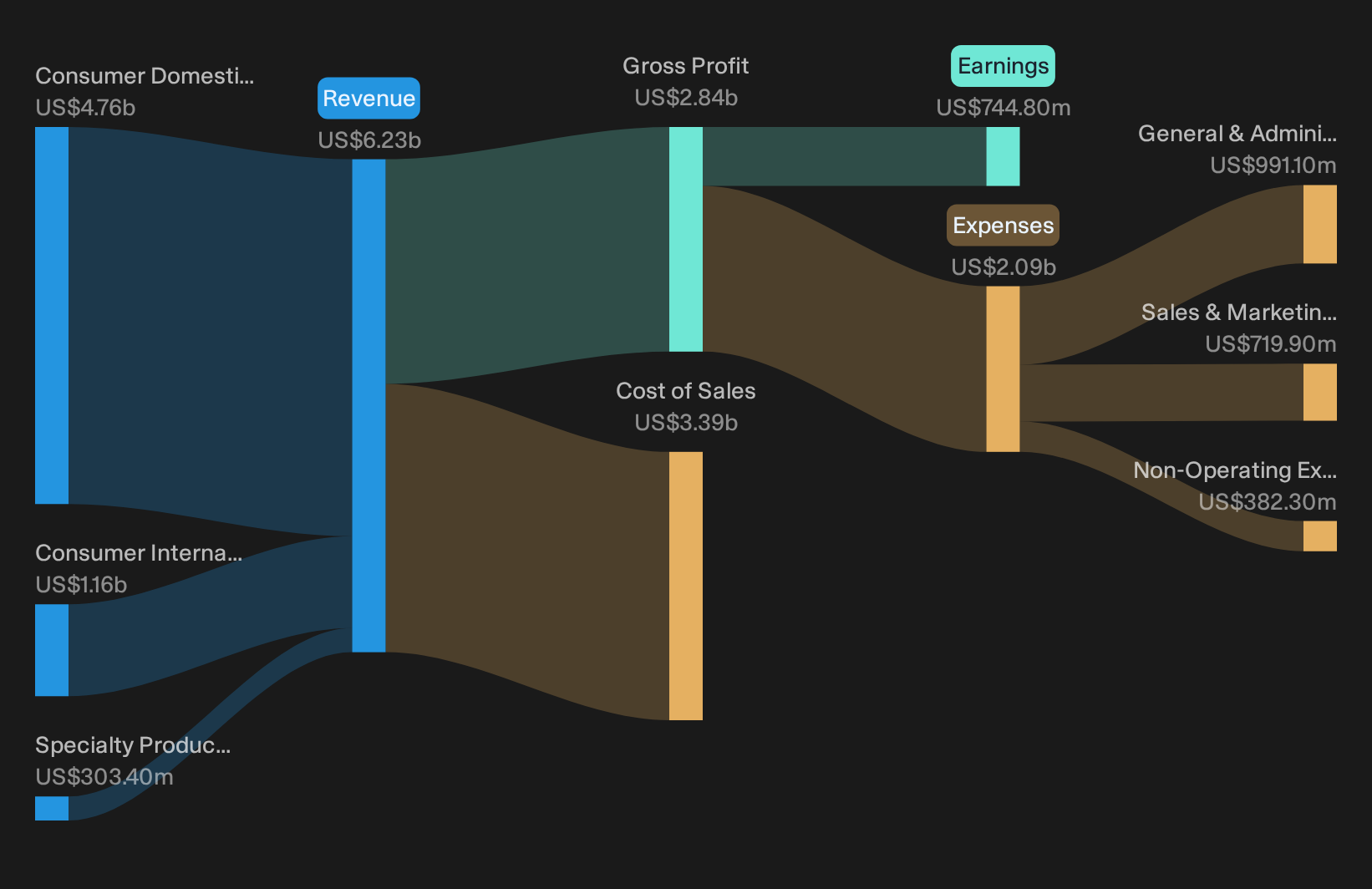
Operations: Church & Dwight generates most of its revenue from Consumer Domestic at US$4.8b, with Consumer International at US$1.2b and US$303 million from SPD.
Market Cap: US$22.3b
Church & Dwight fits the consumer staples theme because products like Arm & Hammer, OxiClean, Trojan and TheraBreath are everyday essentials that shoppers tend to hold onto even when inflation bites and wallets tighten.
"E-commerce growth and online sales, with Church & Dwight's online channel now accounting for 23% of global sales and driving category growth (notably with Touchland's success on Amazon and other platforms), positions the company to benefit from higher-margin, direct-to-consumer sales and increased market reach."
What happens to Church & Dwight's earnings power if a single unseen pressure on input costs and pricing discipline shifts again?
If that pressure point matters to your thesis, read the full narrative for Church & Dwight to see whether e-commerce momentum is masking deeper brand, pricing or margin shifts.
Coca-Cola (KO)
Overview: Coca-Cola is a global beverage giant that sells branded nonalcoholic drinks, concentrates and syrups through an extensive retail and bottling system.
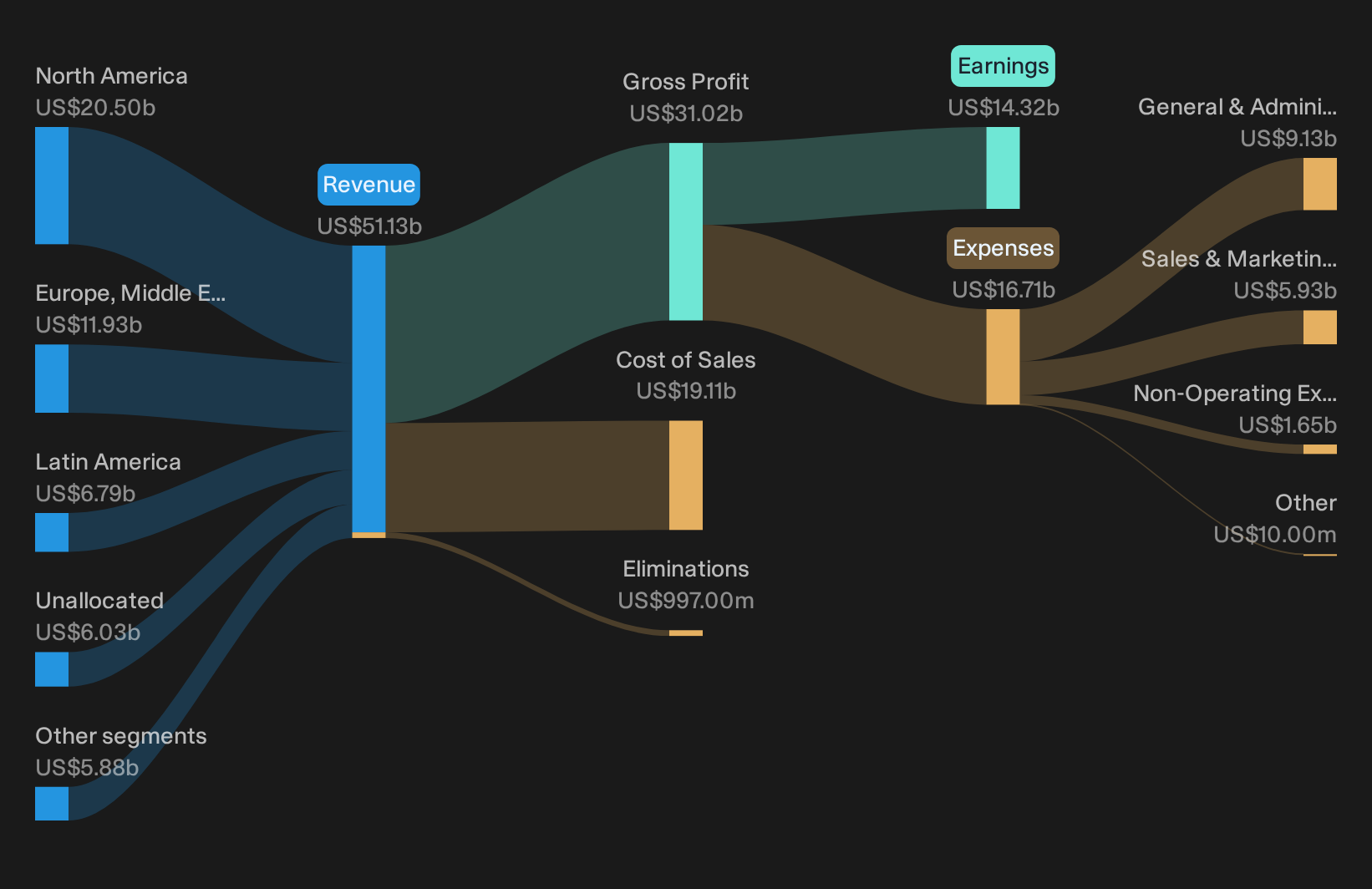
Operations: Coca-Cola generates about US$50.1b from nonalcoholic beverages, with North America contributing US$20.5b and Europe, Middle East & Africa US$11.9b.
Market Cap: US$377.9b
Coca-Cola matters in this screener because its drinks are everyday, low-ticket purchases that can stay in shopping baskets even when inflation and fuel spikes push households toward essentials.
"Zero-sugar variants grew double-digits, proving adaptation to health trends."
What happens to Coca-Cola's pricing power and margins if a single unseen pressure on consumer affordability and input costs shifts again?
If that pressure shift is what you care about, go to the full narrative for Coca-Cola to see whether Coca-Cola's pricing engine is accelerating or masking deeper risks.
Hershey (HSY)
Overview: Hershey manufactures and sells chocolate, candy, salty snacks and pantry items that function as affordable treats and household staples worldwide.
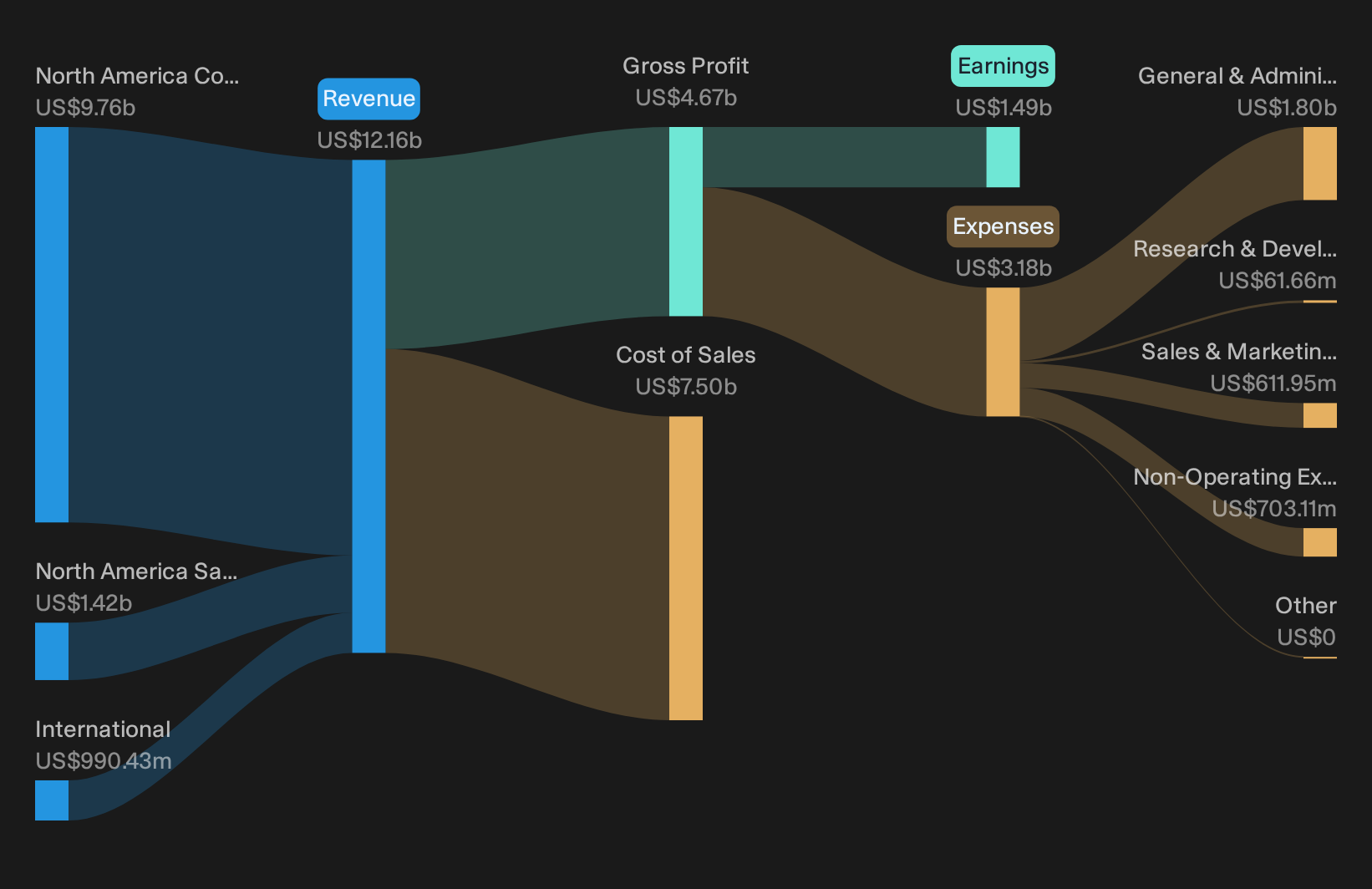
Operations: Hershey generates about US$9.8b from North America Confectionery, US$1.4b from North America Salty Snacks and US$1.0b from International markets.
Market Cap: US$35.0b
Hershey fits this consumer staples and discount theme because small treats and pantry items tend to stay in baskets when shoppers trade down elsewhere. This may matter even more as inflation and fuel costs pressure household budgets.
"The 2025 cocoa shock, a ~60% GAAP EPS collapse driven largely by non-cash hedge mark-to-market, obscured an underlying cash engine that remained intact."
What happens to Hershey's pricing power and cash generation if a single key assumption on input costs and consumer resilience shifts again?
That inflection point is exactly what the full narrative for Hershey unpacks, showing where Hershey’s pricing, cocoa risk and brand strength may be quietly decoupling.
Seeking Alternatives Before The Crowd?
Fresh themes keep breaking out while older ideas lose momentum. Screen under the radar for now and catch quality stocks before the crowd moves in. Consider these approaches:
- Spot income workhorses that aim to keep paying even when markets wobble by scanning the 6 dividend fortresses built around resilient cash generators.
- Track early movers in automation as factories, warehouses and logistics upgrade fast, using the curated 38 robotics and automation stocks to focus on operators with real revenue footprints.
- Hunt for growth stories backed by strong finances through the hand-picked 16 high quality undiscovered gems that highlight lesser-known businesses with solid fundamentals and room to mature.
This article by Simply Wall St is general in nature. We provide commentary based on historical data and analyst forecasts only using an unbiased methodology and our articles are not intended to be financial advice. It does not constitute a recommendation to buy or sell any stock, and does not take account of your objectives, or your financial situation. We aim to bring you long-term focused analysis driven by fundamental data. Note that our analysis may not factor in the latest price-sensitive company announcements or qualitative material. Simply Wall St has no position in any stocks mentioned.
Have feedback on this article? Concerned about the content? Get in touch with us directly. Alternatively, email editorial-team@simplywallst.com