
How Investors Are Reacting To CBA Shares Higher Rate Outlook
- Recent commentary indicates Australia’s economy has slowed, with inflation still high and the Reserve Bank of Australia expected to lift the cash rate to 4.60%. This is shaping the backdrop for Commonwealth Bank of Australia’s lending and deposit activity.
- This combination of softer growth and persistent price pressures highlights a tougher setting for Commonwealth Bank of Australia’s household customers, which can influence credit demand, arrears risk and product mix decisions.
- We will now examine how Commonwealth Bank of Australia's investment narrative is shaped by the expected RBA rate hike and slower growth.
Scan for other banks and lenders that are built to handle higher rates and have more resilient balance sheets by reviewing the list of solid balance sheet and fundamentals (11 results) while you assess Commonwealth Bank of Australia’s position in this slower growth, high inflation setting.
Commonwealth Bank of Australia Investment Narrative Recap
To own Commonwealth Bank of Australia, you need to be comfortable with a large, domestically focused lender that leans heavily on Australian mortgages and deposit funding. The big belief is that its digital investment, strong customer retention and conservative capital settings can offset slower revenue and earnings growth expectations in a tougher economy. With the cash rate expected to lift to 4.60% and growth slowing, the immediate swing factor is net interest margin resilience versus pressure on volumes.
The biggest near term risk is credit quality if household stress rises while CBA runs a relatively low 56% allowance for bad loans. Higher rates and persistent inflation can test arrears and require heavier provisioning, which would weigh on profitability even if the top line holds up. At the same time, above inflation technology and AI spend keeps costs elevated, so any margin squeeze or uptick in loan losses could hit earnings more quickly than in a benign backdrop.
Recent announcements have been light, so the more useful lens here is CBA’s ongoing push into technology and AI, which ties directly into today’s macro setting. Management is spending heavily on digital capabilities and in sourcing talent, with the aim of lifting productivity and sharpening customer experience across retail and business banking. In a higher rate, slower growth economy, that investment can help defend transaction and fee income as more activity moves online and into cashless channels.
The trade off is timing. Expenses from technology programs are front loaded, while the efficiency benefits can take years to fully show up. That lag matters when the RBA is still tightening and credit demand is under pressure. For you as a shareholder, execution on digital projects, control of cost growth and discipline around credit standards sit at the heart of the medium term catalyst. Any sign of rising arrears or further margin compression would quickly refocus attention on risk rather than growth.
Commonwealth Bank of Australia's current analyst narrative points to A$33.4b revenue and A$11.6b earnings by 2029, based on 4.4% yearly revenue growth and an earnings increase of about A$0.7b from A$10.9b today.
Uncover why Commonwealth Bank of Australia's fair value indicates a 19% potential downside to its current price, highlighting a premium that may not hold.
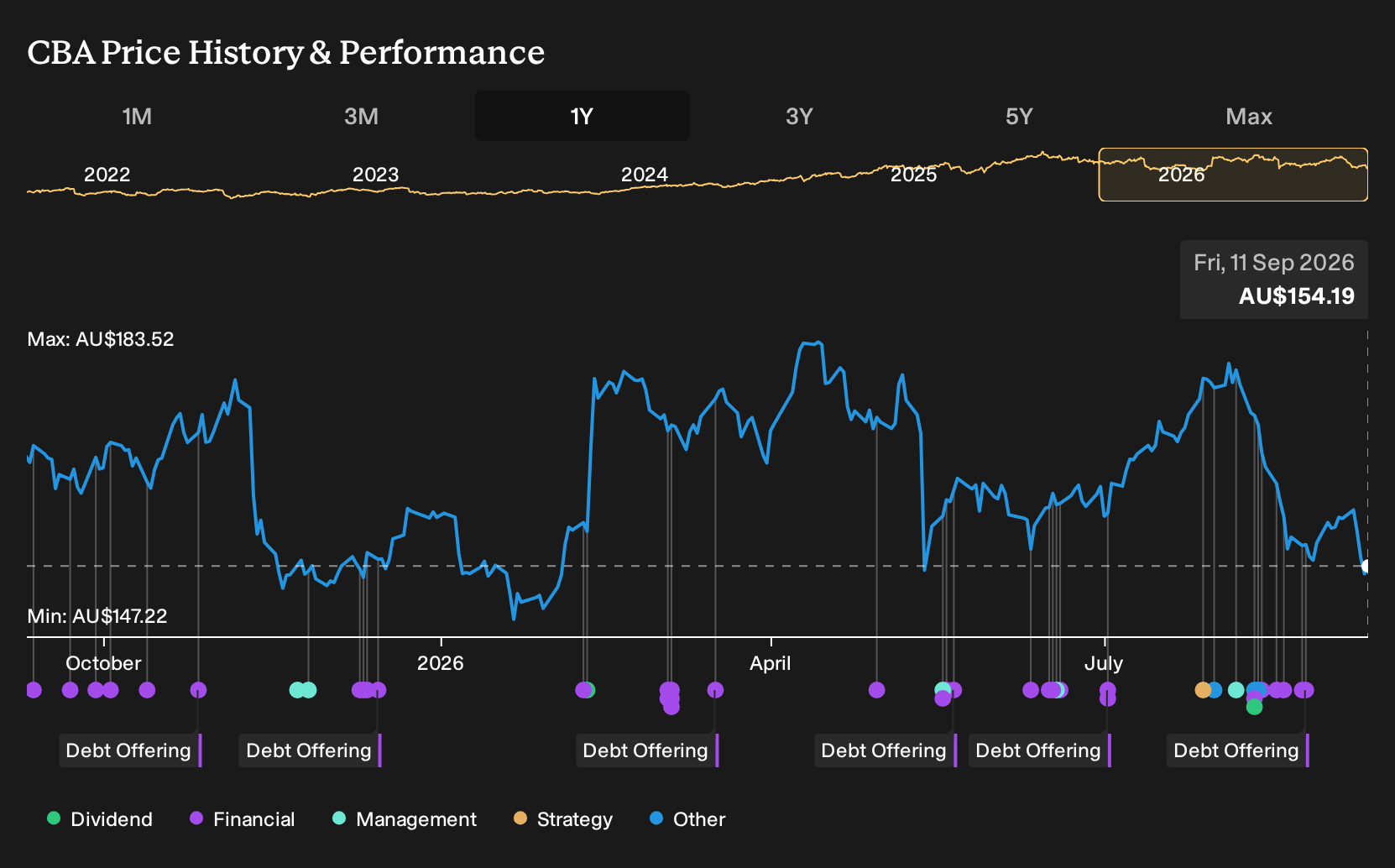
Exploring Other Perspectives
One sharply different angle on Commonwealth Bank of Australia comes from the most bearish analysts, who worry more about property concentration risk. They were projecting A$33.2b in revenue and only A$9.5b in earnings by 2029 before this latest RBA hike signal. Consider using that gap versus consensus as a way to test how your own view might shift as conditions evolve.
Explore 6 other Commonwealth Bank of Australia fair value estimates, including one that suggests as much as 37% downside from the current price.
Reach Your Own Conclusion
Disagree with existing narratives? Extraordinary investment returns rarely come from following the herd, so consider forming your own view based on thorough research.
- A great starting point for your Commonwealth Bank of Australia research is our analysis highlighting 1 key reward and 3 important warning signs that could impact your investment decision.
- See our latest analysis for Commonwealth Bank of Australia. The report includes a comprehensive fundamental analysis summarized in a single visual, the Snowflake, making it easy to evaluate Commonwealth Bank of Australia's overall financial health at a glance.
Looking for more Commonwealth Bank of Australia sized investment ideas?
If you want to balance your view on Commonwealth Bank of Australia with fresh opportunities, a structured list of companies can help you compare quality, risk and income potential far more efficiently than trawling through tickers one by one.
- Target companies that trade below their assessed worth and still show solid fundamentals by reviewing 6 high quality undervalued stocks for ideas that may warrant closer inspection.
- If capital preservation and a smoother ride matter most to you, filter for businesses with steadier profiles by using the 3 resilient stocks with low risk scores as a starting universe.
- For investors hunting earlier stage opportunities with stronger balance sheets than typical micro caps, scan through the 53 elite penny stocks with strong financials and see which ones line up with your risk tolerance.
This article by Simply Wall St is general in nature. We provide commentary based on historical data and analyst forecasts only using an unbiased methodology and our articles are not intended to be financial advice. It does not constitute a recommendation to buy or sell any stock, and does not take account of your objectives, or your financial situation. We aim to bring you long-term focused analysis driven by fundamental data. Note that our analysis may not factor in the latest price-sensitive company announcements or qualitative material. Simply Wall St has no position in any stocks mentioned.
Have feedback on this article? Concerned about the content? Get in touch with us directly. Alternatively, email editorial-team@simplywallst.com