
Stanley Black And Decker (SWK) Stock Looks Fairly Valued Despite 42% Fall
Stanley Black & Decker stock has delivered a steep decline of about 42% over the past five years, yet current valuation checks send a mixed signal, with an intrinsic value estimate that looks close to the market price while earnings based multiples lean cheaper. Recent share price pressure adds another layer, as investors weigh portfolio reshaping moves against what the current tag implies for future cash generation.
- Over the last five years, the share price has fallen about 42%, which means long term holders have absorbed a heavy drawdown that still shapes sentiment today.
- The agreed sale of the Excel Industries mower business may support a tighter focus on higher priority brands. At the same time, any missteps in reshaping the Outdoor portfolio remain a key risk for future cash flows.
- The broader valuation checks land in the middle, with a value score of 4 that points to a mixed picture rather than a clear bargain or clear overpricing.
For investors, the debate is whether Stanley Black & Decker stock at around US$89 already reflects this portfolio shift and recent share price damage, or if the current level still misprices the company’s intrinsic value.
Scan how Stanley Black & Decker compares with other potential turnaround ideas by reviewing our curated list of 31 high quality undervalued stocks.
Does Stanley Black & Decker Look Fairly Valued on Cash Flow?
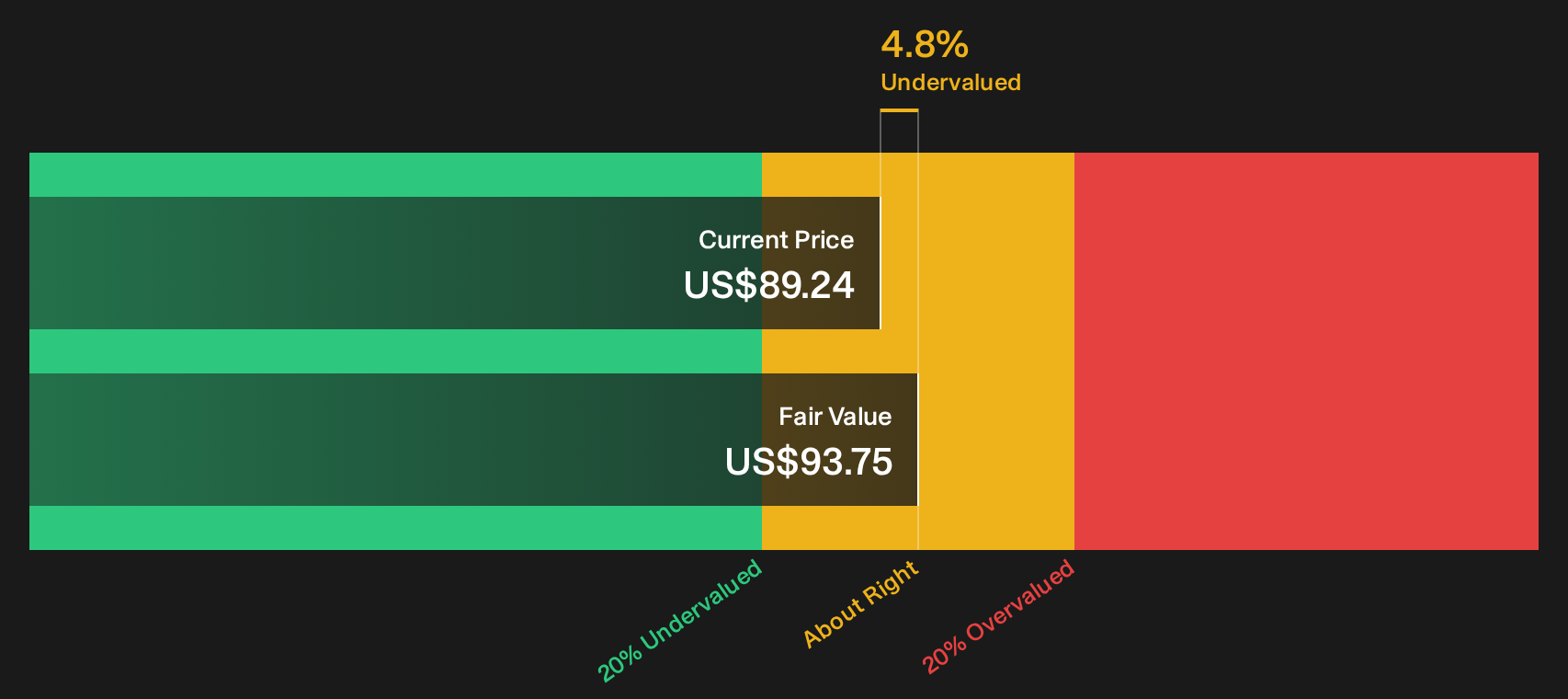
The Discounted Cash Flow (DCF) model here focuses on the cash Stanley Black & Decker can generate for shareholders over time. Latest twelve month free cash flow sits at about $1.2b, and the forecast path assumes that cash generation recovers and then settles into more modest growth rather than swinging sharply higher each year.
On those inputs, the DCF points to an estimated intrinsic value of about $94 per share, which is only slightly above the recent price near $89. That small 4.8% gap suggests the stock screens roughly in line with what its projected cash flows support rather than appearing extremely cheap or stretched. Because the agreed sale of the Excel Industries mower business is aimed at tightening the portfolio around higher priority brands, the modest discount can also be read as the market waiting to see whether those refocusing efforts translate into steadier long term cash generation.
Overall, the DCF analysis indicates that Stanley Black & Decker appears roughly fairly valued on a cash flow basis at current levels.
Stanley Black & Decker is fairly valued according to our Discounted Cash Flow (DCF), but this can change at a moment's notice. Track the value in your watchlist or portfolio and be alerted on when to act.
Is Stanley Black & Decker a Bargain on Earnings?
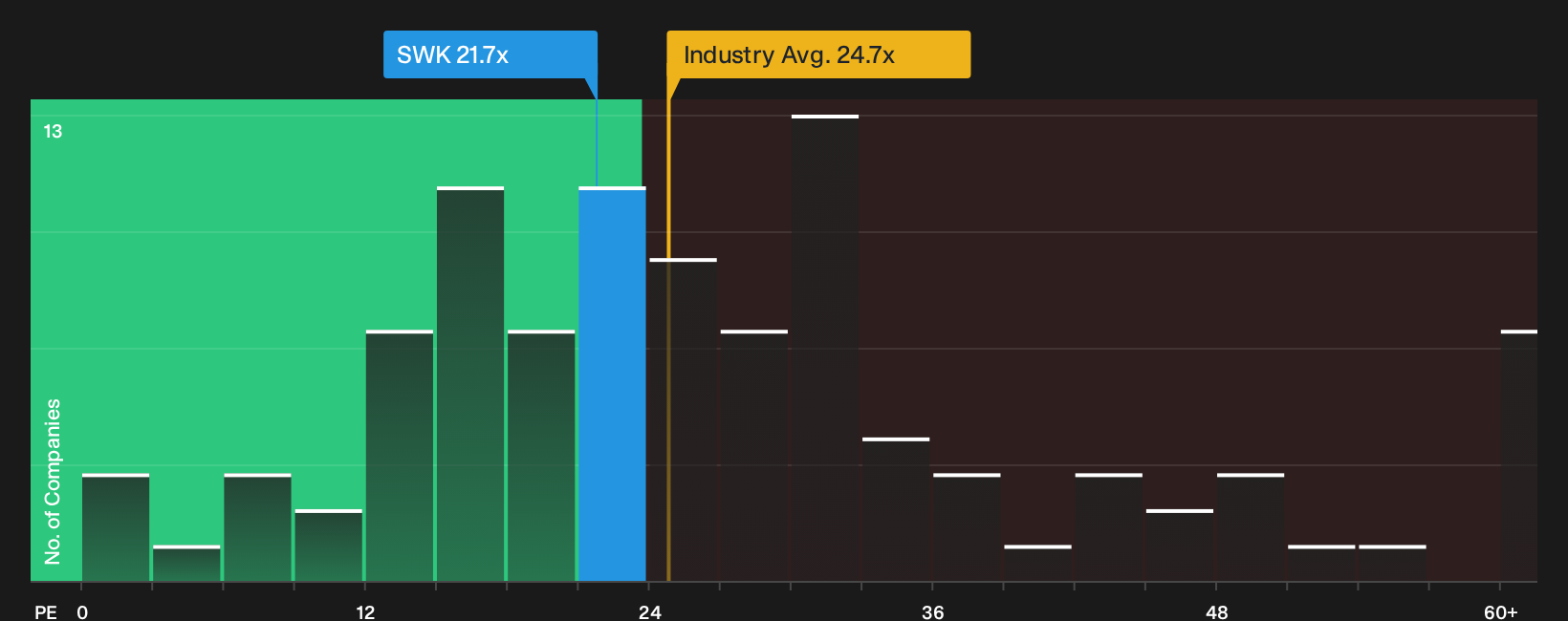
P/E fits Stanley Black & Decker because earnings still anchor how most investors look at mature industrial manufacturers. On this lens, the stock trades at about 21.7x earnings, which is below both the Machinery industry average of roughly 24.7x and the peer group near 32.2x. The tailored fair P/E for Stanley Black & Decker is estimated at about 28.0x, so the current P/E sits well under the level implied by its risk, margins and scale.
That gap suggests the market is assigning a lower earnings multiple than the model indicates would be typical for this type of business. For investors comparing large tool makers, the numbers point to Stanley Black & Decker changing hands at a discount on earnings relative to both the sector and closer peers.
On the P/E yardstick, Stanley Black & Decker stock appears undervalued compared with what its fair multiple and industry benchmarks imply.
See what the numbers say about this price — find out in our valuation breakdown.
The Stanley Black & Decker Narrative: What Would Justify Today's Price?
Stanley Black & Decker’s valuation story raises a simple question for you as a shareholder or watcher. Narratives on Simply Wall St’s Community page pick up from that puzzle and spell out which paths for growth, margins and earnings would need to play out for the current share price to look meaningfully higher or lower. Each one treats fair value as a clear thesis about the business that you can track over time as new information arrives.
One of the top community narratives on Stanley Black & Decker: roughly fairly valued
"Demographic shifts, evolving consumer preferences, and increased competition threaten core revenue streams and require costly adaptation, reducing market share and earnings stability…"
Read one of the top narratives on Stanley Black & Decker
Do you think there's more to the story for Stanley Black & Decker? Head over to our Community to see what others are saying!
The Bottom Line
Put simply, Stanley Black & Decker looks roughly aligned with its Discounted Cash Flow (DCF) intrinsic value, with only a modest 4.8% discount implying no clear giveaway on cash generation alone. The P/E work tilts more supportive, since the stock screens undervalued relative to both its tailored fair multiple and sector markers. Broader checks remain mixed. The key question is whether execution on the portfolio reshaping, especially around Outdoor, is strong enough to support steadier earnings and convince the market to close that earnings based discount rather than treat it as a warning flag.
This article by Simply Wall St is general in nature. We provide commentary based on historical data and analyst forecasts only using an unbiased methodology and our articles are not intended to be financial advice. It does not constitute a recommendation to buy or sell any stock, and does not take account of your objectives, or your financial situation. We aim to bring you long-term focused analysis driven by fundamental data. Note that our analysis may not factor in the latest price-sensitive company announcements or qualitative material. Simply Wall St has no position in any stocks mentioned.
Have feedback on this article? Concerned about the content? Get in touch with us directly. Alternatively, email editorial-team@simplywallst.com