
Shell (LSE:SHEL) Stock Still Looks Reasonable After 196% Return And 23% Fair Value Gap
Shell stock has produced a strong 5 year gain while current valuation checks still lean cheap, with both an intrinsic value estimate from a Discounted Cash Flow (DCF) approach and market multiples pointing to upside relative to the recent share price. That mix of a long run share price climb and an undervalued read from several models is drawing attention to how much good news from recent deals and higher oil prices is already reflected in Shell’s valuation.
- Over the past 5 years Shell has returned about 196.4%, which puts the current price in context as a mature rally rather than a short term spike.
- The completed US$16.5b acquisition of ARC Resources and other recent portfolio moves can support expectations for future cash generation, while exposure to oil price swings and large scale capital commitments may pressure that cash flow if conditions turn less favourable.
- Shell carries a high value score of 5 out of 6, which means the broader set of valuation checks points to the shares trading below what many investors would consider a full price.
The issue now is whether the combination of a 23.1% discount to the intrinsic value estimate and past share price gains still leaves Shell stock offering enough value for investors focused on price versus cash flow.
Spot 9 high quality undervalued stocks that, like Shell, combine solid multi year returns with valuation checks still pointing to upside on cash flow and earnings power.Is Shell Still Cheap on Cash Flow?
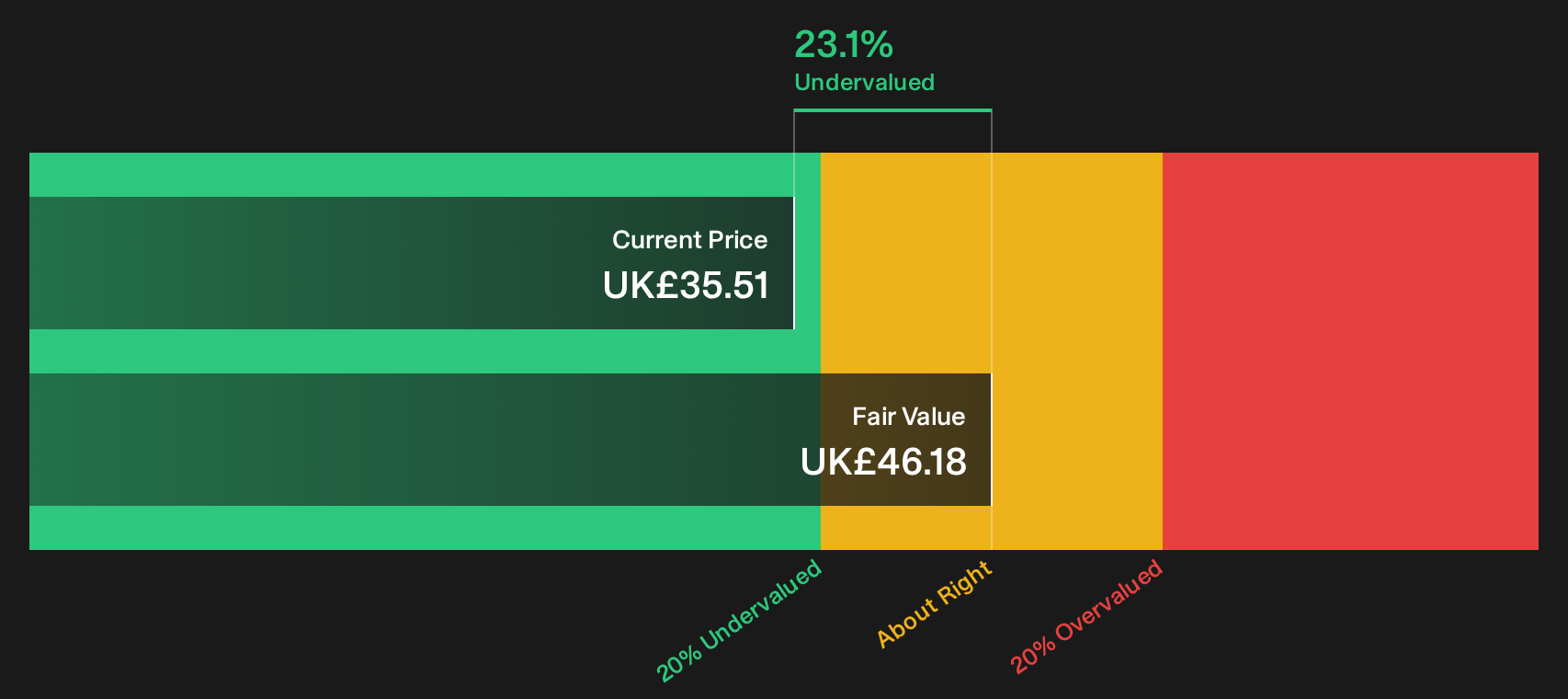
The Discounted Cash Flow (DCF) model here values Shell based on the cash it is expected to generate for shareholders over time. On the latest twelve month view, Shell produced about US$29.2b of free cash flow, which the model treats as a relatively mature and slightly easing stream rather than one that grows aggressively. Feeding those projections into a 2 Stage Free Cash Flow to Equity framework produces an estimated intrinsic value of about £46.18 per share.
Compared with the recent market price, that estimate implies Shell trades at roughly a 23.1% discount, so the shares screen as undervalued on this DCF view. The completed US$16.5b acquisition of ARC Resources, with its added Montney production and reserves, helps explain why the cash flow outlook in the model remains sizeable even if long term growth assumptions are restrained.
On this DCF run, Shell stock appears undervalued relative to the cash it is projected to produce.
Our Discounted Cash Flow (DCF) analysis suggests Shell is undervalued by 23.1%. Track this in your watchlist or portfolio, or discover 9 more high quality undervalued stocks.
Does Shell Look Undervalued on Earnings?
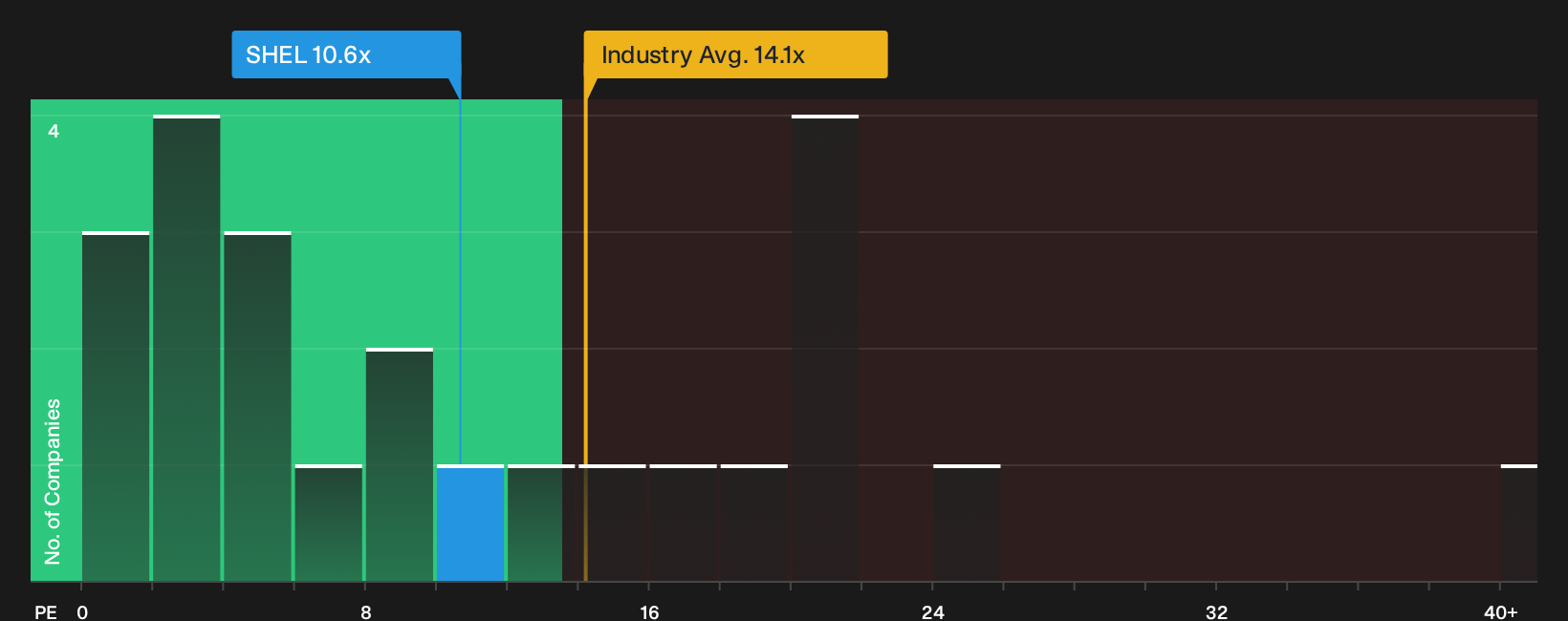
The P/E ratio works well for Shell because earnings are a key yardstick for large, established producers whose profits already reflect big capital programmes. Shell currently trades on a P/E of about 10.6x, which sits below the Oil and Gas sector average of roughly 13.3x and under the peer group at about 15.4x.
A P/E ratio that blends Shell’s size, industry profile and risk into a single yardstick is estimated at around 16.7x. This is materially higher than the level at which the stock currently trades. The gap between the current multiple and this reference ratio suggests Shell is priced below what many investors might expect for its earnings power.
On this earnings yardstick, Shell stock appears undervalued relative to both its sector and this more tailored reference multiple.
See what the numbers say about this price — find out in our valuation breakdown.
The Shell Narrative: What Would Justify Today's Price?
Simply Wall St Narratives for Shell pick up where the valuation puzzle leaves off and explain which paths for growth, profitability and earnings would need to occur for the current share price to appear too low or too high. Each scenario connects Shell's potential catalysts and key risks to a specific fair value view, allowing you to follow over time which version of events appears to be gaining traction on the Community page.
Community views on Shell are split between a patient LNG and buyback story and a more cautious read on reserves, project risk and payout intensity.
Bull case: roughly fairly valued
"Shell's aggressive high-grading of its portfolio (divestment of non-core assets in Chemicals, Retail, and Renewables, and targeted upstream investments in deepwater and LNG) is redirecting capital to higher-return assets and geographies..."
Read the full Bull Case to see why Shell could be undervalued
Bear case: 8% overvalued
"The heavy reliance on buybacks and a distribution target of 40% to 50% of cash flow from operations, with 17 consecutive quarters of US$3b or more in buybacks and about 25% of shares repurchased in three years, may leave less flexibility for reinvestment..."
Read the full Bear Case to see why Shell could be overvalued
Do you think there's more to the story for Shell? Head over to our Community to see what others are saying!
The Bottom Line
Shell screens as undervalued on both the Discounted Cash Flow (DCF) intrinsic value estimate and on earnings multiples, which points to a consistent message rather than a quirky model outcome. The gap between market price and these valuation checks only matters if the company can keep turning its portfolio and recent deals into resilient free cash flow and dependable earnings. The real fork in the road is whether that discount reflects mispricing or a rational worry about capital intensity and reinvestment needs. That question over the quality and durability of Shell's future cash generation is what now separates the bulls from the bears.
This article by Simply Wall St is general in nature. We provide commentary based on historical data and analyst forecasts only using an unbiased methodology and our articles are not intended to be financial advice. It does not constitute a recommendation to buy or sell any stock, and does not take account of your objectives, or your financial situation. We aim to bring you long-term focused analysis driven by fundamental data. Note that our analysis may not factor in the latest price-sensitive company announcements or qualitative material. Simply Wall St has no position in any stocks mentioned.
Have feedback on this article? Concerned about the content? Get in touch with us directly. Alternatively, email editorial-team@simplywallst.com