
3 US Bank Stocks That Could Benefit If Interest Rates Stay Higher
With the Federal Reserve keeping another rate hike on the table, money is quietly shifting as higher borrowing costs pressure some corners of the market while potentially improving the economics of others. That creates a window where well placed businesses might turn rising rates into stronger income, while more stretched areas could feel the squeeze. This article walks through three US bank stocks exposed to this backdrop and explains why their stories deserve a closer look now.
The stocks covered below are a small sample of the idea, with the full screen surfacing 29 more U.S. banks and financial firms that share similar quality and rate sensitivity stories not unpacked here. To go straight to the full results, analyze valuations, and identify your own highest conviction candidates, head into the US Bank Stocks (Beneficiaries of Higher Interest Rates) screener.
Dime Commercial Bancshares (DCOM)
Dime Commercial Bancshares is a century old New York based lender that focuses on traditional banking. Virtually all of its US$439 million in revenue comes from community banking in the United States, and its market value of about US$1.8b places it comfortably within this higher rate focused screen.
Dime Commercial Bancshares fits the theme neatly because it is heavily geared to lending, and management has already highlighted a clear rate driven earnings lever that could be important if policy remains tight for longer.
"The upcoming repricing of nearly $2 billion in loans at substantially higher market rates by the end of 2026, plus another $1.7 billion in 2027, is expected to structurally expand net interest margin and boost earnings significantly in the medium to long term."
What could be particularly important is how one less visible pressure on funding costs develops relative to that repricing runway.
If that funding side story matters to you, read the full narrative for Dime Commercial Bancshares to see how Dime Commercial Bancshares’ earnings profile could be reshaped by higher for longer rates.

National Bank Holdings (NBHC)
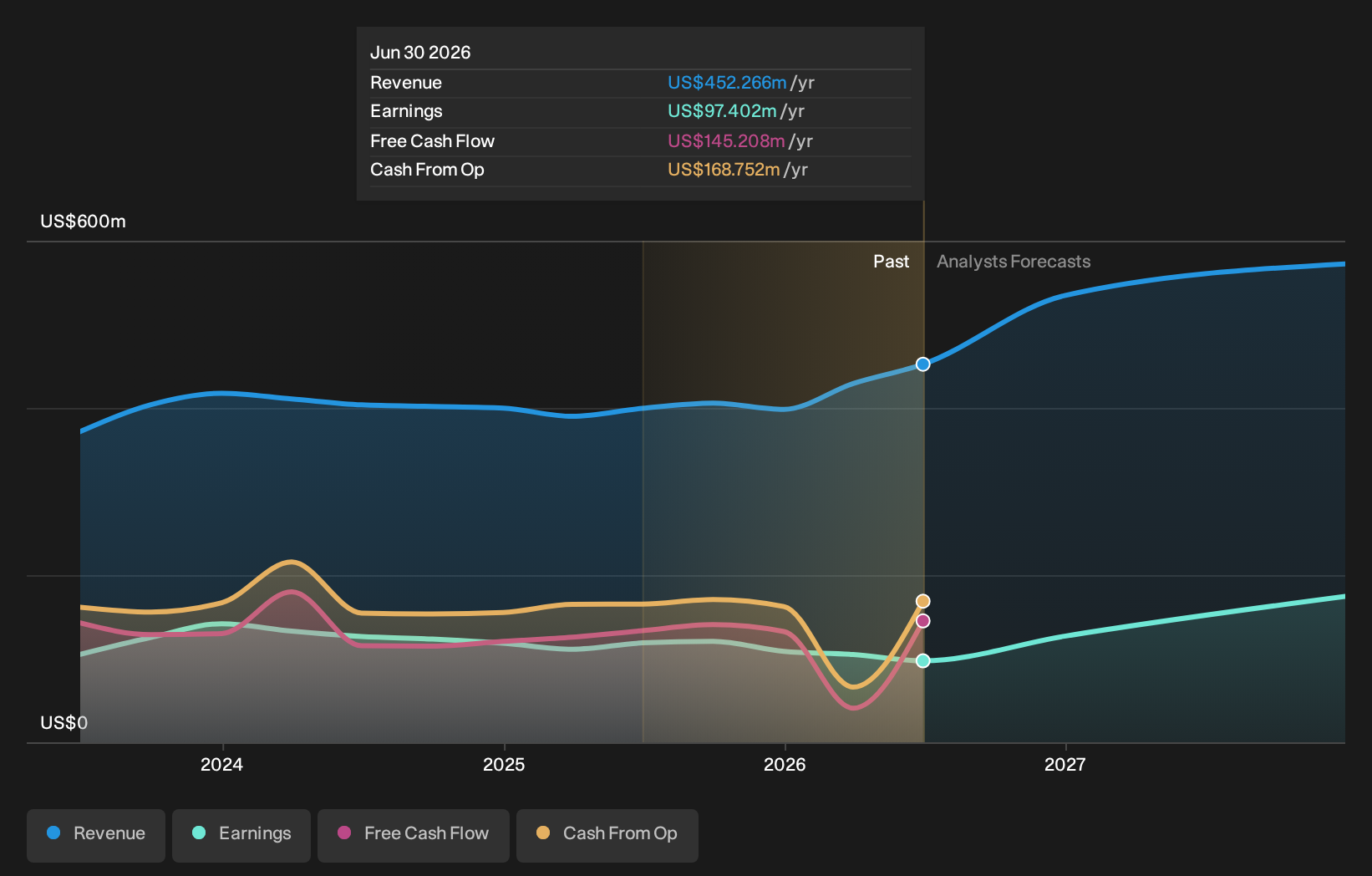
National Bank Holdings leans heavily into classic commercial and consumer lending in growth markets across the Mountain West and Sun Belt, which gives it a clear link to the higher rate theme while it works to add more fee based income streams.
National Bank Holdings generates about US$452 million of banking revenue in the United States and has a market value near US$1.9b, putting it firmly within the screen’s size and quality brackets.
"The successful launch of the 2UniFi platform, with positive early feedback and plans for further feature expansion (including fee-based membership offerings and integrated fintech services for SMBs), positions the company to capitalize on the shift toward digital banking and technology-driven financial solutions, potentially driving incremental noninterest income and expanding high-margin fee revenue streams."
What happens when that higher margin fee engine meets even a small shift in deposit pricing or loan demand could matter a lot for returns.
When that mix of fee momentum and rate sensitivity matters to your returns, read the full narrative for National Bank Holdings to see whether National Bank Holdings’ story is quietly accelerating.
Banc of California (BANC)
Banc of California runs a broad commercial banking and treasury management franchise that fits the screener’s focus on lenders whose core loan and deposit spreads can benefit when interest rates stay higher for longer.
"The ongoing shift to digital financial services across all demographics is accelerating Banc of California's ability to attract new customers, reduce its customer acquisition and operating costs, and expand core deposit growth. This is driving improved efficiency, net interest margins, and sustained earnings growth."
What happens to that margin story if one pressure on funding costs and credit quality does not ease as quickly as investors expect?
If that pressure does keep building, read the full narrative for Banc of California to see how Banc of California’s digital shift could be masking an even bigger earnings story.

Seeking Alternatives Before The Crowd?
Fresh ideas move first. Breakout stories build momentum, while slower ones risk getting caught and dropped from watchlists. Scan what is still under the radar for now and get in early.
- Spot dependable payers with yields that can carry a portfolio when prices swing by reviewing the 6 dividend fortresses before those payouts feel crowded.
- Scan potential future market leaders that still price in early stage expectations through the 15 high quality undiscovered gems while they remain largely off most radars.
- Track companies with sturdy finances that might hold up when conditions get rough by working through the list of solid balance sheet and fundamentals (23 results) before defensive money rotates.
This article by Simply Wall St is general in nature. We provide commentary based on historical data and analyst forecasts only using an unbiased methodology and our articles are not intended to be financial advice. It does not constitute a recommendation to buy or sell any stock, and does not take account of your objectives, or your financial situation. We aim to bring you long-term focused analysis driven by fundamental data. Note that our analysis may not factor in the latest price-sensitive company announcements or qualitative material. Simply Wall St has no position in any stocks mentioned.
Have feedback on this article? Concerned about the content? Get in touch with us directly. Alternatively, email editorial-team@simplywallst.com