
3 UK Stocks Tied To Domestic Food Supply That Investors Should Watch
UK food security is suddenly back in the spotlight, as councils, charities and policymakers start experimenting with local sourcing, shorter supply chains and new routes from field to plate. That shift could quietly reshape who has pricing power and who absorbs the shocks when imports or logistics stumble. This piece walks through three UK-listed stocks exposed to that trend, and explains why their response to it could matter for your portfolio.
The three stocks below are just a starting sample and the full screen surfaced 8 more companies with equally detailed stories around UK sourcing that are not covered here. To go broader and identify your own highest conviction angles on domestic food supply, head straight into the UK-listed Food Retailers and Suppliers Focused on Domestic Sourcing screener.
Cranswick (LSE:CWK)
Overview: Cranswick is a UK-based meat and food producer supplying supermarkets and food service with pork, poultry and other chilled products.
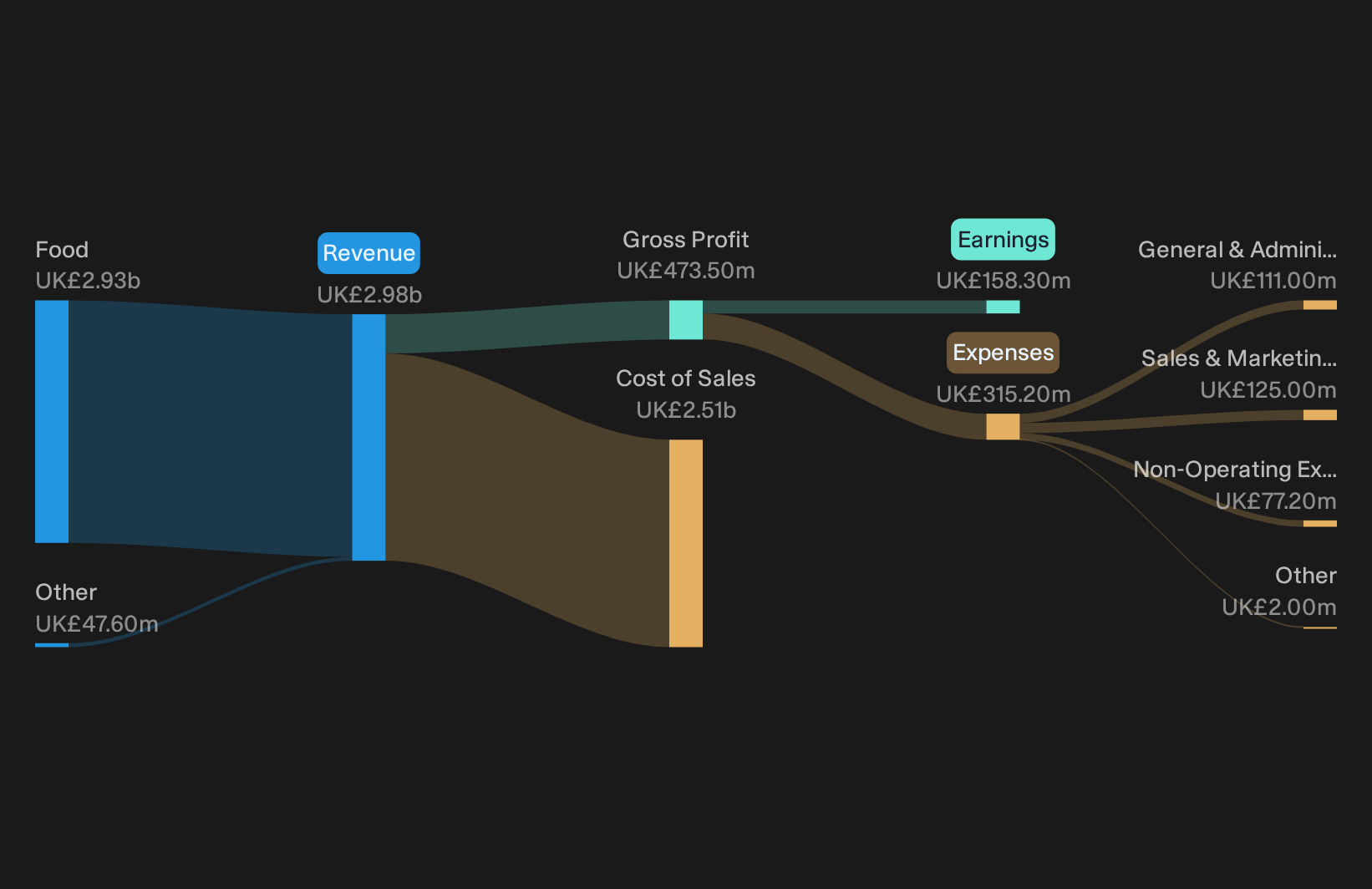
Operations: Cranswick generates about £2.9b from food products and £47.6 million from other activities, with roughly £2.9b earned in the United Kingdom.
Market Cap: £2.7b
Cranswick is closely integrated into UK agrifood supply, with about £2.9b of food revenue and roughly £2.9b coming from UK customers. This provides direct exposure to shorter domestic supply chains rather than long import routes, although the payoff for that focus still depends on how one unseen pressure develops.
To see how that pressure is reflected in Cranswick’s underlying metrics, review the analysis report for Cranswick and judge whether domestic focus is masking risk or creating headroom.
Greencore Group (LSE:GNC)
Overview: Greencore Group manufactures chilled and ambient convenience foods such as sandwiches, salads and ready meals for major UK and Irish retailers.
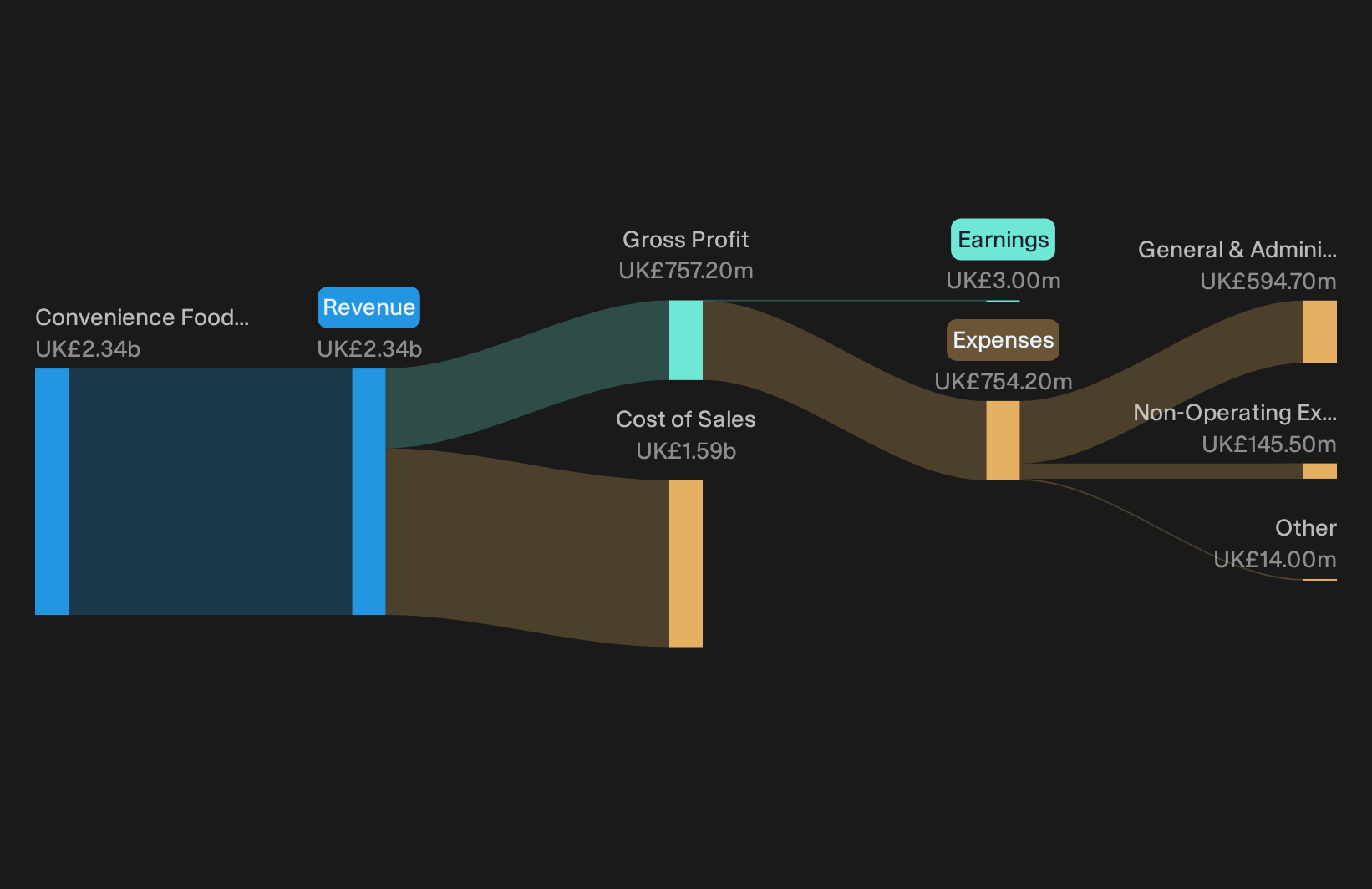
Operations: Greencore Group generates about £2.3b in revenue from Convenience Foods UK & Ireland, reflecting a concentrated focus on that segment.
Market Cap: £2.0b
Greencore Group matters for this domestic sourcing screen because its ready-to-eat products sit at the intersection of retailer demand, short shelf lives and local supply decisions.
"The group's reliance on a concentrated set of major UK retail clients for revenue leaves it acutely vulnerable to contract renegotiation pressures, shifts in retail strategy toward private labels, or abrupt volume reductions, all of which could contribute to volatile earnings and top-line contraction."
What happens to Greencore Group’s margins if a single cost or sourcing assumption in that tightly wired supply chain stops holding?
If that question is on your mind, the full narrative for Greencore Group explains how Greencore Group could convert contract risk into increasing leverage by using the right sourcing mix.
Marks and Spencer Group (LSE:MKS)
Overview: Marks and Spencer Group is a long-established UK retailer whose food halls and online channels sell groceries alongside clothing, homeware and beauty.
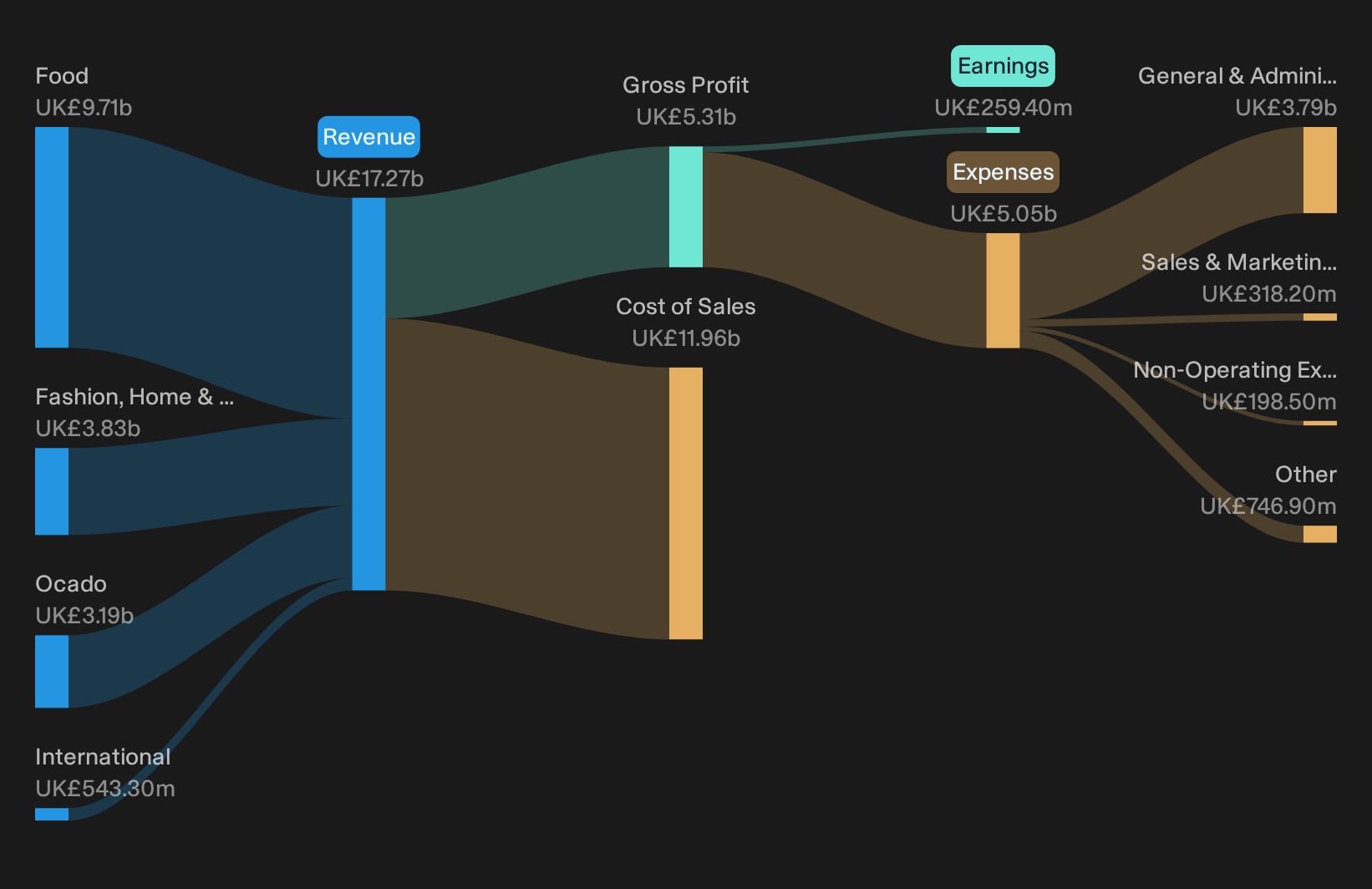
Operations: Marks and Spencer Group generates about £9.7b from Food, £3.8b from Fashion, Home & Beauty, £3.2b from Ocado and £543 million from International.
Market Cap: £7.8b
Marks and Spencer Group brings the screener theme right onto the high street, because its food halls, Select Farm badges and Ocado tie up give it real influence over how UK consumers experience locally sourced produce and shorter supply chains.
"The company's plan to modernize its supply chain aims to create lower-cost and faster operations, which could enhance net margins through increased efficiency and reduced operational costs."
What really matters for investors is how one unresolved trade off between resilience and cost in those food networks ultimately feeds through to margins.
That trade off is exactly where the opportunity could be hiding, and the full narrative for Marks and Spencer Group shows how Marks and Spencer Group might turn supply chain efficiency into accelerating returns.
Seeking Fresh Alternatives Before They Fly
Fresh opportunities do not sit still. Trends gain momentum, prices move and the cleanest entry points get caught quickly. Scan these curated ideas under the radar for now and consider them while they remain less widely followed.
- Identify cash generative businesses early by reviewing the list of solid balance sheet and fundamentals (11 results) that filters for resilience before the broader market fully focuses on them.
- Explore potential income opportunities with the 2 dividend fortresses that focuses on higher-yield payouts while yields remain available at current levels.
- Monitor commodity markets in real time and examine the 35 elite gold producer stocks highlighting producers with targeted exposure, before gold-related developments attract wider attention.
This article by Simply Wall St is general in nature. We provide commentary based on historical data and analyst forecasts only using an unbiased methodology and our articles are not intended to be financial advice. It does not constitute a recommendation to buy or sell any stock, and does not take account of your objectives, or your financial situation. We aim to bring you long-term focused analysis driven by fundamental data. Note that our analysis may not factor in the latest price-sensitive company announcements or qualitative material. Simply Wall St has no position in any stocks mentioned.
Have feedback on this article? Concerned about the content? Get in touch with us directly. Alternatively, email editorial-team@simplywallst.com