Chevron (CVX.US) takes a different approach to hedging supply cuts in the Middle East: targeting Argentina and the Mediterranean to drive global LNG growth and seek a deal with India
The Zhitong Finance App learned that Chevron (CVX.US) Global Gas Business President Freeman Shaheen said that as the Middle East crisis raised buyers' concerns about energy security and demand continued to grow, Chevron is seeking to expand its global gas asset portfolio from Argentina to the Mediterranean. The global gas market has experienced two major disruptions in the past four years: the war in Ukraine in 2022 cut off supplies from Russia, the number one producer, and this year's conflict in Iran cut off supplies from Qatar, driving up the price of liquefied natural gas (LNG).
“What we've seen from this crisis is that it just reinforces the need for diversification — diversification of supply sources and diversification of different contract structures,” Shaheen said. Buyers can't “put themselves at risk in the spot market — the LNG spot market is actually far less liquid than crude oil and refined oil products”, he added.
20 million tons of production capacity combination and four major expansion directions
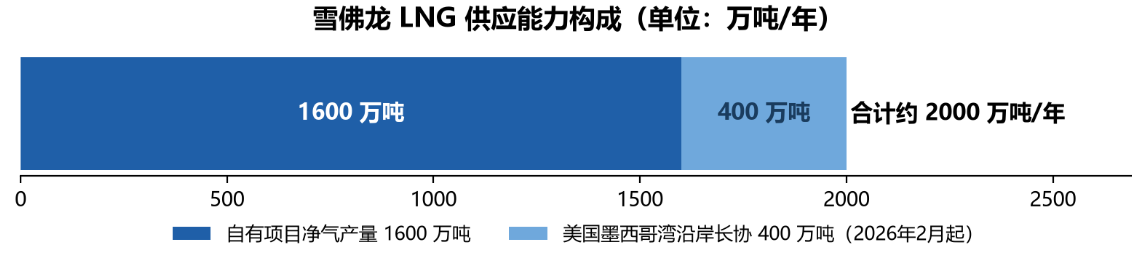
Chevron will currently have an LNG supply capacity of about 20 million tons/year, including its project's net gas production of about 16 million tons, and a contract supply of 4 million tons signed from the US Gulf Coast starting in February this year — the latter will be gradually increased in accordance with the agreement over the next few years.
 “We look forward to continuing to expand this portfolio,” Shaheen said in an interview on the sidelines of the Gastech conference in Bangkok.
“Argentina has excellent prospects for crude oil and gas development. The eastern Mediterranean is also a very exciting region for us,” he said. He is also optimistic about further opportunities for Australia and Africa, provided that the project provides the right capital, financial, and regulatory conditions, and says the US-Iran war has strengthened the demand for diversified gas portfolios.
Shaheen didn't specify where the company might expand in Africa, Australia, or the eastern Mediterranean. In June of this year, Chevron was approved to operate a block off the coast of Greece and lead gas exploration, expanding its presence in the region.
Venezuela: Funding ranking of more than 7 billion US dollars
However, these opportunities must be weighed against Venezuela's investment plans — Chevron and its partners plan to invest more than $7 billion in Venezuela to more than double oil production by 2031.
“I've always heard that Venezuela will have a lot of capital to invest,” Shaheen told Reuters. “All projects will be analyzed in our project sequence and then ranked.”
Asia's base camp and changes in buyer behavior
Chevron already has significant business in Australia, operating the country's largest LNG projects Gorgon (Gorgon) and Wheatstone (Wheatstone) projects, and sells a large portion of its Australian supply to Japan.” Japan remains our base camp, and we also have good structural opportunities in Singapore,” Shaheen said, adding that China and South Korea remain attractive markets. In 2024, Chevron signed an agreement with Singapore's Sembcorp Industries (Sembcorp Industries) to supply up to 600,000 tons of LNG per year starting 2028.
He pointed out that the way LNG buyers obtain supply is also changing: importers with national backgrounds are increasingly willing to sign direct contracts with portfolio suppliers rather than rely on intergovernmental agreements.
India: Prices are sensitive, but “the opportunities are huge”
“I would love to close a deal in India. “It's just that they're very, very sensitive to the price of the title,” Shaheen said. “I think India is still growing. There will be huge opportunities there as time goes on.”
Background: Iran war reshapes global gas market
What Shaheen refers to as “this year's conflict in Iran” is a war that broke out on March 2 this year — after Iran's military strike hit Qatar's export network, Qatar Energy Company shut down the Ras Laffan (Ras Laffan) plant, the world's largest LNG production facility, and European gas prices once jumped nearly 50%. Qatar supplies about one-fifth of the world's LNG, and exports once fell by about 96% from before the war; according to estimates, Qatar's cumulative losses over six months were about 24 billion US dollars, and it may take as long as five years to fully repair the facilities.
At the price level, the Asian spot benchmark JKM surpassed $25 per million British thermal units during the height of the conflict (a new high since 2022). The level of gas storage in Europe continues to decline. According to reports, the overall filling rate in Europe is only about 60%, the lowest in the same period in history, and only 50% in Germany.
The agency is too strict in judging the future market. Goldman Sachs reported on September 10 that LNG exports in the Persian Gulf have recently been only 15%-25% of the normal pre-war level. The bank raised the four-quarter TTF price forecast from 53 euros per megawatt hour to 70 euros and the JKM forecast from 18.90 dollars to 24.85 US dollars; in the extreme scenario where winter flow in the Strait of Hormuz is only 25% of normal value, TTF may rush to 105 euros and JKM about 35 US dollars. However, the bank also warned of the opposite long-term logic: the TTF forecast for 2030-2035 was lowered to 19 euros per megawatt-hour due to a large number of US LNG export projects being approved and put into operation.
Tight supply is also reshaping trade flows. After Europe's TTF overtook Asia's JKM to form a price inversion, the share of LNG exported from the US Gulf of Mexico to Europe rose from about 55% in June-July to more than 65% in August; high prices also caused damage to demand, and China's LNG imports in August are expected to drop by about 18% year on year.
Chevron's Argentinian chips: the two together exceed $16 billion
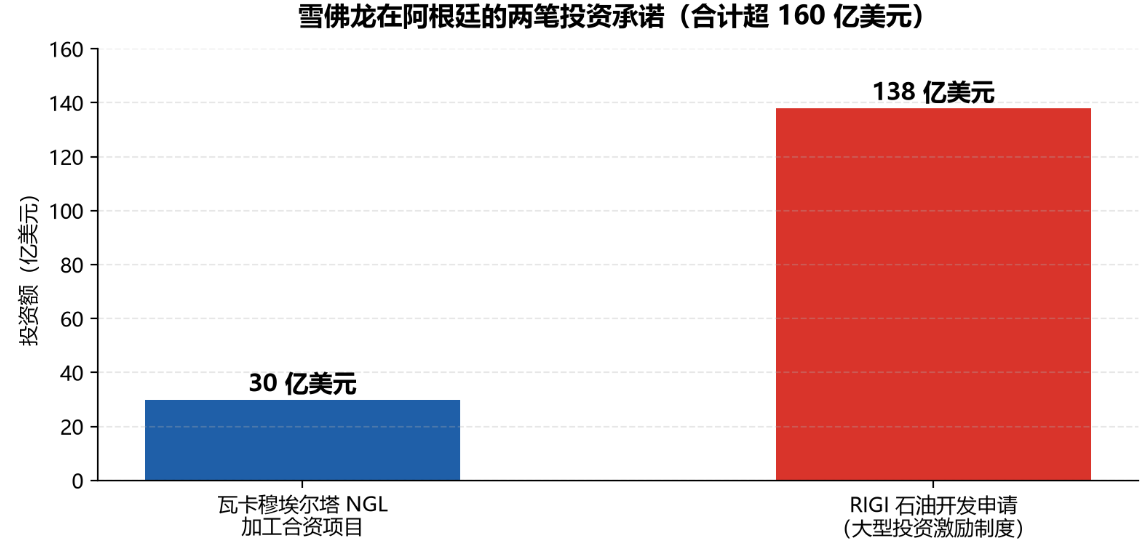
Shaheen is optimistic about Argentina's background; these are two major investments by Chevron in the region. According to reports, Chevron is about to finalize a supply agreement for a $3 billion natural gas liquid (NGL) processing joint venture project, cooperating with the Argentinian National Petroleum Corporation (YPF) and private producer Pluspetrol, with pipeline operator TGS taking the lead in developing processing capacity in the Vaca Muerta (Vaca Muerta) shale area; other sources say Chevron has submitted a $13.8 billion oil development application under Argentina's large-scale investment incentive system (RIGI). Together, the two promises are over $16 billion. Huacamuerta is one of the largest shale oil and gas fields outside of North America, and is becoming a core area for Argentina to increase oil and gas production and exports.