
Is BYD (SEHK:1211) Cheap Following Its August 2026 Production And Sales Update?
BYD (SEHK:1211) has put fresh production and sales figures on the table for August 2026, giving investors new monthly datapoints to weigh against a softer year to date delivery picture.
Recent share price action suggests investors are still cautious. The stock has fallen 9.1% on a 30 day share price return basis and is down 18.8% year to date, while the 1 year total shareholder return has declined 25.5%. This points to fading momentum despite BYD’s latest operational update.
Scan the EV space for other companies where weak recent returns contrast with solid production and earnings trends using our curated list of 190 high quality undervalued stocks.
BYD’s operations look sizable, yet the share price has slipped while production and sales metrics stay in focus. The real issue now is whether that mix adds up to a compelling valuation today.
Most Popular Narrative: 47% Undervalued
BYD’s most followed narrative pegs fair value at HK$152.38 per share compared with the last close of HK$80.20, which puts the current market price well below that reference point and frames the stock as heavily discounted in this view.
For years, the market viewed BYD as the "budget" alternative to Tesla, a battery company that happened to make cars. In 2026, that narrative has flipped. BYD is no longer just competing on price; they are competing on intelligence and longevity, while Tesla grapples with hardware fragmentation and a shifting pricing model.
See why 12 investors see BYD as 47% undervalued.
Result: Fair Value of HK$152.38 (UNDERVALUED)
Still, the BYD narrative could be tested if trade barriers tighten around Chinese EV exports, or if legal liabilities from advanced driver assistance systems escalate sharply.
Find out about the key risks to this BYD narrative.
Another View On BYD’s Valuation
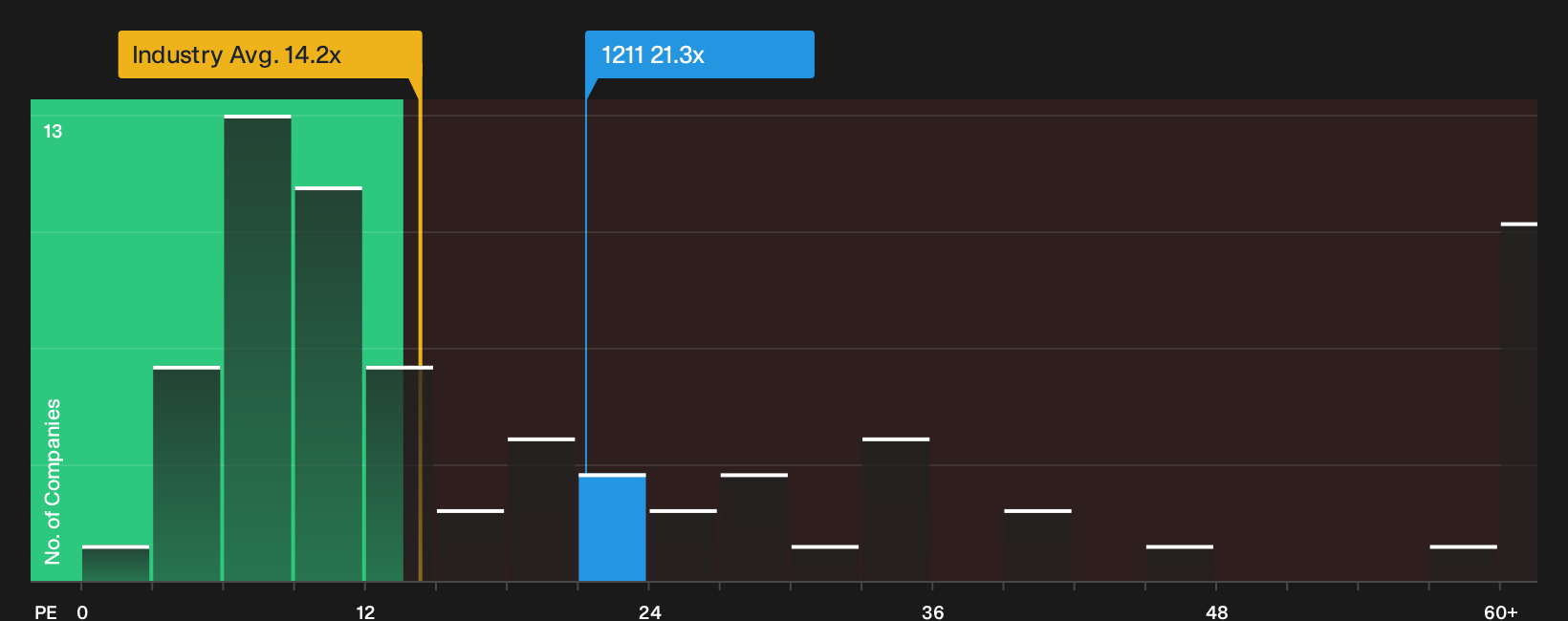
That user narrative leans on a fair value of HK$152.38 per BYD share, which frames the stock as heavily discounted. The preferred earnings yardstick tells a sharper story. At a P/E of 21.3x, the business looks expensive versus its fair ratio of 14.2x and the Asian auto group on 14.2x.
Against closer peers, BYD lines up nearer the average P/E of 22.2x, which softens the picture but still leaves a meaningful gap to that 14.2x fair ratio. For investors thinking about valuation risk, the key question is whether earnings strength can justify paying a richer multiple or if the market eventually drifts back toward that lower reference point.
See what the numbers say about this price — find out in our valuation breakdown.
Next Steps
Sentiment on BYD in this piece is mixed, with clear upsides and real concerns, so consider reviewing the data for yourself and pressure testing both sides of the thesis using our breakdown of 3 key rewards and 1 important warning sign
Looking for more investment ideas beyond BYD?
Do not stop at a single stock. Use the screener to spot fresh opportunities that fit your style before other investors start paying attention.
- Hunt for underpriced quality by scanning our curated universe of 190 high quality undervalued stocks that pair solid fundamentals with discounted valuations.
- Build a steadier income stream by focusing on 161 dividend fortresses that aim to combine higher yields with balance sheet strength.
- Protect your capital first by filtering for 103 resilient stocks with low risk scores that score well on financial health and earnings consistency.
This article by Simply Wall St is general in nature. We provide commentary based on historical data and analyst forecasts only using an unbiased methodology and our articles are not intended to be financial advice. It does not constitute a recommendation to buy or sell any stock, and does not take account of your objectives, or your financial situation. We aim to bring you long-term focused analysis driven by fundamental data. Note that our analysis may not factor in the latest price-sensitive company announcements or qualitative material. Simply Wall St has no position in any stocks mentioned.
Have feedback on this article? Concerned about the content? Get in touch with us directly. Alternatively, email editorial-team@simplywallst.com