
Target (TGT) Shares Just Moved, What Is Drawing Attention Now?
Target (TGT) just put marketing veteran Mark Weinstein in charge of how shoppers experience the brand, while it ramps up new food partnerships and rolls out its Target Beauty Studio concept nationwide.
Recent headlines around Target, from the rollout of Target Beauty Studio brands to expanded food partnerships with Amylu Foods and Wild Alaskan Company, arrive after a 90-day share price return of 20.8% and a year-to-date share price gain of 53.62%. This is set against a 1-year total shareholder return of 79.06%, which contrasts with a weaker 5-year total shareholder return that is down 25.23%. This pattern suggests that momentum has picked up again, but from a longer-term base that is still recovering.
Scan Target's recent momentum alongside a curated group of retailers with resilient financials using our list of solid balance sheet and fundamentals (22 results).Target appears to have its merchandising and guest experience story working again after a powerful share price run. The harder question now is whether that renewed strength is already fully reflected in today’s valuation.
Most Popular Narrative: 15% Overvalued
Compared with Target's last close at $154.40, the most followed narrative points to a fair value of $133.84, which implies investors are paying a premium for the current turnaround story.
The analysts have a consensus price target of $133.84 for Target based on their expectations of its future earnings growth, profit margins and other risk factors. However, there is a degree of disagreement amongst analysts, with the most bullish reporting a price target of $162.0, and the most bearish reporting a price target of just $92.0.
See why 150 investors see Target as 15% overvalued.
Result: Fair Value of $133.84 (OVERVALUED)
Still, the narrative can break in both directions if Target's heavy spending on remodels and technology lifts margins faster than expected, or if competitive pricing pressure undercuts that effort.
Find out about the key risks to this Target narrative.
Another View On Target's Valuation
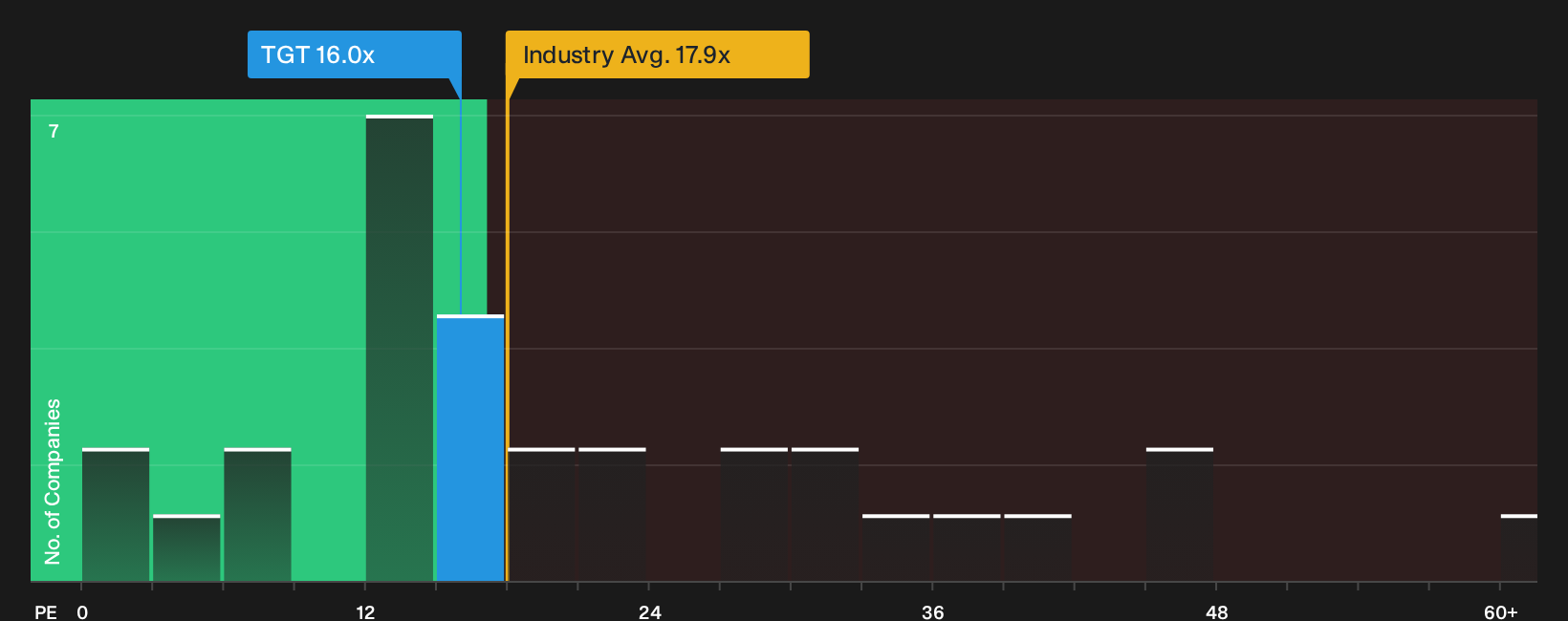
Analysts see Target as about 15% overvalued based on their $133.84 fair value, yet the stock trades on a P/E of roughly 16x, while the US Consumer Retailing industry sits nearer 17.9x and the fair ratio model points to 24.8x.
That gap suggests the market is paying less for Target's earnings than both peers and the fair ratio imply. This can indicate less downside risk if sentiment cools and more potential upside if the share price moves closer to those higher benchmarks. Which version of fair value do you trust most when you look at this setup?
See what the numbers say about this price — find out in our valuation breakdown.
Next Steps
If the mixed signals around Target leave you torn between caution and optimism, move quickly to test that instinct against the data and weigh both sides of the story with the 4 key rewards and 2 important warning signs.
Looking for more ideas beyond Target?
If Target has sharpened your appetite for quality, do not stop here. Use fresh data to pressure test your next moves and keep raising the bar.
- Hunt for mispriced quality by scanning our 34 high quality undervalued stocks and compare companies that pair solid fundamentals with potentially attractive entry points.
- Strengthen your income stream by reviewing the 6 dividend fortresses and see which payouts align with your risk tolerance and return goals.
- Dial back portfolio risk by filtering for sturdier balance sheets using the 11 resilient stocks with low risk scores and see which businesses hold up best when conditions get tougher.
This article by Simply Wall St is general in nature. We provide commentary based on historical data and analyst forecasts only using an unbiased methodology and our articles are not intended to be financial advice. It does not constitute a recommendation to buy or sell any stock, and does not take account of your objectives, or your financial situation. We aim to bring you long-term focused analysis driven by fundamental data. Note that our analysis may not factor in the latest price-sensitive company announcements or qualitative material. Simply Wall St has no position in any stocks mentioned.
Have feedback on this article? Concerned about the content? Get in touch with us directly. Alternatively, email editorial-team@simplywallst.com