
The yen fell below the 156 mark overnight, and the Federal Reserve's hawkish interest rate hike forced the Bank of Japan into a “high-pressure moment”
The yen fell sharply after the Federal Reserve adopted hawkish interest rate hikes, which raised the risk level of the Bank of Japan's policy meeting on Friday. The strategist warned that unless officials can convince the market that monetary policy will be further tightened in the future, the yen may continue to weaken.
The Federal Reserve raised interest rates for the first time since 2023 and is expected to raise interest rates further on Wednesday, prompting traders to bet on three more rate hikes until mid-next year. This is likely to keep the spread between the US and Japan wide, even if the market expects the Bank of Japan to raise its own policy interest rate this week.
Affected by the Federal Reserve's move, the yen fell 1% during overnight trading to 156.42 yen per dollar. The yen had previously rebounded sharply earlier this month, driven by market expectations for faster tightening by the Bank of Japan, the liquidation of Japanese yen financing arbitrage transactions, and speculation that Japanese pension funds might divert more capital into domestic assets.
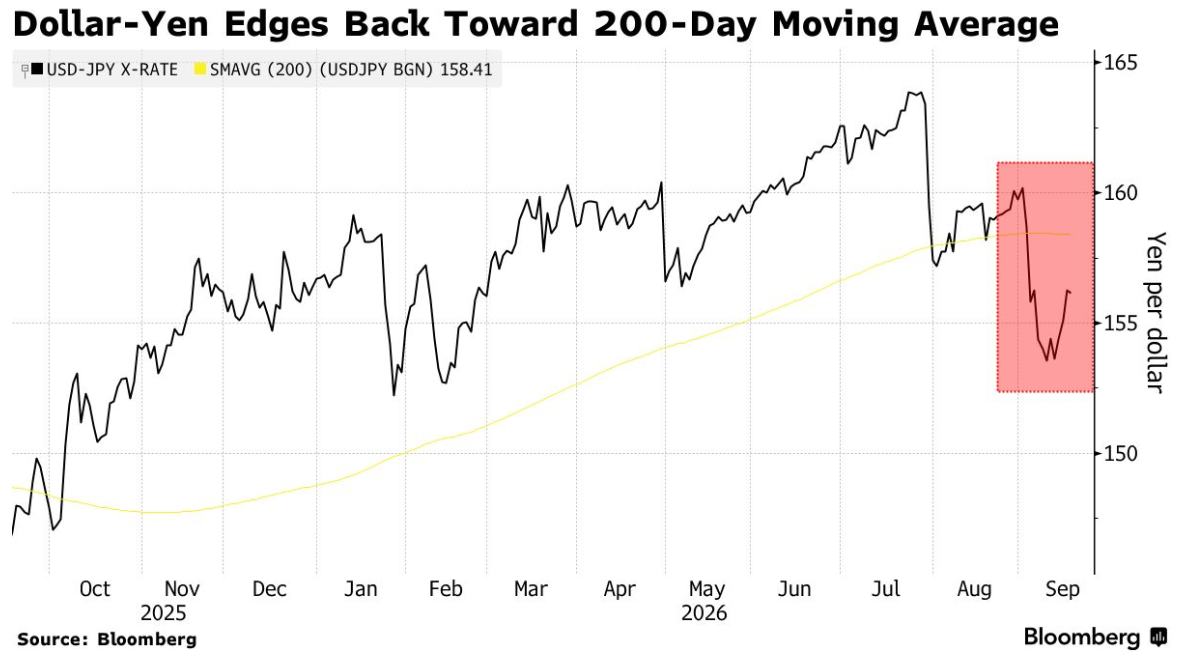
Glenn Yin, ACCM's head of research in Melbourne, said: “There is no doubt that Japan is under tremendous pressure to both raise interest rates and release hawkish signals to minimize losses.” If the Bank of Japan disappoints, “hitting the 160 mark in the short term is not a risk that can be undone.”
The threshold is very high. Overnight index swaps have almost completely priced interest rate increases of 25 basis points, leaving traders focused on Bank of Japan Governor Kazuo Ueda's post-meeting press conference to find clues about the pace and scope of further tightening. Hawk member Takada Hajime even left room for unconventional rate hikes or continuous rate hikes.
Rinto Maruyama, senior interest rate and foreign exchange strategist at SMBC Nikko Securities, said that the Japanese yen resumed its decline, giving the Bank of Japan more reason to emphasize the upward risk of inflation. He said that the rise in oil prices may provide a reason for policy makers to further tighten their policies.
Maruyama said that the rate hike expected on Friday will bring Japan's policy interest rate into the neutral range of estimates, making it unlikely that officials will release a signal of 50 basis point rate hikes or continuous rate hikes. He believes that if this meeting is interpreted as being dovish, 158 would be the next upside target for USD/JPY.
This means that if investors decide that it is difficult for the Bank of Japan's austerity cycle to keep up with the Federal Reserve, the yen will become weak. Maruyama believes that over time, if US interest rates rise faster than Japan, the dollar is expected to gradually rise to 160 against the yen.
Having said that, there is also reason to expect a new round of sell-off in yen that will not be as intense as before. Arbitrage traders have been burned by the yen's recent rebound, and hedge funds have cut their bearish positions. According to the US Commodity Futures Trading Commission data, for the week ending September 8, leveraged traders cut their bearish bets on the yen in half.
The threat of further intervention could also dampen the depreciation of the yen. Japan and the US have shown a desire to join forces to enter the market, and US Treasury Secretary Bezent continues to send signals supporting the strengthening of the yen.
Friday's rate hike may not be enough to support the yen. Akira Moroga, chief market strategist at Aozora Bank, said that the Bank of Japan “may not adopt a hawkish stance like the Federal Reserve, which may be a direct catalyst for the weakening of the yen.” He believes that the dollar near the 200-day EMA against the 158.50 yen is the next key hurdle.