
Kioxia Holdings And 2 More Grid Tech Stocks To Watch
Oil supply routes are again in the spotlight after fresh disruptions between Yemen’s Houthis and Saudi Arabia raised concerns about an inflation shock from higher energy prices. Power delivery suddenly matters a lot more when energy gets pricier and less predictable. That puts the companies upgrading transmission lines and grid hardware on center stage. This article breaks down three stocks from our future power infrastructure screener that are worth having on your radar.
The three stocks covered below are only a sample, as the full screen surfaced 35 more power grid technology companies with equally compelling narratives that are not discussed in this article. To go beyond this short list, head straight to the Power Grid Technology Stocks screener to analyze, filter, and identify the power grid plays that best fit your own portfolio approach.
Kioxia Holdings (TSE:285A)
Overview: Kioxia Holdings supplies NAND flash memory and SSDs for data centers, AI servers, and devices that need dense, reliable storage.
Operations: Kioxia generates ¥3,761,946 million from its Memory Business, centered on flash storage and SSD products for global customers.
Market Cap: ¥27.8 trillion
Kioxia Holdings connects to the power grid theme by providing the high-performance NAND and SSD storage that keeps AI heavy data centers running. These facilities support modern grid analytics, outage prediction, and electrification planning, and Kioxia’s memory business is closely linked to that demand, although one unresolved pressure could significantly affect future outcomes for this infrastructure story.
That unresolved pressure is exactly why a closer look at the 3 key rewards and 1 important major warning sign could be useful before Kioxia Holdings’ storage story really accelerates.

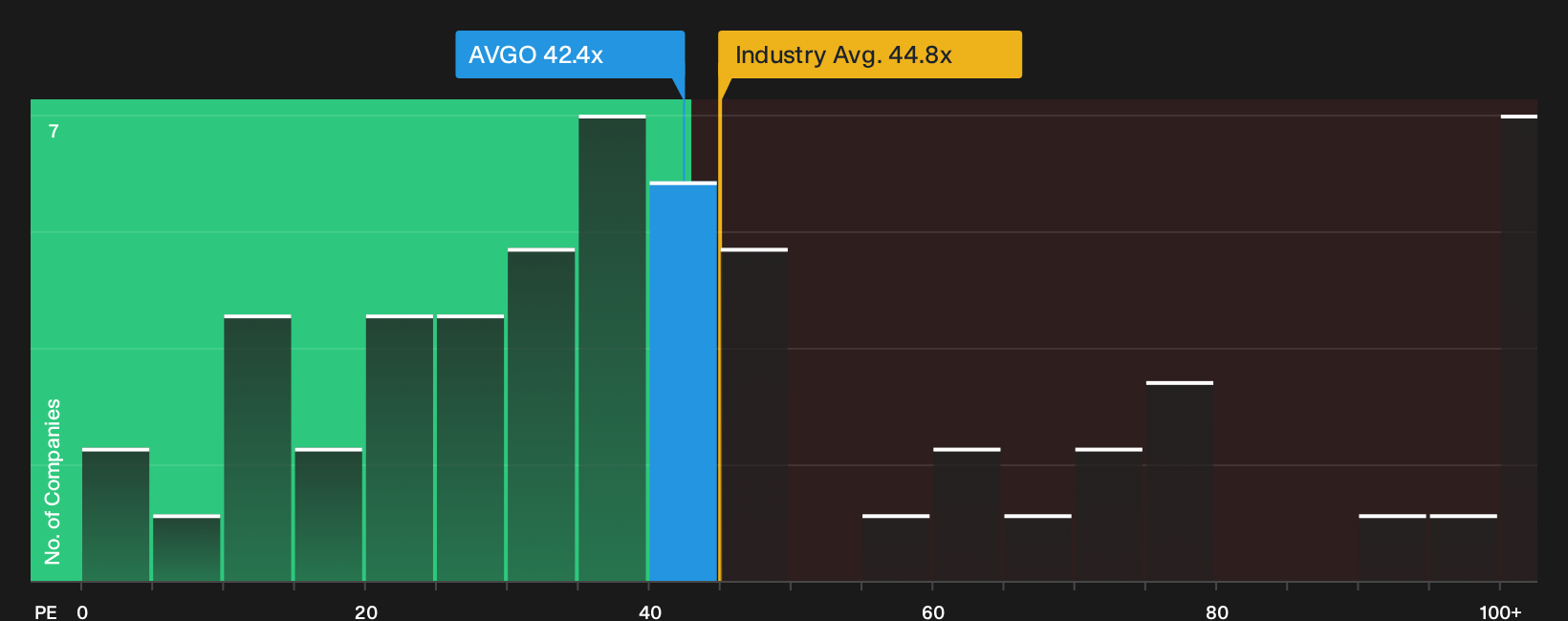
Broadcom (AVGO)
Overview: Broadcom supplies networking chips, custom silicon, and infrastructure software that help AI data centers and utilities move and manage large power-hungry data flows.
Operations: Broadcom generates about US$59.4b from Semiconductor Solutions and US$29.7b from Infrastructure Software, reflecting a broad digital infrastructure footprint.
Market Cap: US$1.6 trillion
Broadcom matters for this power grid technology screen because its networking hardware and software sit inside the AI data centers and carrier networks that utilities rely on to monitor substations, control grid-edge equipment, and route power data in real time.
"Broadcom benefits from growth in AI infrastructure, rising networking and bandwidth requirements, and increasing data center complexity."
The key question is how far Broadcom can advance its AI custom silicon and networking roadmap before one unseen pressure starts to bite into margins.
Before that pressure shows up in the financials, read the full narrative for Broadcom to see how Broadcom’s AI ambitions and margin risks are really interacting.
Vertiv Holdings Co (VRT)
Overview: Vertiv Holdings Co provides high-density power, cooling, and modular data center infrastructure and services that keep AI and electrified networks running reliably.
Operations: Vertiv generates about US$7.5b from the Americas, US$2.7b from Asia Pacific, and US$2.4b from Europe, Middle East & Africa.
Market Cap: US$90.3b
Vertiv matters for this power grid screen because its power and thermal systems sit where the grid meets AI heavy data centers, turning raw electricity into usable, cooled compute capacity.
"Vertiv's Q4 2025 organic orders surged 252% year-over-year, and its $15 billion backlog is equivalent to roughly 1.5 years of trailing revenue."
What really shapes Vertiv’s upside from here is how one unseen pressure feeds through to pricing power and long-term margin strength.
If that pressure is on your mind, read the full narrative for Vertiv Holdings Co to determine whether Vertiv’s backlog is masking risk or setting up a stronger runway.

Seeking Fresh Alternatives Beyond Power Grids
Markets move fast and the best breakout opportunities rarely wait. Scan fresh ideas with real momentum while they are still under the radar for now and act now.
- Spot resilient cash generators before they start flying by running your filters through the list of solid balance sheet and fundamentals (20 results).
- Chase income opportunities that keep paying even when sentiment drops by reviewing the curated 16 dividend fortresses.
- Track early AI momentum stories before they get caught by the crowd by scanning the focused 75 profitable AI stocks that aren't just burning cash.
This article by Simply Wall St is general in nature. We provide commentary based on historical data and analyst forecasts only using an unbiased methodology and our articles are not intended to be financial advice. It does not constitute a recommendation to buy or sell any stock, and does not take account of your objectives, or your financial situation. We aim to bring you long-term focused analysis driven by fundamental data. Note that our analysis may not factor in the latest price-sensitive company announcements or qualitative material. Simply Wall St has no position in any stocks mentioned.
Have feedback on this article? Concerned about the content? Get in touch with us directly. Alternatively, email editorial-team@simplywallst.com