
3 U.S. Apparel Stocks Screening for Gains From India Tariff Risks
Tariff threats on Indian exports after the “Sanctioning Russia and Iran Act of 2026” are shaking up supply chains, but they are also quietly shifting the playing field toward manufacturers listed in the U.S. that compete with India. If trade friction lingers, some of these stocks could gain fresh orders, pricing power or simply more investor attention. This piece walks through 3 such U.S. manufacturing stocks exposed to this news, and what that might mean for your portfolio.
The stocks covered below are just a starting sample, and the full screen surfaced 47 more manufacturers with equally compelling stories that are not covered in this article.
Identify your own potential tariff beneficiaries by heading straight into the US-focused import-substitution beneficiaries for India-exposed manufacturing screener.
Capri Holdings (CPRI)
Overview: Capri Holdings designs and sells Michael Kors and Jimmy Choo branded apparel, handbags, footwear, and accessories, giving US retailers an alternative to India-sourced fashion suppliers.
Operations: Capri generates about US$2.8b from Michael Kors and US$617 million from Jimmy Choo, with revenue anchored in the United States and EMEA.
Market Cap: US$1.6b
Capri Holdings fits this import-substitution theme because its Michael Kors and Jimmy Choo labels already supply many of the same categories US buyers currently source from India. Any sourcing rethink immediately puts this portfolio in the conversation for replacement orders.
Sequential improvement in full-price store traffic, reduced discounting, and growing success of new product launches, supported by data-driven marketing and influencer engagement, signal effective brand revitalization and are expected to drive AUR and revenue growth.
The real swing factor for Capri Holdings is whether one pressure on its cost base eases fast enough to let that brand repair flow through to margins.
If that cost relief lands at the right moment, full narrative for Capri Holdings shows how Capri Holdings could see that brand repair accelerate and what risks might still slow it.

PVH (PVH)
Overview: PVH is a global apparel group behind Calvin Klein and Tommy Hilfiger, supplying branded clothing and accessories across major retail channels.
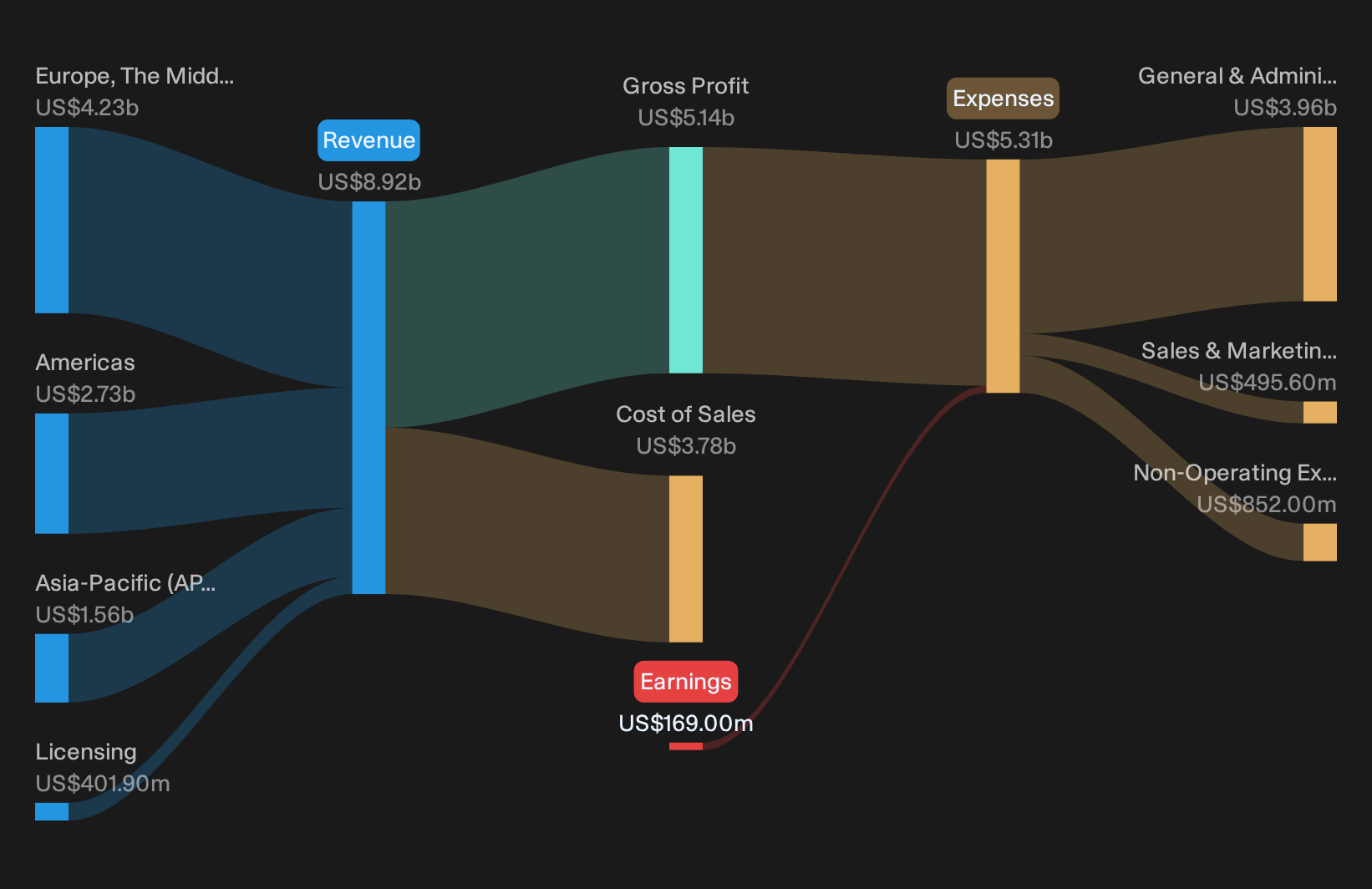
Operations: PVH generates about US$2.7b in the Americas, US$4.2b in EMEA, US$1.6b in Asia-Pacific and US$402 million from licensing.
Market Cap: US$3.3b
PVH plugs straight into the tariff story because its US focused apparel mix sits in the same product categories India exports at scale. As a result, any shift in sourcing or pricing power flows quickly into how much value the Calvin Klein and Tommy Hilfiger franchises can pull from American shoppers.
Increasing direct-to-consumer digital sales and omnichannel execution, supported by investments in online platforms and digital marketing, are reducing reliance on traditional wholesale and retail and are expected to support higher net margins and improve overall earnings.
What really moves the needle for PVH is how one less visible cost pressure ultimately feeds into that margin story investors are watching.
When that cost pressure finally eases, full narrative for PVH lays out how PVH’s margin story could accelerate, where risks still bite, and what the market might be missing.
V.F (VFC)
Overview: V.F. Corporation sells branded outdoor and lifestyle apparel, footwear, and accessories like Vans and The North Face to global consumers.
Operations: V.F. generates about US$5.8b from Outdoor and US$2.7b from Active, with a smaller US$1.0b contribution from other activities.
Market Cap: US$5.0b
V.F. matters for this import substitution screen because its US facing brands offer retailers a ready alternative to India-linked apparel suppliers just as sourcing decisions come under fresh tariff scrutiny.
Intensifying consumer preference for digitally native direct-to-consumer brands continues to erode the relevance of legacy brands like V.F., with accelerating channel rationalization and persistent declines at key franchises such as Vans likely to result in sustained long-term revenue contraction. The company's current turnaround initiatives may only partially offset these pressures.
What happens to V.F. margins if a single unresolved cost and pricing pressure moves even slightly in the wrong direction?
That risk cuts both ways for V.F, and full narrative for V.F explains where pressure may be masking potential upside and how a successful reset could help re-rate the story.

Seeking Alternatives Before Momentum Flies
Fresh tariff stories keep reshaping which stocks catch real momentum. Before the next breakout gets caught by the crowd and the edge drops away, consider moving early instead of waiting.
- Spot sturdy payers that can keep income flowing even when headlines change by scanning the 6 dividend fortresses while yields and prices still look reasonable.
- Hunt for resilient operators with room to compound returns using the curated 11 resilient stocks with low risk scores before these steadier performers attract wider attention.
- Track the AI buildout by following the infrastructure backbone through the hand picked 60 AI infrastructure stocks before capital crowds the trade.
This article by Simply Wall St is general in nature. We provide commentary based on historical data and analyst forecasts only using an unbiased methodology and our articles are not intended to be financial advice. It does not constitute a recommendation to buy or sell any stock, and does not take account of your objectives, or your financial situation. We aim to bring you long-term focused analysis driven by fundamental data. Note that our analysis may not factor in the latest price-sensitive company announcements or qualitative material. Simply Wall St has no position in any stocks mentioned.
Have feedback on this article? Concerned about the content? Get in touch with us directly. Alternatively, email editorial-team@simplywallst.com