
What Apple (AAPL)'s iPhone 18 Launch Means For Shareholders
- Apple recently rolled out the iPhone 18 Pro and Pro Max alongside its first foldable iPhone Duo, with U.S. carriers and RedPocket Mobile offering unlocked preorders, multi-network 5G activation, and a wide slate of promotions that help offset higher device prices.
- The new lineup leans heavily on Apple Intelligence and Siri AI across iPhone, Apple Watch, and AirPods 5. This ties premium hardware closer to AI features that can support higher average selling prices while keeping users more deeply embedded in the broader Apple ecosystem.
- We will now look at how Apple’s AI centric iPhone 18 Pro launch could influence the broader investment narrative around the business.
Apple Investment Narrative Recap
To own Apple, you need to believe its integrated hardware, services, and Apple Intelligence stack can keep people upgrading iPhones while deepening engagement across Watch, AirPods, and subscriptions. The key near term swing factor is how the iPhone 18 Pro, Pro Max, and Duo cycle lands in the context of higher prices, longer replacement habits, and mixed early preorder data.
The main risk right now sits in margin pressure from higher component costs, aggressive carrier promotions, and ongoing regulatory and legal scrutiny around the App Store and privacy. Recent headlines on UK encryption and the £2b ATT lawsuit speak directly to that, but do not yet change the operating story in a measurable way.
The most relevant fresh data point for this launch is U.S. carrier and MVNO activity around the iPhone 18 Pro lineup and iPhone Duo. T Mobile, Metro by T Mobile, and RedPocket Mobile are leaning into heavy bill credits, extended installment plans, and unlocked multi network support to soften the higher upfront pricing and keep volumes flowing.
For you as a shareholder, those offers matter because they show carriers, not Apple, carrying much of the affordability burden. That can help protect average selling prices while still supporting upgrades. The flip side is reliance on rich trade in subsidies, which reinforces the risk that future demand becomes more dependent on promotions to clear premium hardware.
Apple Earnings And Valuation Set Against The iPhone 18 Cycle
Analyst models around Apple now anchor the iPhone 18 Pro, Pro Max, and Duo launch to a longer multiyear view rather than a single upgrade quarter. Consensus assumptions point to revenue growing by 9.7% a year over the next 3 years, with profit margins easing from 27.6% today to 26.7% by year three. Earnings are projected to climb from US$128.9b today to US$164.4b by 2029. This implies an increase of about US$35.5b in profit over that period and a P/E that settles near 35.7x on those forecast earnings, compared with 37.6x today.
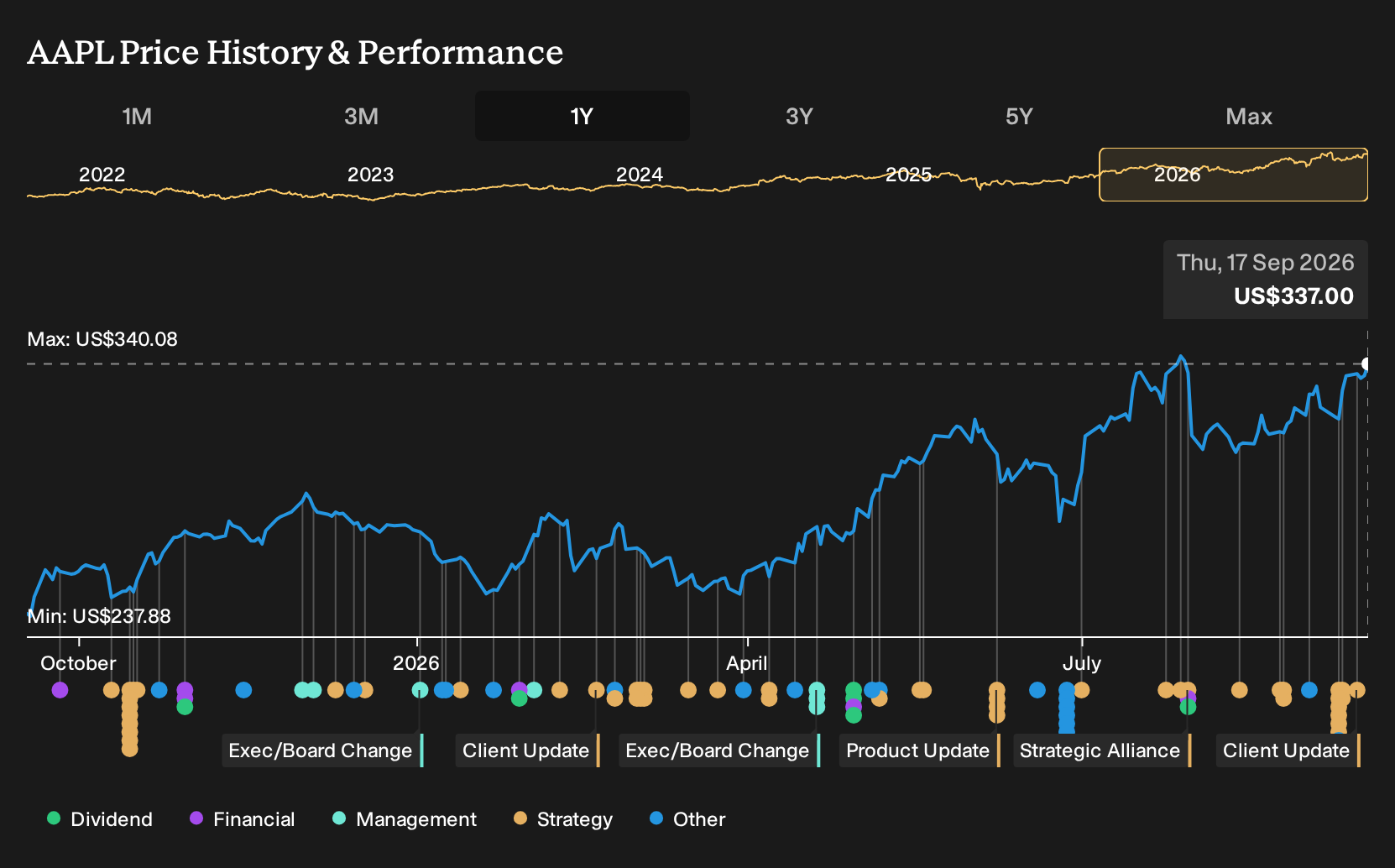
On the top line, the consolidated view is that Apple could reach US$616.5b in revenue and US$164.4b in earnings by 2029, while trading on that 35.7x P/E multiple and using a discount rate of about 8.6% in many fair value models. That forecast sits next to a consensus target price of US$325.66 around a current share price of US$332.27, which leaves only a small gap between where the stock trades and where analysts cluster. For investors, the practical takeaway is that much of the AI and Apple Intelligence narrative, along with the iPhone 18 cycle, already appears to be reflected in the current valuation. Any change in expectations around revenue growth, margin pressure, or the pace of AI adoption may therefore matter more than the headline device launch itself.
Apple's narrative outlines revenues of US$616.5b and earnings of US$164.4b by 2029, which equates to 9.7% yearly revenue growth and an earnings increase of about US$35.5b from current earnings of US$128.9b.
Discover how Apple's fair value indicates a 3% potential downside to its current price, which leaves little room for error.
Exploring Other Perspectives
Some of the lowest Apple analysts lean into a very different story. They focus on the risk that iPhone demand proves softer than expected, even with iPhone Duo and heavy carrier offers. Before this launch, that group was modeling only 6.3% annual revenue growth with earnings of about US$147.4b by 2029. That is a much more cautious setup than consensus. It could shift again as the new devices and AI features land. Use this spread in expectations as a reminder that reasonable people can read the same data very differently. Consider reviewing several viewpoints before deciding how Apple fits your portfolio.
Explore 46 other Apple fair value estimates, including one that suggests as much as 46% downside from the current price!
Form Your Own Verdict
Don't just follow the ticker. Dig into the data and build a conviction that's truly your own.
- A great starting point for your Apple research is our analysis highlighting 2 key rewards that could impact your investment decision.
- See our latest analysis for Apple. The report includes a comprehensive fundamental analysis summarized in a single visual, the Snowflake, making it easy to evaluate Apple's overall financial health at a glance.
Looking For More Investment Ideas Beyond Apple?
If the Apple story feels fully priced to you right now, it can help to widen the lens and compare it with other opportunities on the Simply Wall St Screener. That way you anchor your view of Apple against a broader mix of balance sheets, income profiles, and dividend policies.
- For investors who care most about valuation support and business quality, scan a curated set of 29 high quality undervalued stocks that pair stronger fundamentals with more modest expectations baked into the share price.
- If resilience and capital preservation sit higher on your checklist, filter for 11 resilient stocks with low risk scores that score well on financial health and business stability while still offering equity upside.
- When you want to broaden your watchlist with fresher ideas, use the screener to surface 16 high quality undiscovered gems that combine solid underlying metrics with less crowded investor attention.
This article by Simply Wall St is general in nature. We provide commentary based on historical data and analyst forecasts only using an unbiased methodology and our articles are not intended to be financial advice. It does not constitute a recommendation to buy or sell any stock, and does not take account of your objectives, or your financial situation. We aim to bring you long-term focused analysis driven by fundamental data. Note that our analysis may not factor in the latest price-sensitive company announcements or qualitative material. Simply Wall St has no position in any stocks mentioned.
Have feedback on this article? Concerned about the content? Get in touch with us directly. Alternatively, email editorial-team@simplywallst.com