
Yunman launches a special service for the aluminum industry in Gongyi to digitally activate new momentum in bulk logistics
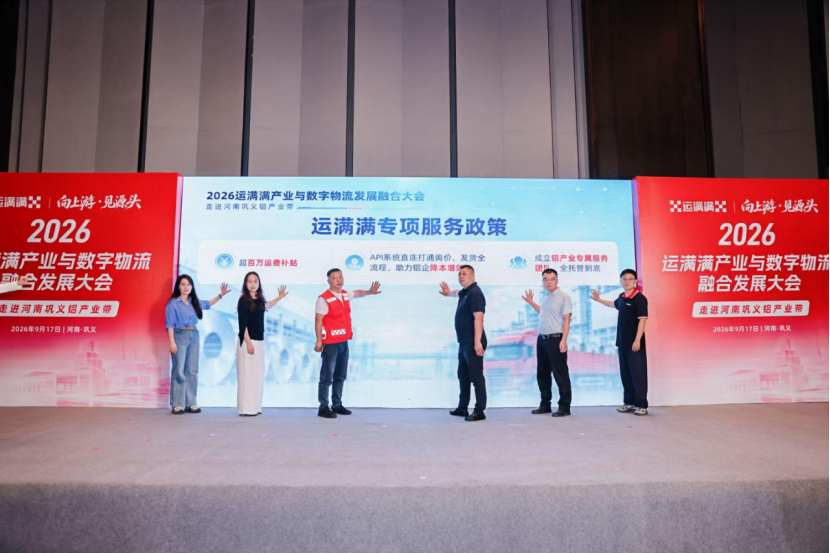
On September 17, Upstream · Seeing the Source - 2026 Yunman Industrial and Digital Logistics Integrated Development Conference was successfully held in Gongyi, Henan, the largest aluminum sheet and foil processing base in the country. The event brought together local governments, the Henan Nonferrous Metals Industry Association, leading companies in the aluminum industry, and media from inside and outside the province to analyze the logistics link of Gongyi's 100 billion aluminum processing industry cluster from the perspective of freight circulation. On site, the digital freight logistics platform Yunman released the “Aluminum in Freight Data” interpretation report for the first time, and simultaneously launched a one-million special service policy for the aluminum industry in Gongyi.
100 billion aluminum industry cluster: “two ends outside”, logistics has become a key variable in transformation and upgrading
Gongyi is the largest, most comprehensive, and well-equipped aluminum sheet and foil industry cluster in China. According to public data, for every 10 cans in the world, 1 comes from Gongyi; for every 3 domestic can lids, 1 is produced in Gongyi. There are more than 200 local aluminum processing enterprises, 4 of the top 10 aluminum sheet and foil enterprises in the country, and thousands of upstream and downstream supporting enterprises. At present, Gongyi aluminum processing products occupy more than 30% of the domestic market share, with an output value of over 140 billion yuan in 2025, which is the core business card for the high-quality development of Henan's manufacturing industry.
Lu Yan, deputy director of the Aluminum Processing Industry Department of the Henan Nonferrous Metals Industry Association, said at the meeting that due to the adjustment of the domestic industrial layout, the Henan aluminum industry showed the characteristics of “double entry and exit”: large quantities of raw materials are transferred from external regions, processed products are sold to the national market, and the logistics supply chain is directly related to enterprise costs, efficiency and core competitiveness.
“The space for cost reduction on the production side is gradually narrowing, and the digitalization of the logistics supply chain is becoming a new blue ocean for the aluminum industry to cultivate new quality productivity.” Lu Yan mentioned it. Large aluminum companies' own fixed fleets can guarantee transportation within the normalized plan, but in the face of peak orders and temporary increases, there will still be capacity gaps. Digital freight platforms do not replace companies' own logistics, but serve as an effective supplement to make up for shortcomings in capacity during fluctuation periods and help optimize the overall logistics costs of the industry.
Looking at the industry from a freight perspective: “Aluminum in Freight Data” outlines the national distribution map of aluminum goods
At the event, Ni Haixia, a senior expert in commercial analysis of Yunmanman, released an interpretation report on “Aluminum in Freight Data”, which relied on the platform's actual freight orders from January to August 2026 to restore a complete picture of the logistics transformation of the national and Gongyi aluminum industries.
According to the data, Gongyi ranks first among the regions and counties that ship aluminum sheets and foils in the country. On the raw material side, alumina and aluminum ingots flow into Gongyi from raw material production areas such as Xining, Baotou, Changji, and Binzhou; on the finished product side, aluminum products produced by Gongyi are sent to major manufacturing provinces such as Shandong, Jiangsu, Anhui, Zhejiang, and Hebei. Among them, Shangqiu, Binzhou, Shanghai, Xuzhou, and Qingdao became the core recipient cities. According to platform data, in 2026, Gongyi's farthest single aluminum product spanned more than 2,700 kilometers directly to Linzhi, Tibet, showing the vast market depth of the Central Plains industrial cluster.
Looking at transport models, Gongyi aluminum products freight showed diverse characteristics. The 4.2-meter high fence, 13-meter high fence, 6.8-meter high rail, 13-meter flat panel, and 9.6-meter high rail form the main model. Taking into account small-batch transfers and transportation of tens of tons of bulk goods, the average transportation distance of aluminum goods is 629 kilometers. The demand for different types and sizes of aluminum for different models is very prominent. As one of the “barometers” for observing the real economy, Gongyi's two-way activity in “raw material input, deep processing, and finished product export” is a vivid reflection of the deep integration of industrial clusters into the unified national market.
Three special policies have been implemented to solve the pain points of bulk logistics in the aluminum industry
In response to real problems in the industry, such as the high risk of damage in aluminum transportation, complicated scheduling, and system fragmentation, Yunmanman officially released three special service policies for the Gongyi aluminum industry on site, empowering local manufacturers in multiple dimensions of cost, digitalization, and exclusive services:
The first is a freight subsidy of over one million. Full shipping will invest real money to directly reduce the logistics costs of aluminum companies' delivery and reduce the freight burden on enterprises.
Second, Yunmanman is directly connected to the API system, opening up a closed loop for the entire logistics business. The complete capacity of the platform is embedded in the enterprise's own TMS/ERP system, and everything from inquiry, order delivery, in-transit management, and settlement and invoicing is completed in the enterprise's internal system. There is no need to switch back and forth between multiple platforms, promoting the digital upgrading of logistics in the aluminum industry again, and achieving cost reduction and efficiency.
The third is to set up an exclusive service team for the aluminum industry to achieve full business management. Special docking personnel are provided for customers in the aluminum industry to undertake full-process services such as delivery coordination, freight follow-up, cargo damage dispute handling, and transportation guarantee in one stop to protect the transportation of high-value aluminum materials.
“Large aluminum companies' self-built fleets and digital platforms complement each other. Our own fleet maintains stable transportation plans, and our full fleet acts as the enterprise's 'capacity spot market' and intelligent scheduling center. The company does not need to allocate a large amount of heavy assets for peak business to achieve optimal overall logistics costs.” Business leaders at the roundtable forum interpreted the platform's positioning in this way.
Digital tools to improve efficiency: shorten the time required to find a car and continuously reduce the idle loss of trucks
Under the traditional model, manufacturing companies rely on acquaintances and information departments to find cars, and delivery times are often calculated in days. After connecting to the digital platform, the cargo owner can ship the goods in as fast as a few minutes to complete vehicle matching. According to reports, the AI intelligent car search function, which relies on the Manyun Big Model, is being piloted, and each order can save an average of 30.5 minutes of communication time.
Wang Weifeng, general manager of the curtain wall supply department of a local manufacturing company, has a deep understanding of this. He has been using it for five or six years, and the company can deliver two or three cars on a daily basis. “From a small 3.8-meter van to a 13-meter-high fence, we need to schedule all types of cars on the platform. The fastest way to get there is a driver about 10 minutes after the order is placed. The entire transportation trajectory can be checked, and I feel more at ease with delivery.” Wang Weifeng said that efficient capacity matching has become an important support for the company's daily production and delivery.
Extending from efficiency on the individual enterprise side to the entire road freight industry, digital freight continues to leverage overall transportation efficiency improvements. In 2020-2025, the “three empty rate” (empty driving rate, vacancy rate, no-load rate) of Manbang platform trucks dropped from 38.97% to 34.88%. Increased vehicle utilization also brought considerable carbon reduction and social and economic benefits.
Walk into the site of leading companies and see the real freight scene of the 100 billion industrial belt
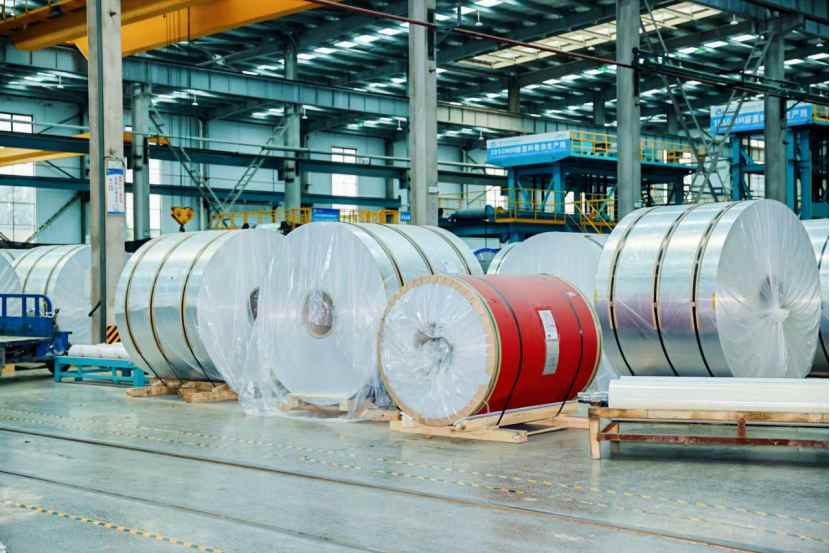
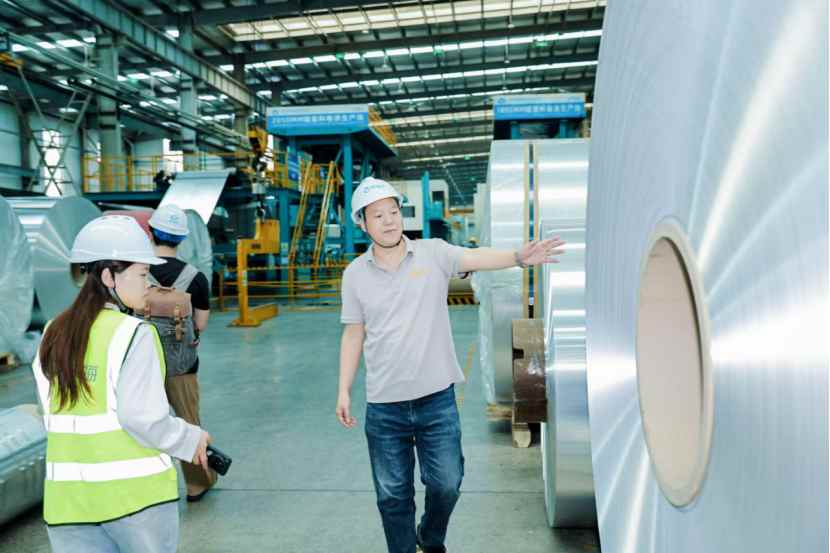
After the conference, the media and their entourage visited local aluminum companies for research. At the finished goods yard, the shiny aluminum coils were neatly stacked, and the entire process of lifting, padding, bundling, loading and shipping was completely shown on site. The person in charge of logistics at the enterprise explained on the spot that in a roll of high-value aluminum, every detail of lifting or fixing cannot be sloppy. A slight carelessness can cause cargo damage. It is hoped that digital logistics will continue to deepen large-scale manufacturing scenarios and solve real logistics problems on the frontline of the industry.
According to reports, Gongyi is a key sample of the “upstream · see the source” industry full of luck. In the future, Yunmanman will replicate this industrial service methodology to more large-scale manufacturing clusters, rely on the national capacity network and API digital capabilities, continue to serve the real economy and help more products made in China reach a broad market.