
Are S&P Global (SPGI) Utility Cost Warnings A New Risk For City Credit?
- S&P Global (NYSE:SPGI) analysts flag rising utility bills as a new affordability pressure for US cities and residents.
- The research links higher electricity, water and heating charges to potential strain on municipal finances and local credit quality.
- S&P Global highlights affordable housing and sustainable debt instruments as areas where issuers and investors may see fresh issuance activity.
- Rising utility costs pressuring municipal finances is only one part of the wider S&P Global story for investors to weigh. We have also flagged 4 other big wins for S&P Global.
Rising utility burdens and municipal credit stress point to a broader theme in essential infrastructure, which you can explore through 37 power grid technology and infrastructure stocks.
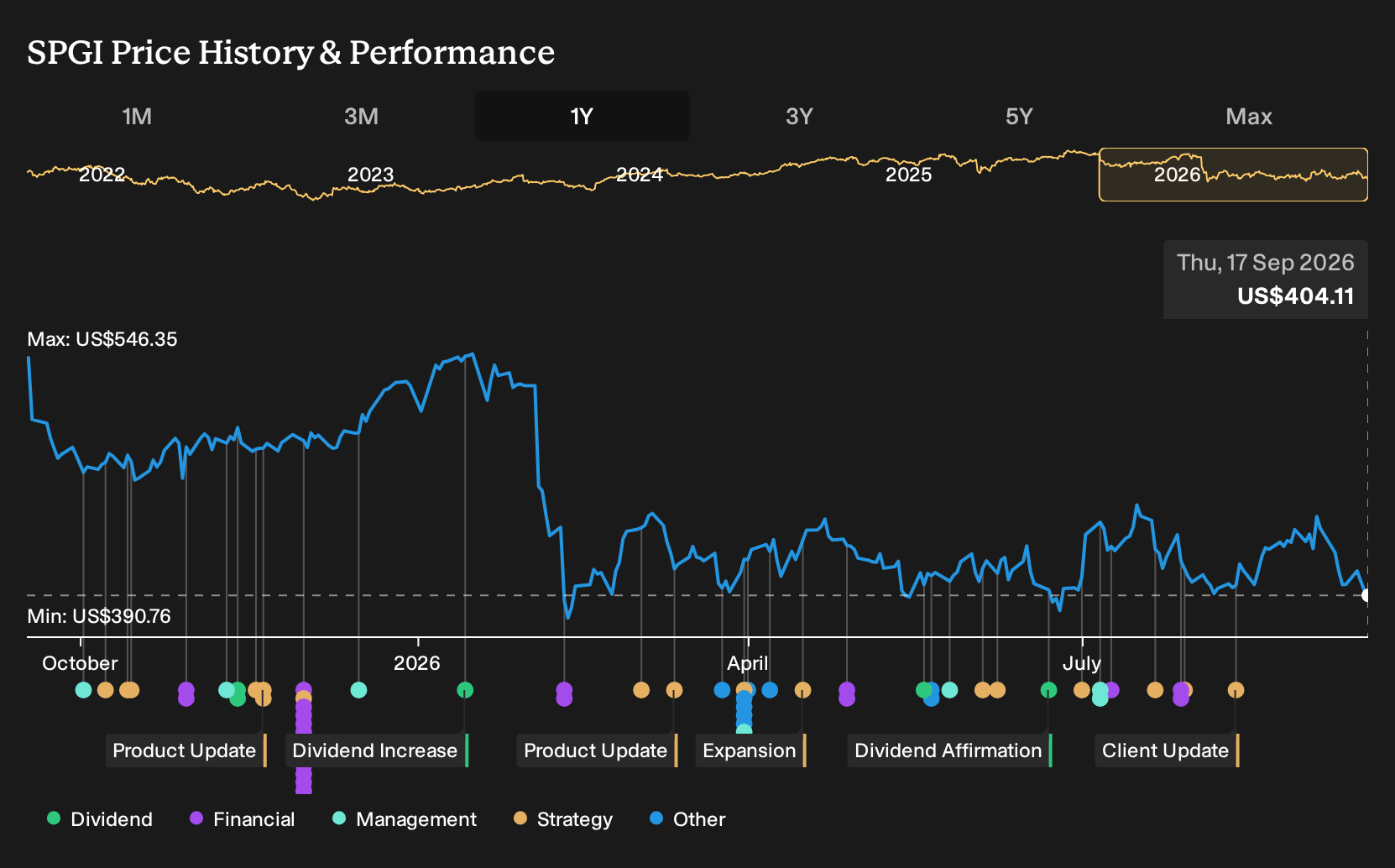
S&P Global, a US capital markets data and analytics provider with a market cap of about US$119.9b, supplies benchmarks, credit insights, and sector research that many municipal issuers and fixed income investors rely on when assessing risks in areas such as utilities, housing, and sustainable debt.
See how S&P Global's balance sheet measures up.
Rising utility costs test S&P Global’s infrastructure and housing thesis
S&P Global’s narrative leans on growing demand for credit opinions and data as capital flows through public markets, especially into energy transition and related infrastructure. This affordability warning ties directly into that, because strained cities and households still need funding frameworks and credit signals that investors trust.
"The introduction and rapid growth of energy transition and climate products, almost 30% year-over-year, in response to global focus on energy security and transition, could lead to significant revenue growth opportunities in emerging markets and technologies..."
See how the full story points towards a $519 fair value for S&P Global.
The market reaction may focus on municipal credit risk. For S&P Global, however, the more relevant question is product usage. Higher utility bills that squeeze local budgets can push issuers to refinance, restructure or tap sustainable debt formats, all of which rely on ratings, benchmarks and sector research.
On the other side, prolonged affordability stress could weigh on issuance volumes if cities delay projects or constrain borrowing. That outcome would press directly on the Ratings division thesis that healthy capital markets support demand. It also tests whether newer climate and housing datasets really differentiate S&P Global from Moody’s or MSCI when public-sector clients become more cost sensitive.
The same affordability story can look like a growing need for S&P Global’s tools or a cap on their usage, depending on which narrative an investor considers stronger.
One big S&P Global question this article has not answered
All of this still leaves one issue hanging over S&P Global, which is who is actually steering the business and what incentives those decision makers really respond to. See who is actually steering S&P Global, and how they are paid.
This article by Simply Wall St is general in nature. We provide commentary based on historical data and analyst forecasts only using an unbiased methodology and our articles are not intended to be financial advice. It does not constitute a recommendation to buy or sell any stock, and does not take account of your objectives, or your financial situation. We aim to bring you long-term focused analysis driven by fundamental data. Note that our analysis may not factor in the latest price-sensitive company announcements or qualitative material. Simply Wall St has no position in any stocks mentioned.
Have feedback on this article? Concerned about the content? Get in touch with us directly. Alternatively, email editorial-team@simplywallst.com