
CenterPoint Energy (CNP) Replaces $2.4 Billion Credit Facility With $2.2 Billion Line
- CenterPoint Energy (NYSE:CNP) has replaced its prior US$2.4b unsecured revolving credit facility with a new US$2.2b facility.
- The new senior unsecured revolving credit line has a five year term and includes updated financial covenants for the utility.
- Revised terms include specific provisions tied to natural disaster recovery costs and updated commitment amounts across participating lenders.
- The shift to a new US$2.2b five year credit facility is one factor to consider alongside our broader CenterPoint Energy view. Take a look at 2 warning signs (1 major) we have identified for CenterPoint Energy.
This type of funding update is not unique to CenterPoint Energy. It may be useful to compare it with a wider group of resilient utilities and infrastructure stocks via 30 resilient stocks with low risk scores.
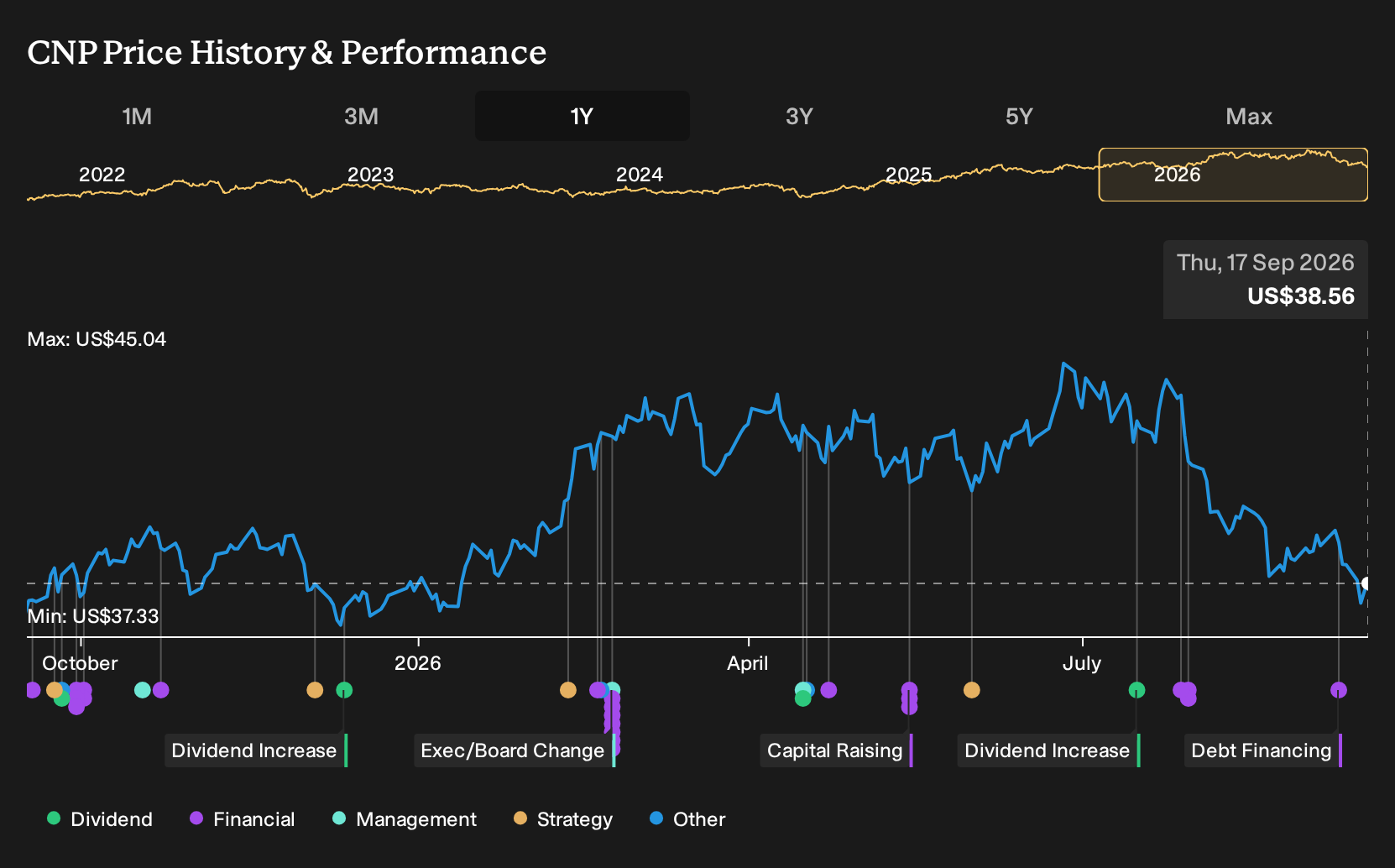
CenterPoint Energy runs regulated electric and natural gas utilities in the US, so access to a large revolving credit facility directly affects how it funds grid investments, maintains infrastructure and manages working capital across its integrated operations.
See how CenterPoint Energy's balance sheet measures up.
Why would CenterPoint Energy move from a US$2.4b to a US$2.2b revolving credit facility?
CenterPoint Energy is keeping a large liquidity backstop in place while trimming headline capacity by US$200 million. That still leaves a sizeable US$2.2b line to support capital spending and working capital, and it may signal tighter alignment between committed bank lines and expected short term funding needs.
How do the covenants and disaster provisions affect the balance sheet risk?
The debt to consolidated capitalization covenant of 67.5%, with a temporary step up to 70% after qualifying natural disasters, formalizes a ceiling on leverage while giving the utility room to absorb large restoration costs. It helps frame how much balance sheet stretch lenders are willing to tolerate if storm related spending climbs before securitization funding is in place.
Does this credit move change the CenterPoint Energy narrative?
The new facility fits with a story that already highlights heavy capital investment, interest cost pressures and regulatory risk rather than rewriting it. It gives the business structured liquidity to pursue grid and resiliency projects linked to load growth while keeping a clear leverage guardrail that matters for interest coverage, which analysts have flagged as a concern.
See how these catalysts shape CenterPoint Energy's path to a $46.12 fair value.
What should investors watch next for this financing to really matter?
The key test is how CenterPoint Energy uses this facility alongside future bond issues and any additional equity to fund its projected grid investments. Debt to capitalization levels relative to the 67.5% covenant, interest expense trends and any securitization deals following large storms will show whether this structure supports the capital plan without straining coverage ratios.
The one CenterPoint Energy check to run before acting on any headline
Before you make any move on CenterPoint Energy, it helps to see where analysts think the balance of earnings power, dividends and capital spending lands a few years from now. See where analysts expect CenterPoint Energy to be in a few years.
This article by Simply Wall St is general in nature. We provide commentary based on historical data and analyst forecasts only using an unbiased methodology and our articles are not intended to be financial advice. It does not constitute a recommendation to buy or sell any stock, and does not take account of your objectives, or your financial situation. We aim to bring you long-term focused analysis driven by fundamental data. Note that our analysis may not factor in the latest price-sensitive company announcements or qualitative material. Simply Wall St has no position in any stocks mentioned.
Have feedback on this article? Concerned about the content? Get in touch with us directly. Alternatively, email editorial-team@simplywallst.com