
Is Schneider Electric (ENXTPA:SU) Still Undervalued On The Fed Driven Rally?
Schneider Electric (ENXTPA:SU) moved higher after the latest US Federal Reserve rate hike shifted sentiment across European equities. The stock reacted alongside peers as tighter policy pushed the dollar up and refocused attention on export and energy costs.
For context, Schneider Electric’s share price has risen 21.11% year to date to €287.10, while the 1-year total shareholder return of 25.34% and 3-year total shareholder return of 94.37% point to momentum that has been building rather than fading.
Scan Schneider Electric’s peers riding the same rate and energy story by exploring our hand-picked 37 power grid technology and infrastructure stocks.
After a 21.11% gain so far this year and a fresh push from the Fed driven move, Schneider Electric now forces a choice: pay up after the run or wait for a cheaper entry as the valuation stacks up next.
Most Popular Narrative: 12% Undervalued
Schneider Electric’s most followed valuation story points to a fair value of €325.04, above the last close at €287.10. This frames the recent rally as still short of that narrative target.
The company's transition toward software and recurring digital services (notably EcoStruxure, AVEVA SaaS, and EcoCare), now representing 60% of revenues and growing at double-digit rates, should drive higher margins and recurring earnings, with further upside potential as AVEVA's SaaS conversion completes by 2027.
See why 112 investors see Schneider Electric as 12% undervalued.
Result: Fair Value of €325.04 (UNDERVALUED)
Still, Schneider Electric’s story could wobble if margin pressure persists in weaker Industrial Automation markets, or if heavy investment weighs more heavily on cash generation.
Find out about the key risks to this Schneider Electric narrative.
Another View: Schneider Electric Through A Cash Flow Lens
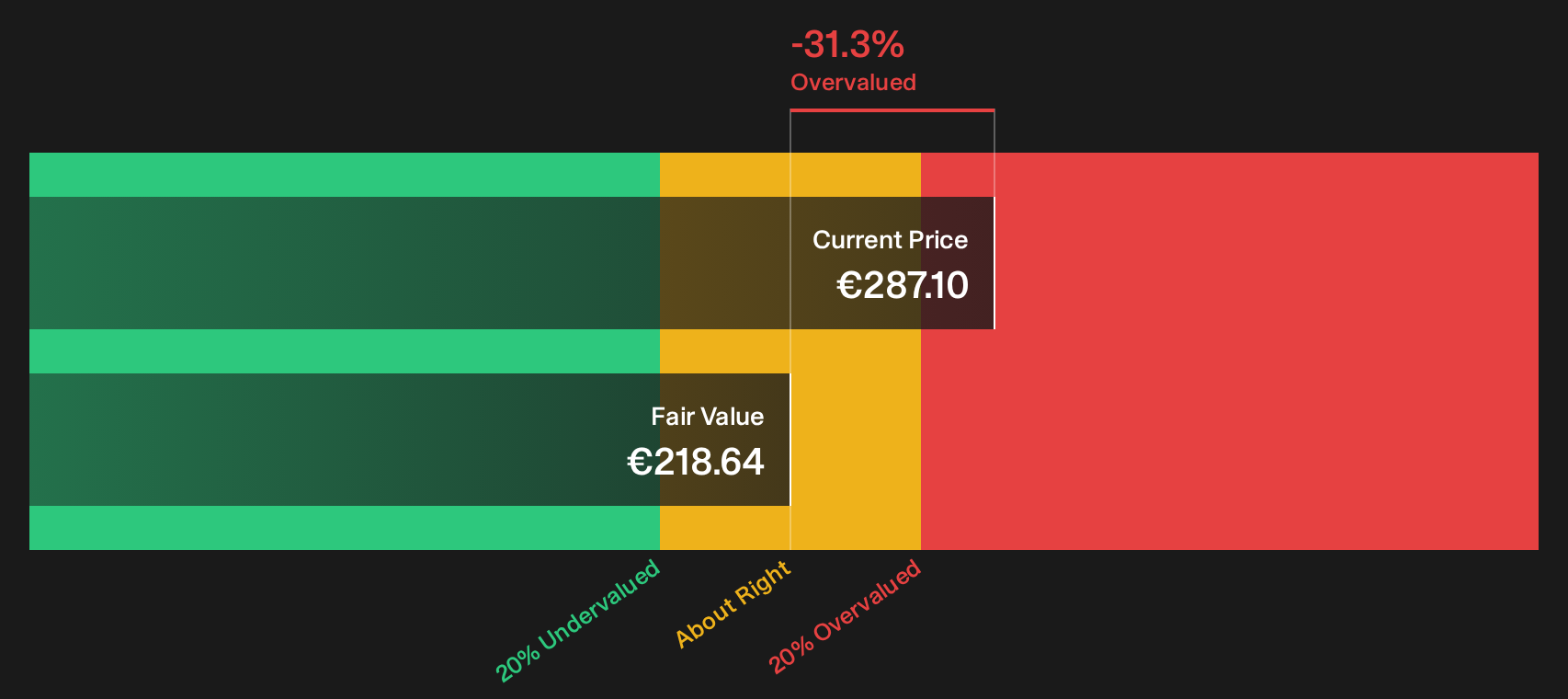
The popular story has Schneider Electric at a fair value of €325.04 and looking undervalued. Our DCF model tells a different tale. On that framework, the present value of future cash flows is €218.64 per share, so the current €287.10 level screens as expensive rather than cheap.
This gap between a cash flow based figure and the narrative fair value leaves you with a clear choice. Do you trust earnings multiples that lean on stronger future margins, or a DCF that puts more weight on today’s cash generation and balance sheet pressure, especially with high debt still in the mix?
Look into how the SWS DCF model arrives at its fair value.
Simply Wall St performs a discounted cash flow (DCF) on every stock in the world every day (check out Schneider Electric for example). We show the entire calculation in full. You can track the result in your watchlist or portfolio and be alerted when this changes, or use our stock screener to discover 169 high quality undervalued stocks. If you save a screener we even alert you when new companies match - so you never miss a potential opportunity.
Next Steps
Signals on Schneider Electric are mixed so far. If you want to act before sentiment shifts again, weigh the upside against the pressure points through the 2 key rewards and 1 important warning sign.
Hunting For More Ideas Beyond Schneider Electric?
Do not stop with a single stock. Use curated lists to quickly surface fresh ideas that match your risk comfort, income needs, and quality preferences.
- Target punchy upside potential by scanning the 134 elite penny stocks with strong financials that already clear a basic financial strength bar.
- Focus on value and quality together by reviewing the 169 high quality undervalued stocks that pair solid cash flows with healthier balance sheets.
- Prioritise resilience and smoother sleep at night by filtering for 227 resilient stocks with low risk scores that score well on financial stability metrics.
This article by Simply Wall St is general in nature. We provide commentary based on historical data and analyst forecasts only using an unbiased methodology and our articles are not intended to be financial advice. It does not constitute a recommendation to buy or sell any stock, and does not take account of your objectives, or your financial situation. We aim to bring you long-term focused analysis driven by fundamental data. Note that our analysis may not factor in the latest price-sensitive company announcements or qualitative material. Simply Wall St has no position in any stocks mentioned.
Have feedback on this article? Concerned about the content? Get in touch with us directly. Alternatively, email editorial-team@simplywallst.com