
AI Defense Partnership Altering The Investment Case For Kawasaki Heavy Industries Stock?
- Kawasaki Heavy Industries reported a multi year teaming agreement with EdgeCortix to co develop AI enabled aerospace and defense systems worth several million US$ between 2026 and 2028.
- The focus on edge AI chips and software for mission critical aerial platforms indicates that Kawasaki Heavy Industries is deepening its role in higher value defense system integration work rather than remaining primarily a hardware supplier.
- We will look at how Kawasaki Heavy Industries' AI edge computing alliance with EdgeCortix could reshape the broader investment narrative.
Scan beyond Kawasaki Heavy Industries and see how other defense focused AI plays are positioning for mission critical workloads with our curated 95 robotics and automation stocks.
Kawasaki Heavy Industries Investment Narrative Recap
To hold Kawasaki Heavy Industries, an investor needs to believe its mix of aerospace, hydrogen, robotics and transportation can convert into steadier earnings despite currency swings and choppy cash generation. The EdgeCortix agreement points to deeper AI content in aerospace platforms, but the initial multi year scope is relatively modest, so it does not change the near term story on its own.
The key short term swing factor remains execution in existing aerospace and precision machinery programs, while keeping free cash flow from deteriorating further, as debt is not well covered by operating cash flow. The biggest risk is that weaker demand in segments like Aerospace Systems or Powersports and Engine, combined with yen moves, squeezes margins and limits funding capacity for these new AI heavy projects.
The most relevant context for this AI teaming is the broader push into higher value engineering across energy solutions, robotics and aerospace, supported by prior investment in hydrogen infrastructure and automation. Those areas already sit alongside aircraft and defense work, so adding edge AI workloads aligns with an existing tilt toward more software heavy, systems driven revenue rather than pure hardware volume.
For catalysts, investors are still watching whether precision machinery and robot activities, including medical robotics, can sustain the earnings growth that analysts forecast at about 10.4% per year. The EdgeCortix collaboration sits alongside that story. It gives Kawasaki Heavy Industries more technical depth for future defense and industrial projects, but execution, capital discipline and foreign exchange headwinds still shape the earnings path in the next few years.
What The Kawasaki Heavy Industries Forecasts Assume
For Kawasaki Heavy Industries, the analyst playbook is fairly clear. The story leans on steady revenue expansion, slightly better profitability and a bigger earnings base by the end of the decade, with the AI edge push acting as one more lever rather than the main engine.
Consensus models build in 7.2% yearly revenue growth over the next three years, paired with profit margins that move from 5.1% today to 5.7% by around 2029. On the earnings line, forecasts point to ¥119.6b today rising to ¥165.6b by 2029, which is an increase of about ¥46b in profit. Analysts still differ on how far that can stretch, with the most optimistic scenarios pointing to earnings of ¥195.6b, but the core narrative anchors around that ¥165.6b mark.
Those same projections assume the share count stays flat, so all of the uplift in earnings per share would need to come from actual profit growth rather than financial engineering. The implied P/E multiple on the 2029 earnings is 23.9x, up from 18.1x today and above the 13.3x level quoted for the wider Japan machinery group. In practice, this means you would effectively be paying a premium for Kawasaki Heavy Industries' mix of hydrogen, robotics, aerospace and now AI infused defense systems.
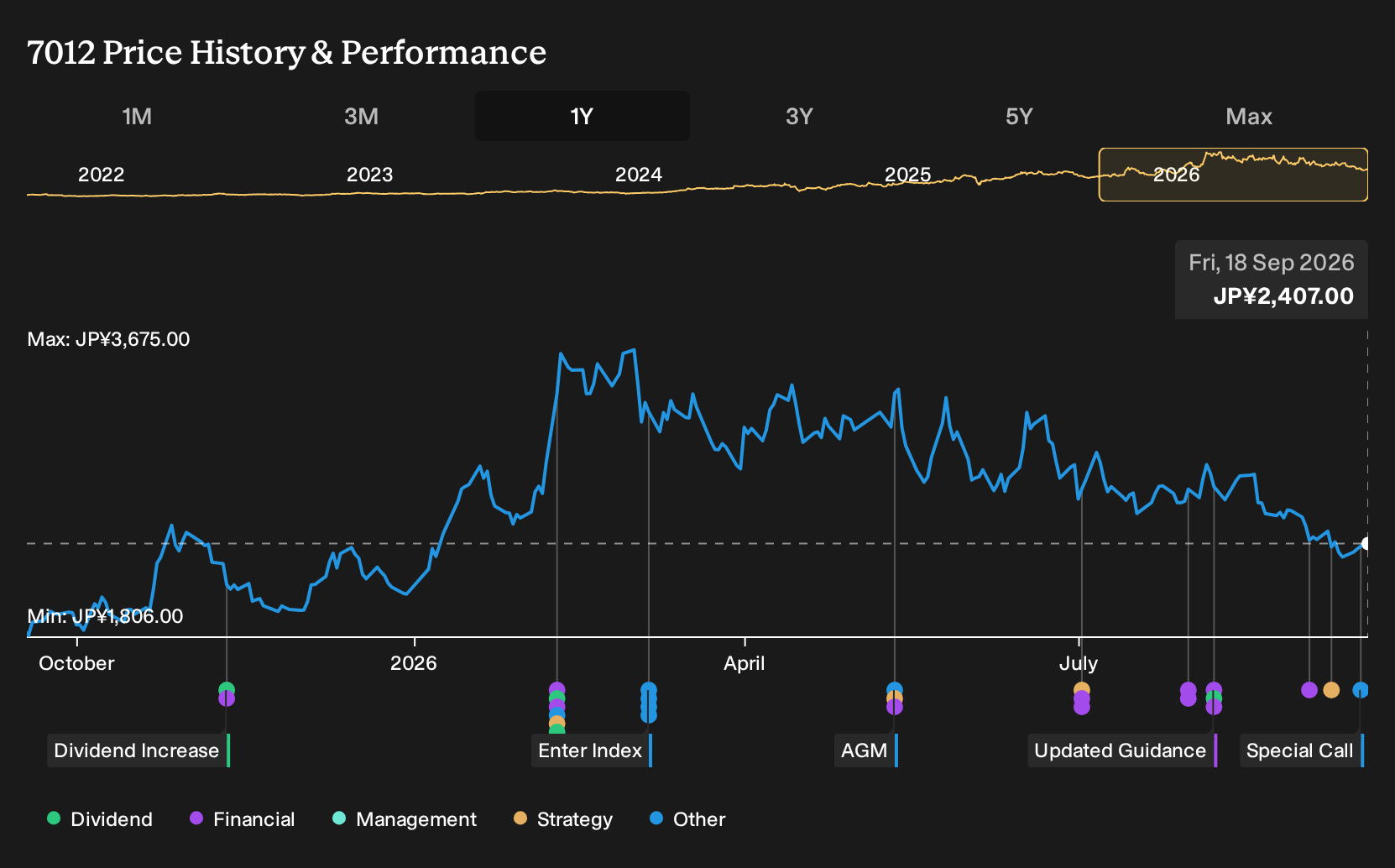
On top of those underlying forecasts, the current consensus price target of ¥3,823.08 sits 32.3% above a share price of ¥2,590. The range around that is wide, with targets running from ¥2,630 at the low end to ¥4,900 on the high side. Anyone looking at the stock needs to decide whether the combination of planned hydrogen infrastructure, robotics exposure and deeper AI content in defense hardware justifies both the projected earnings path and the richer multiple that is baked into these estimates.
Kawasaki Heavy Industries' current analyst narrative points to revenues of ¥2,916.7b and earnings of ¥165.6b by 2029, based on 7.2% yearly revenue growth and an earnings increase of roughly ¥46b from ¥119.6b today.
Uncover why Kawasaki Heavy Industries' fair value indicates a 59% potential upside to its current price, which could narrow quickly.
Exploring Other Perspectives
One alternate storyline focuses less on hydrogen and more on Kawasaki Heavy Industries' automation gap. The most optimistic analysts were already pencilling in ¥3,231.6b of revenue and ¥195.6b of earnings by 2029, well above consensus. You can treat this AI teaming with EdgeCortix as a fresh test of those bolder assumptions and decide which version of the future feels closer to your own view.
Explore 3 other Kawasaki Heavy Industries fair value estimates, including one that suggests as much as 104% upside from the current price!
Decide For Yourself
Don't just follow the ticker. Dig into the data and build a conviction that's truly your own.
- A great starting point for your Kawasaki Heavy Industries research is our analysis highlighting 2 key rewards and 2 important warning signs that could impact your investment decision.
- See our latest analysis for Kawasaki Heavy Industries. The report includes a comprehensive fundamental analysis summarized in a single visual, the Snowflake, making it easy to evaluate Kawasaki Heavy Industries' overall financial health at a glance.
Looking For More Investment Ideas Beyond Kawasaki Heavy Industries?
If Kawasaki Heavy Industries has sparked your interest, it can help to widen the lens and compare it with other opportunities that match your risk tolerance, income needs and growth expectations using the Simply Wall St Screener.
- For investors who want potential upside without ignoring balance sheet strength, review a curated 74 high quality undiscovered gems that already show solid fundamentals.
- If resilience matters more than headline growth, scan a focused 21 resilient stocks with low risk scores that scores well on financial stability.
- For readers who care about steady cash flows and income, assess a targeted 14 dividend fortresses that aims for 5%+ yields with staying power.
This article by Simply Wall St is general in nature. We provide commentary based on historical data and analyst forecasts only using an unbiased methodology and our articles are not intended to be financial advice. It does not constitute a recommendation to buy or sell any stock, and does not take account of your objectives, or your financial situation. We aim to bring you long-term focused analysis driven by fundamental data. Note that our analysis may not factor in the latest price-sensitive company announcements or qualitative material. Simply Wall St has no position in any stocks mentioned.
Have feedback on this article? Concerned about the content? Get in touch with us directly. Alternatively, email editorial-team@simplywallst.com