
Do These 3 Checks Before Buying Cochlear Limited (ASX:COH) For Its Upcoming Dividend
Readers hoping to buy Cochlear Limited (ASX:COH) for its dividend will need to make their move shortly, as the stock is about to trade ex-dividend. The ex-dividend date is commonly two business days before the record date, which is the cut-off date for shareholders to be present on the company's books to be eligible for a dividend payment. It is important to be aware of the ex-dividend date because any trade on the stock needs to have been settled on or before the record date. Thus, you can purchase Cochlear's shares before the 21st of September in order to receive the dividend, which the company will pay on the 14th of October.
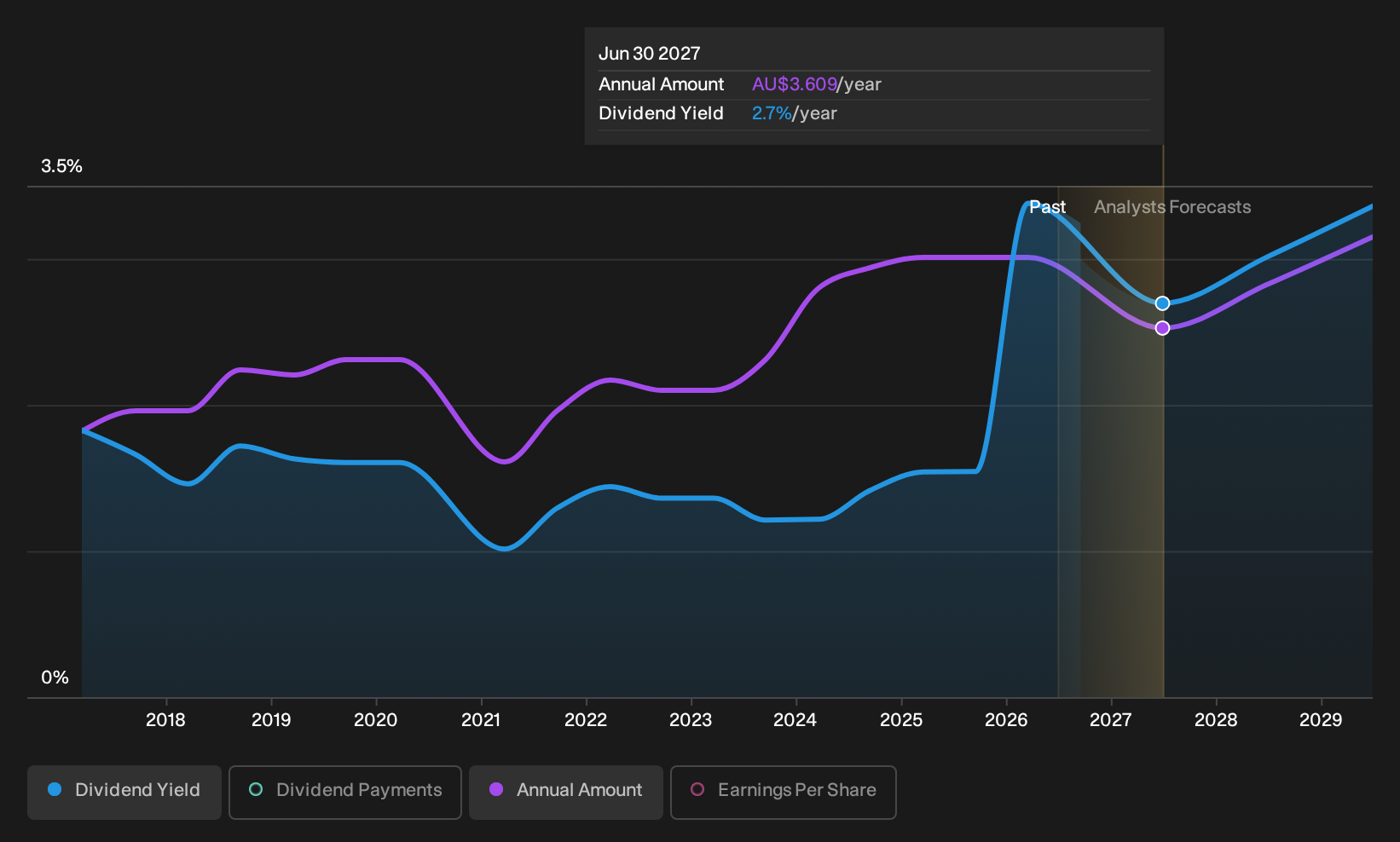
The company's next dividend payment will be AU$1.30 per share, on the back of last year when the company paid a total of AU$2.60 to shareholders. Calculating the last year's worth of payments shows that Cochlear has a trailing yield of 1.9% on the current share price of AU$133.90. If you buy this business for its dividend, you should have an idea of whether Cochlear's dividend is reliable and sustainable. So we need to check whether the dividend payments are covered, and if earnings are growing.
Dividends are usually paid out of company profits, so if a company pays out more than it earned then its dividend is usually at greater risk of being cut. Cochlear paid out 153% of profit in the past year, which we think is typically not sustainable unless there are mitigating characteristics such as unusually strong cash flow or a large cash balance. That said, even highly profitable companies sometimes might not generate enough cash to pay the dividend, which is why we should always check if the dividend is covered by cash flow. It paid out 101% of its free cash flow in the form of dividends last year, which is outside the comfort zone for most businesses. Cash flows are usually much more volatile than earnings, so this could be a temporary effect - but we'd generally want to look more closely here.
Cash is slightly more important than profit from a dividend perspective, but given Cochlear's payments were not well covered by either earnings or cash flow, we are concerned about the sustainability of this dividend.
Check out our latest analysis for Cochlear
Click here to see the company's payout ratio, plus analyst estimates of its future dividends.
Have Earnings And Dividends Been Growing?
When earnings decline, dividend companies become much harder to analyse and own safely. Investors love dividends, so if earnings fall and the dividend is reduced, expect a stock to be sold off heavily at the same time. Cochlear's earnings per share have fallen at approximately 14% a year over the previous five years. Such a sharp decline casts doubt on the future sustainability of the dividend.
Another key way to measure a company's dividend prospects is by measuring its historical rate of dividend growth. Cochlear has delivered an average of 0.8% per year annual increase in its dividend, based on the past 10 years of dividend payments.
The Bottom Line
From a dividend perspective, should investors buy or avoid Cochlear? Not only are earnings per share declining, but Cochlear is paying out an uncomfortably high percentage of both its earnings and cashflow to shareholders as dividends. Unless there are grounds to believe a turnaround is imminent, this is one of the least attractive dividend stocks under this analysis. It's not an attractive combination from a dividend perspective, and we're inclined to pass on this one for the time being.
With that being said, if you're still considering Cochlear as an investment, you'll find it beneficial to know what risks this stock is facing. To help with this, we've discovered 2 warning signs for Cochlear that you should be aware of before investing in their shares.
A common investing mistake is buying the first interesting stock you see. Here you can find a full list of high-yield dividend stocks.
Have feedback on this article? Concerned about the content? Get in touch with us directly. Alternatively, email editorial-team (at) simplywallst.com.
This article by Simply Wall St is general in nature. We provide commentary based on historical data and analyst forecasts only using an unbiased methodology and our articles are not intended to be financial advice. It does not constitute a recommendation to buy or sell any stock, and does not take account of your objectives, or your financial situation. We aim to bring you long-term focused analysis driven by fundamental data. Note that our analysis may not factor in the latest price-sensitive company announcements or qualitative material. Simply Wall St has no position in any stocks mentioned.