
How Investors Are Reacting To Fannie Mae Stock After Easier Mortgage Insurance Cancellation
- The Federal Housing Finance Agency recently aligned Fannie Mae’s mortgage insurance cancellation rules with Freddie Mac, making it easier for eligible borrowers to remove insurance as home values rise and potentially reduce monthly housing costs.
- This policy shift directly affects Fannie Mae’s guaranty and mortgage backed securities franchise because easier insurance cancellation can influence borrower behavior, prepayment patterns and the mix of loans flowing into its US$4.1b guaranty book.
- We will look at how Fannie Mae’s investment narrative intersects with easier mortgage insurance cancellation for borrowers under the new rules.
Scan how Fannie Mae’s policy shift fits into the broader housing story by reviewing hand picked list of solid balance sheet and fundamentals (23 results) that could benefit from similar borrower friendly trends.
Federal National Mortgage Association Investment Narrative Recap
For a shareholder in Federal National Mortgage Association, the core belief is that its US$4.1t guaranty book and role in US housing finance can support steady guaranty fee income even as conditions shift. The recent mortgage insurance rule alignment may influence prepayments and mix, but it does not change that central thesis on its own.
The near term swing factor is how volumes and credit trends evolve while earnings forecasts point to declines over the next few years. The biggest risk sits with housing market pressure feeding into higher multifamily delinquencies, credit losses and tighter net margins, especially with debt not well covered by operating cash flow.
The most relevant recent development is the Federal Housing Finance Agency move that aligned Fannie Mae’s mortgage insurance cancellation rules with Freddie Mac. This adjustment can alter borrower behavior, monthly payment burdens and ultimately prepayment speeds inside the guaranty and mortgage backed securities businesses.
For Federal National Mortgage Association, that operational tweak interacts with existing catalysts such as ongoing repricing of the guaranty book, cost reduction efforts and growth in the retained portfolio. It also sits alongside structural risks, including higher regulatory capital needs and housing stress that could raise long term credit costs if conditions weaken further.
Federal National Mortgage Association's narrative projects US$32.1b revenue and US$169.4 thousand earnings by 2029. This framework assumes 5.7% yearly revenue growth and an earnings decline of about US$67.8m from US$68.0m today.
Uncover how Federal National Mortgage Association's fair value indicates a 99% potential upside to its current price before the market closes the discount.
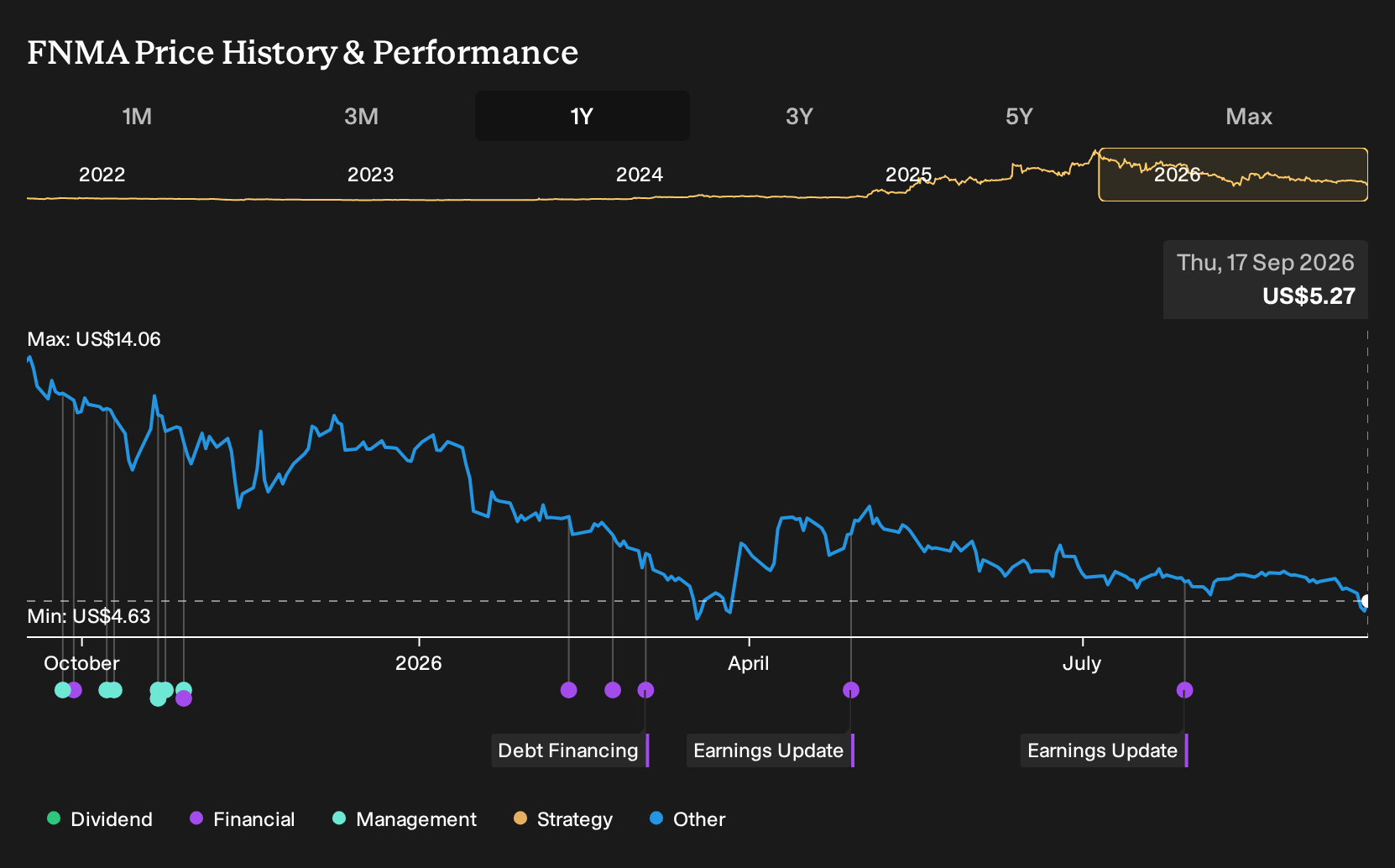
Exploring Other Perspectives
One alternate view fixates on interest rate risk for Fannie Mae. The most bearish analysts worried that longer term rate positions and US$150 million of unrealized losses could cap future profit, even while they penciled in US$32.0b revenue and US$29.4b earnings by 2029. Those pre news forecasts may change after this policy shift, so consider a range of viewpoints before deciding what makes sense for you.
Explore 7 other Federal National Mortgage Association fair value estimates, including one that suggests it could be worth just $9.59!
The Verdict Is Yours
Disagree with existing narratives? Extraordinary investment returns rarely come from following the herd, so consider forming your own view.
- A great starting point for your Federal National Mortgage Association research is our analysis highlighting 2 key rewards and 2 important warning signs that could impact your investment decision.
- See our latest analysis for Federal National Mortgage Association. The report includes a comprehensive fundamental analysis summarized in a single visual, the Snowflake, making it easy to evaluate Federal National Mortgage Association's overall financial health at a glance.
Looking For More Investment Ideas Beyond Federal National Mortgage Association?
If you want to stress test your thesis on Federal National Mortgage Association, it can help to line it up against other opportunities with different risk and income profiles using the Simply Wall St Screener.
- For investors who want potential upside with strict balance sheet discipline, filter for companies through the 29 high quality undervalued stocks and see which ones match your preferred mix of value and quality.
- If capital preservation sits higher on your priority list, consider scanning a 30 resilient stocks with low risk scores that focuses on businesses with more resilient risk scores and steadier profiles.
- Those hunting for growing payouts can review a curated set of income ideas using the 6 dividend fortresses and compare yields, payout ratios and track records side by side.
This article by Simply Wall St is general in nature. We provide commentary based on historical data and analyst forecasts only using an unbiased methodology and our articles are not intended to be financial advice. It does not constitute a recommendation to buy or sell any stock, and does not take account of your objectives, or your financial situation. We aim to bring you long-term focused analysis driven by fundamental data. Note that our analysis may not factor in the latest price-sensitive company announcements or qualitative material. Simply Wall St has no position in any stocks mentioned.
Have feedback on this article? Concerned about the content? Get in touch with us directly. Alternatively, email editorial-team@simplywallst.com