
How Charter Extensions At SFL (SFL) Have Changed Its Investment Story
- SFL Corporation disclosed that it extended charters on six 15,400 TEU container vessels with Hapag-Lloyd AG for seven additional years, adding about US$750 million to its fixed rate charter backlog and taking total contracted revenue to roughly US$4.6b.
- The longer charter coverage through 2035 to 2036 with an investment grade liner materially increases SFL’s contracted earnings visibility and reduces exposure to shorter term container market swings.
- We will now look at how SFL's larger fixed charter backlog with Hapag-Lloyd could reshape the broader investment narrative for the business.
Scan how SFL’s extended vessel coverage compares with other shipping and infrastructure plays by checking out the list of solid balance sheet and fundamentals (23 results) that are already positioned on long-term contracts and robust fundamentals.
SFL Investment Narrative Recap
SFL appeals most to investors who have confidence in its ability to keep ships employed on long-term contracts while managing debt and dividend demands. The extended Hapag-Lloyd charters add US$750 million of fixed-rate backlog and take total contract coverage to about US$4.6 billion, which directly supports near-term earnings visibility.
The key short-term swing factor is still how SFL balances that contracted cash flow against interest costs and capital commitments, especially with interest payments not well covered by earnings and a dividend that is flagged as thinly covered. Concentration in container exposure remains a central risk if global volumes soften.
The September 2026 charter extension with Hapag-Lloyd is the operational headline that matters most at this stage. Those six 15,400 TEU vessels now have coverage into 2035 to 2036 at firm rates, which ties a larger share of SFL’s earnings to an investment-grade counterparty rather than spot markets.
This additional backlog connects directly with earlier themes around fleet renewal and earnings growth expectations. More contracted revenue can help SFL service interest costs and support its capital spending plan, while also giving management a longer runway to address risks around environmental regulation, vessel obsolescence and any idle high-value assets such as rigs.
SFL's current analyst narrative points to revenues of US$860.7 million and earnings of US$141.7 million by 2029. These figures are based on an assumed 6.5% yearly revenue growth rate and an increase in earnings of about US$77.8 million from US$63.9 million today.
Uncover why SFL's fair value indicates a 3% potential downside to its current price, which leaves little room for error.
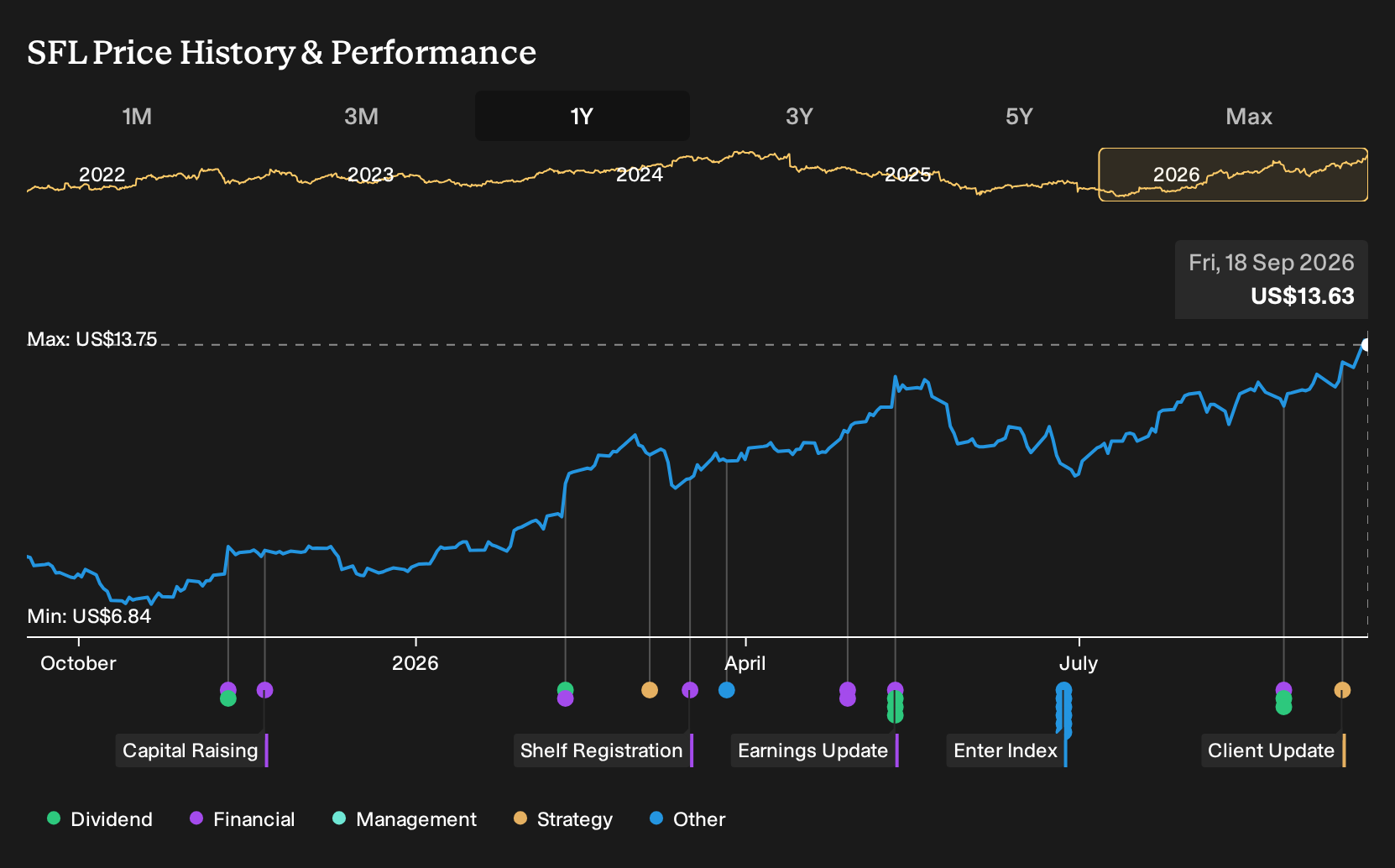
Exploring Other Perspectives
For SFL, the big alternate swing factor is Hercules. The most optimistic analysts were already penciling in earnings of US$171.6 million on revenues of about US$876.7 million by 2029, assuming harsher environment drilling improves. The new container backlog may push those views further, or prompt a reset. Opinions can differ widely; treat this as one of several narratives to explore.
Explore 4 other SFL fair value estimates, including one that suggests it could be worth as much as $13.17.
The Verdict Is Yours
Disagree with existing narratives? Extraordinary investment outcomes seldom result from following the herd, so trust your own analysis.
- A great starting point for your SFL research is our analysis highlighting 2 key rewards and 2 important warning signs that could impact your investment decision.
- See our latest analysis for SFL. The report includes a comprehensive fundamental analysis summarized in a single visual, the Snowflake, making it easy to evaluate SFL's overall financial health at a glance.
Looking for more SFL investment ideas?
Once you have a view on SFL, it can help to benchmark that thesis against other businesses with different risk and return profiles using the Simply Wall St Screener.
- For investors who want potential upside with strict price discipline, filter for companies that screen as 33 high quality undervalued stocks based on their fundamentals.
- If income stability matters most, compare SFL’s dividend profile with a set of 6 dividend fortresses that focus on higher yields with supporting financials.
- Prefer stronger balance sheets and sturdier cash flows, even if growth is steadier, by scanning a 30 resilient stocks with low risk scores that aims to keep downside in check.
This article by Simply Wall St is general in nature. We provide commentary based on historical data and analyst forecasts only using an unbiased methodology and our articles are not intended to be financial advice. It does not constitute a recommendation to buy or sell any stock, and does not take account of your objectives, or your financial situation. We aim to bring you long-term focused analysis driven by fundamental data. Note that our analysis may not factor in the latest price-sensitive company announcements or qualitative material. Simply Wall St has no position in any stocks mentioned.
Have feedback on this article? Concerned about the content? Get in touch with us directly. Alternatively, email editorial-team@simplywallst.com