
Sanctions Allegations Could Be A Big Test For Raiffeisen Bank International Stock
- Raiffeisen Bank International was accused by short-seller Grizzly Research of facilitating over $1b of Russian trade that allegedly circumvented sanctions, a claim the bank rejected as misleading and inconsistent with its compliance framework.
- The controversy concentrates attention on Raiffeisen Bank International's remaining Russian exposure, including trapped capital and operational ties that may carry legal, regulatory, and reputational pressure.
- We will look at how Raiffeisen Bank International's investment narrative is tested by fresh scrutiny of its Russian sanctions compliance exposure.
Raiffeisen Bank International Investment Narrative Recap
To own Raiffeisen Bank International, you need to be comfortable with a Central and Eastern Europe focused lender that still has meaningful Russian exposure. The near term story leans on steady loan and deposit demand in markets like Czechia and Slovakia and on keeping net interest income and fees resilient while regulatory and legal noise stays manageable.
The recent sanctions allegations pull the biggest existing risk into the spotlight, which is the complex Russian exit and trapped capital. That could affect timing on capital mobility and compliance costs more than day to day operations in core CEE markets, unless regulators impose new restrictions that materially affect the group.
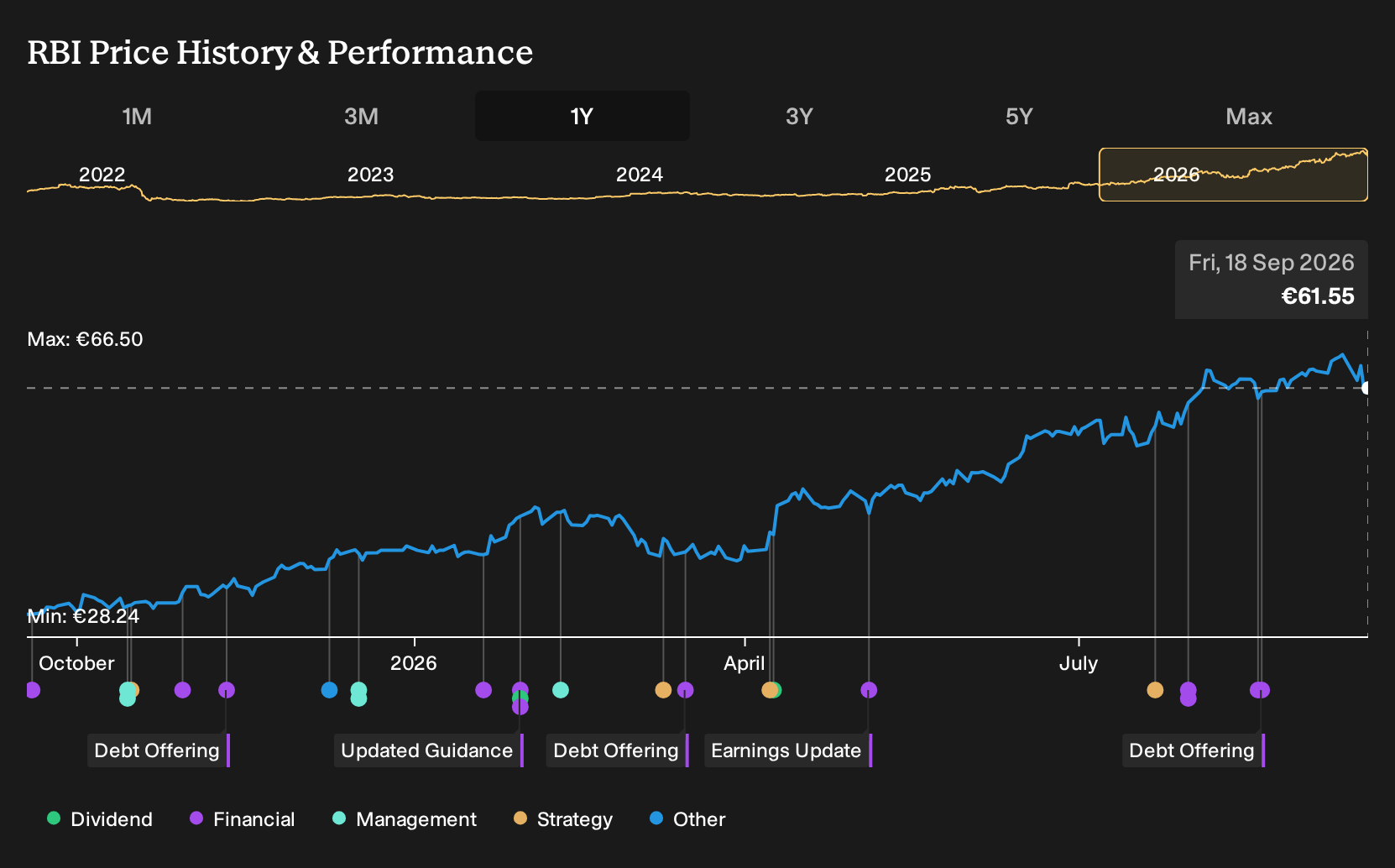
The Grizzly Research report accusing Raiffeisen Bank International of facilitating Russian sanctions circumvention is the announcement that matters most for this catalyst and risk mix. It directly intersects with long running concerns about geopolitical exposure, potential sanctions losses and the chance of forced write downs on Russian related assets and trapped capital.
This scrutiny lands on top of existing issues like high bad loans at 2.4% and a relatively low 69% allowance for bad loans, as well as unpredictable litigation costs in Poland. Execution now revolves around maintaining regulatory confidence, containing legal expenses and protecting CET1 strength so the bank can keep investing in CEE growth and digital projects.
On current analyst assumptions, Raiffeisen Bank International is mapped to €9.3 billion in revenue and €2.5 billion in earnings by 2029, which implies revenue growth of 1.6% per year and an increase in earnings of about €0.1 billion from €2.4 billion today.
Uncover why Raiffeisen Bank International's fair value indicates a 10% potential downside to its current price, leaving little room for error.
Exploring Other Perspectives
Some of the highest Raiffeisen Bank International analysts focused on a very different catalyst. They highlighted faster Russian deleveraging that could eventually release trapped capital. Before this short-seller report, that camp was pencilling in about €10.0 billion of revenue and €3.0 billion of earnings by 2029. These more optimistic forecasts might shift as you weigh fresh sanctions scrutiny, so treat them as one of several viewpoints to stress test your own stance.
Explore 4 other Raiffeisen Bank International fair value estimates, including one that suggests as much as 114% upside from the current price!
The Verdict Is Yours
Don't just follow the ticker; dig into the data and build a conviction that's truly your own.
- A great starting point for your Raiffeisen Bank International research is our analysis highlighting 4 key rewards and 3 important warning signs that could impact your investment decision.
- See our latest analysis for Raiffeisen Bank International. The report includes a comprehensive fundamental analysis summarized in a single visual, the Snowflake, making it easy to evaluate Raiffeisen Bank International's overall financial health at a glance.
Looking for more Raiffeisen Bank International sized investment ideas?
If this Raiffeisen Bank International sanctions story has sharpened your focus on risk and reward, it can help to widen the lens and scan for other stocks that better suit your return goals and comfort level. The Simply Wall St Screener is built for exactly that, so you can quickly filter by balance sheet strength, income potential, or mispriced quality.
- For investors who want resilience first, consider focusing on companies with stronger finances and cleaner leverage profiles by using a list of solid balance sheet and fundamentals (197 results).
- If income stability matters more to you than price swings, target businesses with robust payouts and higher yields through a curated 155 dividend fortresses.
- Those hunting for quality at a discount can concentrate on shares that combine sound fundamentals with more attractive pricing through a focused 179 high quality undervalued stocks.
This article by Simply Wall St is general in nature. We provide commentary based on historical data and analyst forecasts only using an unbiased methodology and our articles are not intended to be financial advice. It does not constitute a recommendation to buy or sell any stock, and does not take account of your objectives, or your financial situation. We aim to bring you long-term focused analysis driven by fundamental data. Note that our analysis may not factor in the latest price-sensitive company announcements or qualitative material. Simply Wall St has no position in any stocks mentioned.
Have feedback on this article? Concerned about the content? Get in touch with us directly. Alternatively, email editorial-team@simplywallst.com