
Loblaw Stock And Canadian Grocers Winning More Private Label Shoppers
Grocery bills in Canada keep climbing faster than overall inflation, and shoppers are quietly rewriting their habits. That pressure has turned private-label food into a powerful story for both retailers and investors looking at Canadian grocery stocks. Some companies may benefit as customers trade down, while others face tougher competition. This article walks through three Canadian grocers exposed to these trends and how the current backdrop could affect their prospects.
The stocks covered below are only a small sample of Canadian grocery retailers with meaningful private-label mentions in their business descriptions, and the full screen surfaced 0 more companies with equally compelling narratives that are not discussed in this article. If you want to identify and analyze the most interesting private-label grocery ideas for your own watchlist, head straight into the Canadian Grocery Retailers with Strong Private-Label Businesses screener
George Weston (TSX:WN)
Overview: George Weston is a Canadian holding company that primarily owns Loblaw’s grocery and drug retail operations, plus a major real estate portfolio.
Operations: George Weston generates about CA$65.1b in revenue from Loblaw and CA$1.4b from Choice Properties, almost entirely within Canada.
Market Cap: CA$37.2b
George Weston gives you indirect access to Loblaw’s large Canadian supermarket network and its well known private-label brands that many shoppers turn to when food inflation bites. The holding structure adds exposure to real estate and financial services. This can diversify the story but can also blur pure-play grocery economics depending on how one unseen pressure plays out.
That hidden pressure on pure grocery economics makes it worth scanning the 1 key reward and 2 important warning signs to see what might be masking or magnifying George Weston’s story.

Metro (TSX:MRU)
Overview: Metro is a Canadian supermarket and discount grocer with a large range of private-label food and pharmacy products across its banners.
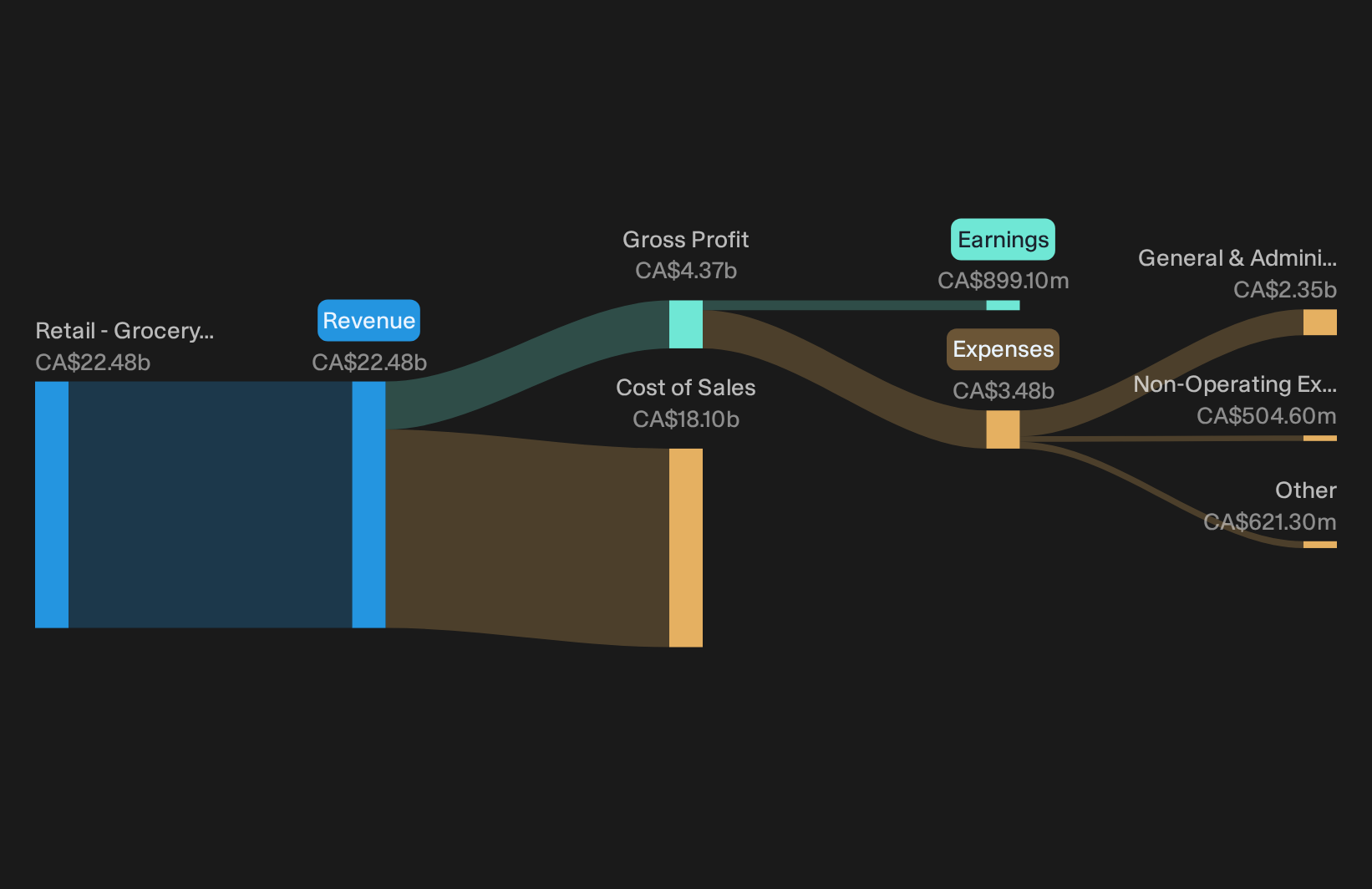
Operations: Metro generates about CA$22.5b in revenue from grocery retail in Canada, giving it direct exposure to domestic food spending.
Market Cap: CA$19.2b
Metro sits in the middle of this screener’s range, with discount banners and in house brands that shoppers often use when weekly bills feel tight.
"Continued outperformance of private label sales versus national brands, along with increased promotional activity and customer loyalty program engagement, is likely to support gross margin resilience and protect earnings amid a highly competitive and inflationary market environment."
What matters next for Metro is how a shift in its mix of value formats and store brands affects its long term margins.
If that margin mix is what you care about, the full narrative for Metro shows how Metro’s private-label and discount engines could be quietly reshaping long term earnings power.
Loblaw Companies (TSX:L)
Overview: Loblaw Companies is a Canadian food and pharmacy retailer. Its grocery chains and store brands anchor a wide private-label ecosystem.
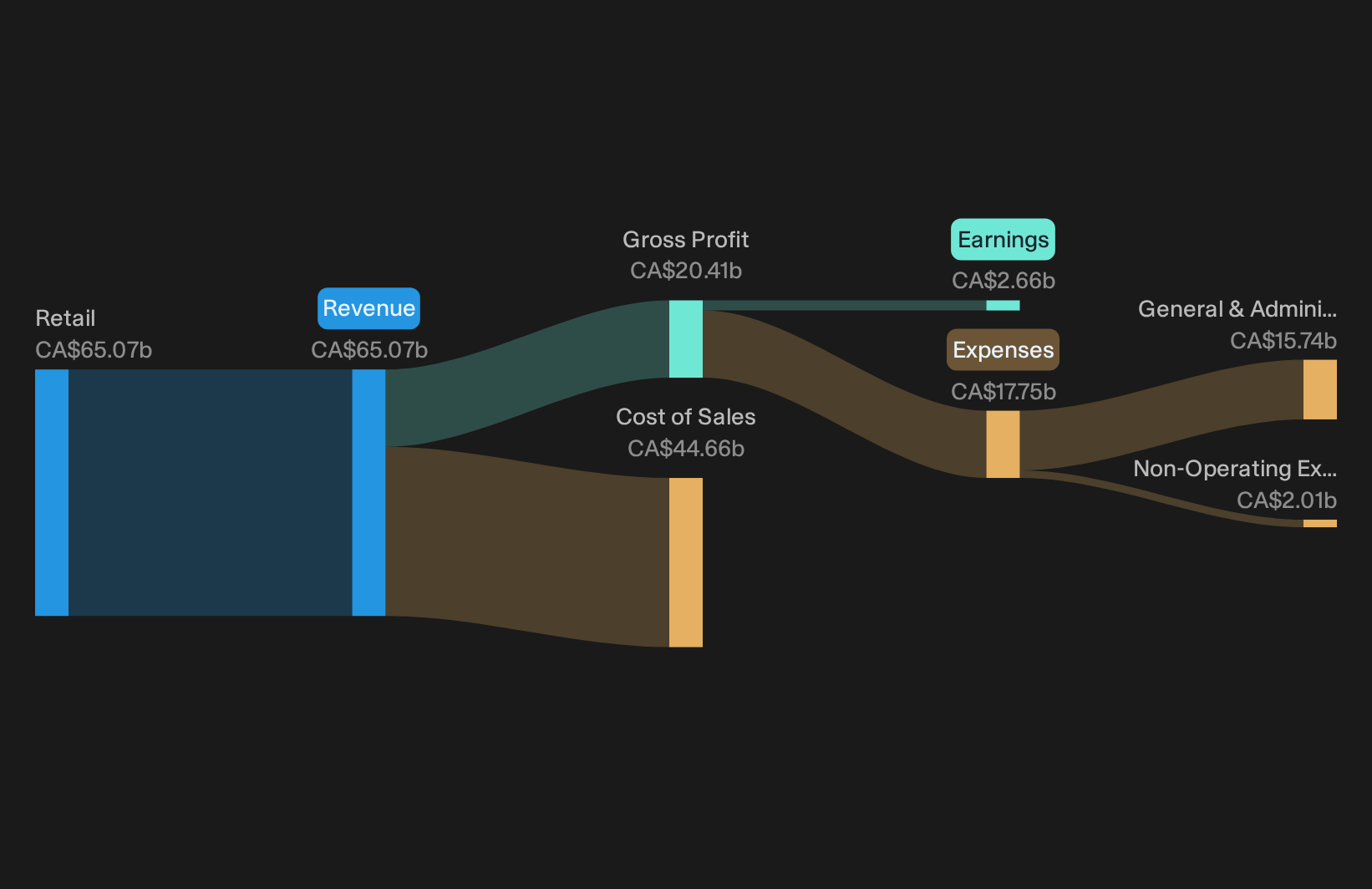
Operations: Loblaw Companies generates about CA$65.1b in Retail revenue, all from Canada, tying its fortunes directly to domestic shoppers.
Market Cap: CA$71.1b
Loblaw Companies matters for this private-label screener because it controls the shelf space where many Canadians now hunt for cheaper store brands instead of big national logos.
"The push towards ESG initiatives, local sourcing, and the Buy Canadian trend is strengthening brand loyalty and supporting premium pricing and private label sales, which anchors gross margins and lowers competitive churn risk."
What could really shift how that plays out is how one less visible cost and funding pressure interacts with those inflation era private-label gains.
Those funding and cost cross-currents are exactly where the real story gets interesting, and the full narrative for Loblaw Companies unpacks how Loblaw Companies' private-label engine could be quietly decoupling earnings risk from inflation headwinds.
Seeking Alternatives Before The Crowd?
Fresh breakout stories do not stay under the radar for long. Screens move fast, momentum rotates, and entry points can slip away quickly. Consider exploring opportunities sooner rather than later.
- Focus on dependable cash flows and sturdy balance sheets with the curated list of solid balance sheet and fundamentals (7 results) before the market fully prices in their resilience.
- Look for potential upside in metal producers using the hand picked 36 elite gold producer stocks while sentiment and fundamentals may still differ.
- Explore structural demand shifts in electrical infrastructure through the focused 39 power grid technology and infrastructure stocks while these stories are still developing.
This article by Simply Wall St is general in nature. We provide commentary based on historical data and analyst forecasts only using an unbiased methodology and our articles are not intended to be financial advice. It does not constitute a recommendation to buy or sell any stock, and does not take account of your objectives, or your financial situation. We aim to bring you long-term focused analysis driven by fundamental data. Note that our analysis may not factor in the latest price-sensitive company announcements or qualitative material. Simply Wall St has no position in any stocks mentioned.
Have feedback on this article? Concerned about the content? Get in touch with us directly. Alternatively, email editorial-team@simplywallst.com