
Dividend Stocks For Higher Rates With Federal Realty Investment Trust And Two REITs
With the Federal Reserve lifting rates again to 3.75% to 4.00% and signaling more tightening ahead, the easy-money playbook that helped high-growth stocks looks far less comfortable. Income investors watching a richly priced S&P 500 may feel caught between inflation and valuation risk. This article explores three dividend-paying value stocks exposed to this new rate backdrop and how each might fit, or not fit, into a more cautious playbook.
The stocks highlighted below are just a sample set. The full screen surfaced 2 more large dividend payers with equally compelling income and valuation stories that are not covered in this article.
If you want to identify candidates that better match your own risk, yield, and balance sheet preferences, head straight into the High-Quality Dividend-Paying Value Stocks screener
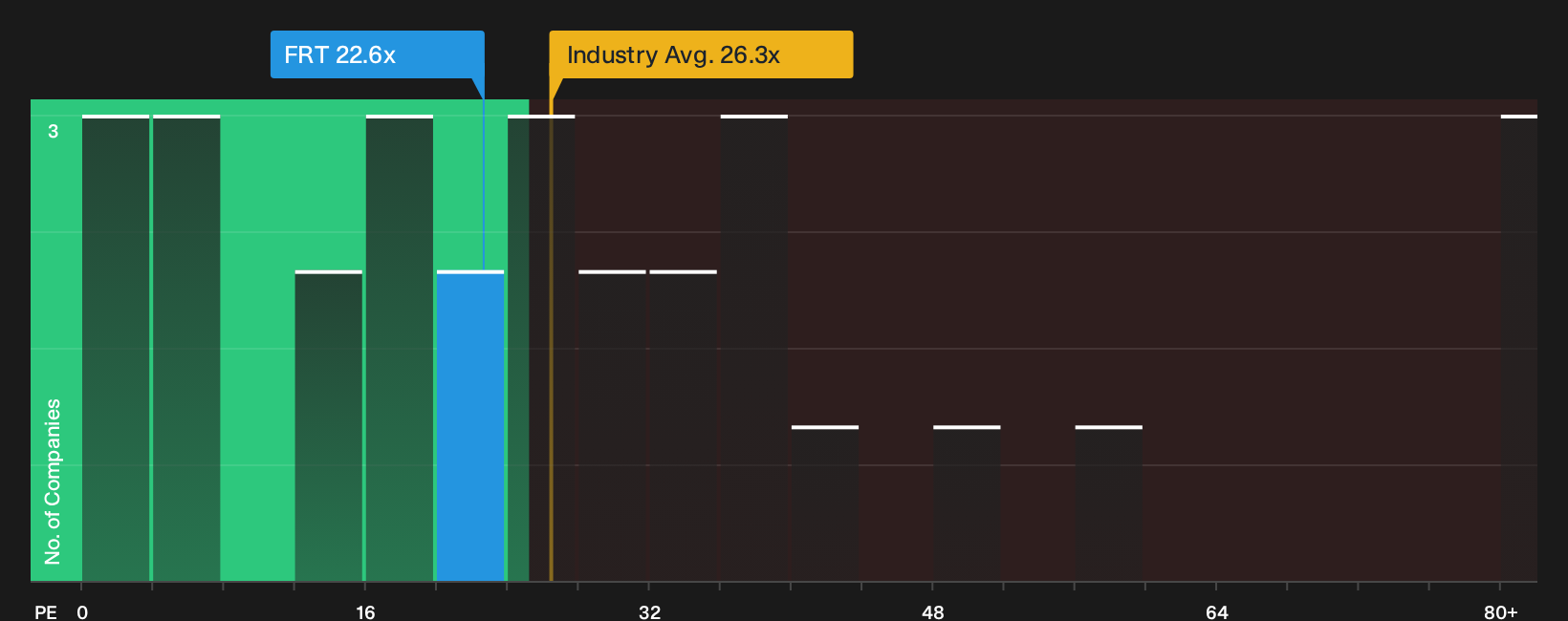
Federal Realty Investment Trust (FRT)
Federal Realty Investment Trust fits neatly into the High-Quality Dividend-Paying Value Stocks theme because it pairs long-running dividend income with a focus on high-end retail and mixed-use properties, giving investors exposure to everyday consumer spending through premium real estate.
Federal Realty Investment Trust is a U.S. REIT that owns and redevelops open-air shopping centers and mixed-use destinations in strong markets, earning about US$1.3b from ownership, management and redevelopment activities, with a market value around US$9.7b.
Expansion into large, dominant retail assets in affluent, high‑income suburban markets beyond traditional coastal geographies allows Federal Realty to leverage its tenant relationships and placemaking expertise, which can unlock rent growth and higher IRRs from untapped, supply‑constrained markets. This has the potential to positively impact revenue and long‑term earnings growth.
What really matters now is how one unseen pressure on funding costs and future project economics ultimately shapes that earnings path.
That funding pressure is exactly what the full narrative for Federal Realty Investment Trust unpacks in detail, showing where Federal Realty Investment Trust could still accelerate value as capital costs reset.
Universal Health Realty Income Trust (UHT)
Universal Health Realty Income Trust is a healthcare REIT that owns and leases hospitals and medical facilities under long-term contracts. This aligns with the screener’s focus on dividend-paying value stocks backed by recurring cash flows. The trust generates about US$101 million from investing in and leasing healthcare and human service facilities and carries a market cap near US$553 million.
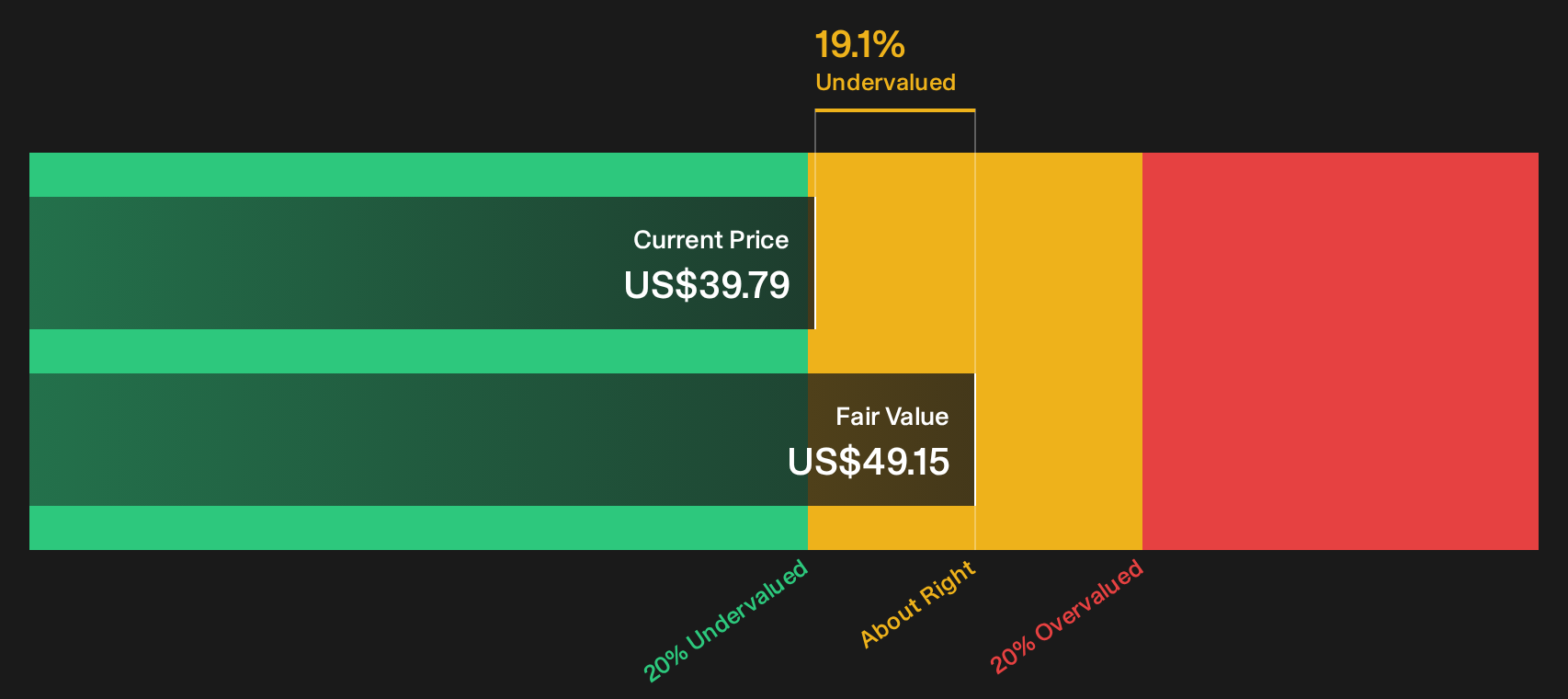
Universal Health Realty Income Trust offers income investors a 7.54% dividend yield and exposure to hospital and medical facility rents, which fits the screener’s tilt toward steady cash flows and modest leverage. Valuation sits about 19.1% below one fair value estimate; however, interest coverage and earnings pressure leave a lot riding on how one unseen funding cost pressure evolves.
That funding overhang is exactly what the 2 key rewards and 2 important warning signs (2 are major!) unpacks, so you can see whether today’s yield masks pressure or sets up a healthier reset.
Picton Property Income (PCTN.F)
Picton Property Income is a UK commercial property REIT whose actively managed portfolio of 45 assets aims to provide diversified rental income that fits the high-quality dividend-paying value theme. It generated about £51 million from real estate investment and has a market cap near $482 million.
For income-focused investors looking beyond expensive U.S. equities, Picton Property Income offers a diversified UK rent roll, a track record of paying dividends and a P/E around 13.9x that lines up with a value tilt. However, one unresolved funding pressure could still reshape how resilient that income stream feels as rates stay higher for longer.
With that funding question hanging over Picton Property Income, review the analysis report for Picton Property Income to see whether current yields could be masking something or setting up a break.

Seeking Fresh Alternatives Before They Fly
Fresh ideas move first, and laggards get caught holding what has already run. Scan focused stock lists while they are still under the radar for now, and consider acting while they remain less widely followed.
- Look for potential turnaround stories with strong balance sheets before momentum headlines appear by scanning the curated 35 high quality undervalued stocks.
- Monitor long-term infrastructure themes by tracking companies involved in powering the grid through the focused 39 power grid technology and infrastructure stocks while valuations may still be adjusting.
- Review data on relatively resilient performers by running a targeted pass across 30 resilient stocks with low risk scores so you are not responding only after prices have already moved.
This article by Simply Wall St is general in nature. We provide commentary based on historical data and analyst forecasts only using an unbiased methodology and our articles are not intended to be financial advice. It does not constitute a recommendation to buy or sell any stock, and does not take account of your objectives, or your financial situation. We aim to bring you long-term focused analysis driven by fundamental data. Note that our analysis may not factor in the latest price-sensitive company announcements or qualitative material. Simply Wall St has no position in any stocks mentioned.
Have feedback on this article? Concerned about the content? Get in touch with us directly. Alternatively, email editorial-team@simplywallst.com