
Did Note Exchange Just Shift FirstEnergy (FE) Stock Narrative?
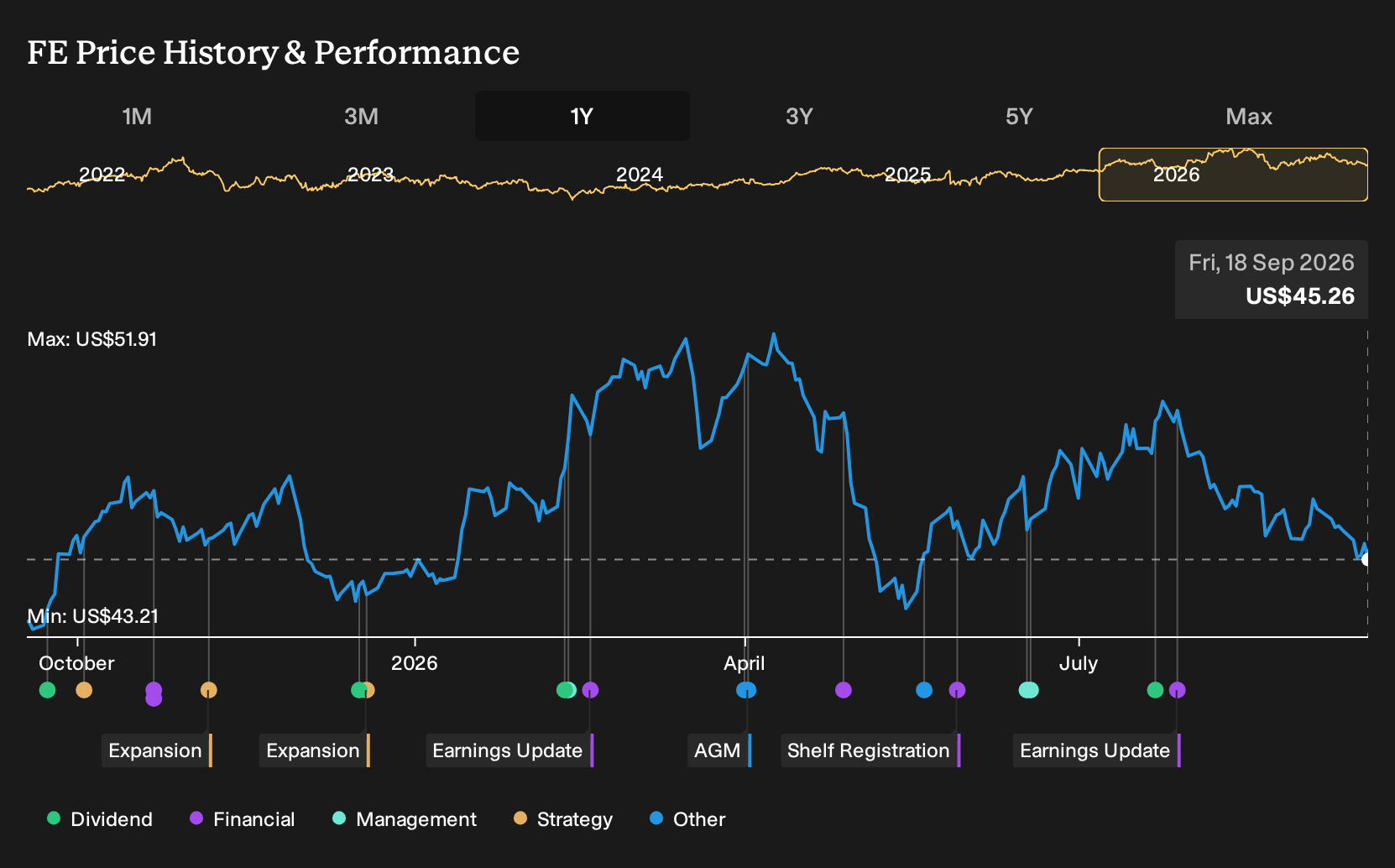
- FirstEnergy's Pennsylvania Electric Company previously launched an exchange offer for up to $850 million of unregistered senior notes, tied to registration rights agreements rather than fresh capital raising, alongside a planned $28 billion grid and infrastructure program through 2029.
- The combination of a large, non-fundraising note exchange and a multiyear infrastructure plan highlights how FirstEnergy is juggling balance sheet structure, regulatory commitments and heavy capital needs that could influence funding flexibility and future dilution risk.
- We will look at how FirstEnergy's investment narrative is affected by the senior note exchange and the scale of its grid program.
Compare how FirstEnergy's grid heavy plan stacks up against other regulated utilities by scanning a curated shortlist of 39 power grid technology and infrastructure stocks aligned with similar long term investment themes.
FirstEnergy Investment Narrative Recap
For you to own FirstEnergy, you need to be comfortable with a slow and regulated story that leans heavily on grid demand from data centers, electrification and supportive state regulation. The near term hinge point is whether that US$28b grid plan can move through regulators and into the rate base on time without unexpected pushback or delays.
The biggest risk right now sits around funding that capital program while interest coverage is already tight and the dividend is not fully covered by earnings or free cash flow. If capital markets stay open and regulators remain constructive, the recent note exchange itself looks more like plumbing than a material shift in the operating story.
The exchange offer at Pennsylvania Electric is the key announcement to watch because it ties directly into how FirstEnergy finances that US$28b grid build. Swapping unregistered senior notes for registered ones does not raise fresh money, but it does tidy up an existing slice of the debt stack and supports market access.
For you, the main takeaway is about execution risk and balance sheet headroom. A cleaner structure can help FirstEnergy focus on getting projects built, earning allowed returns and keeping pressure off new equity issuance. The flip side is that heavy capex, modest interest cover and an uncovered 4.11% dividend leave little room for operational missteps or regulatory surprises.
FirstEnergy's current analyst story points to US$18.0b in revenue and US$2.0b in earnings by 2029, built on 4.8% yearly revenue growth and an earnings increase of roughly US$0.9b from US$1.1b today.
Discover how FirstEnergy's fair value points to an 18% potential upside to its current price, a discount that could narrow quickly once sentiment shifts.
Exploring Other Perspectives
Two fair value estimates from the Simply Wall St Community span a wide band, from about US$29 per share up to roughly US$53, showing how far opinions on FirstEnergy can stretch. These community views sit alongside concerns about legal overhang and heavy grid spending. Together, these factors could shape how comfortably future earnings cover that investment load. Readers should weigh these contrasting angles and explore more community viewpoints before forming a stance.
Explore another FirstEnergy fair value estimate, including one that suggests as much as 35% downside from the current price.
The Verdict Is Yours
Don't just follow the ticker. Dig into the data and build a conviction that's truly your own.
- A great starting point for your FirstEnergy research is our analysis highlighting 1 key reward and 2 important warning signs that could impact your investment decision.
- See our latest analysis for FirstEnergy. The report includes a comprehensive fundamental analysis summarized in a single visual, the Snowflake, making it easy to evaluate FirstEnergy's overall financial health at a glance.
Looking for more investment ideas beyond FirstEnergy?
If the FirstEnergy story has you thinking about portfolio balance and risk, it helps to compare it with other businesses that share some financial traits but operate under different conditions. The Simply Wall St Screener can surface those candidates quickly so you spend more time weighing trade offs and less time hunting for tickers.
- If capital preservation sits high on your list, consider starting with a group of defensively positioned companies by scanning a 30 resilient stocks with low risk scores that aim to keep drawdowns in check.
- For readers focused on quality at a sensible entry point, filter for businesses with strong fundamentals and potential pricing gaps by working through a curated 35 high quality undervalued stocks that may justify deeper research.
- Income oriented investors who like the idea of cash coming back to them regularly can review a targeted 7 dividend fortresses to see which payers might warrant a spot on the watchlist.
This article by Simply Wall St is general in nature. We provide commentary based on historical data and analyst forecasts only using an unbiased methodology and our articles are not intended to be financial advice. It does not constitute a recommendation to buy or sell any stock, and does not take account of your objectives, or your financial situation. We aim to bring you long-term focused analysis driven by fundamental data. Note that our analysis may not factor in the latest price-sensitive company announcements or qualitative material. Simply Wall St has no position in any stocks mentioned.
Have feedback on this article? Concerned about the content? Get in touch with us directly. Alternatively, email editorial-team@simplywallst.com